
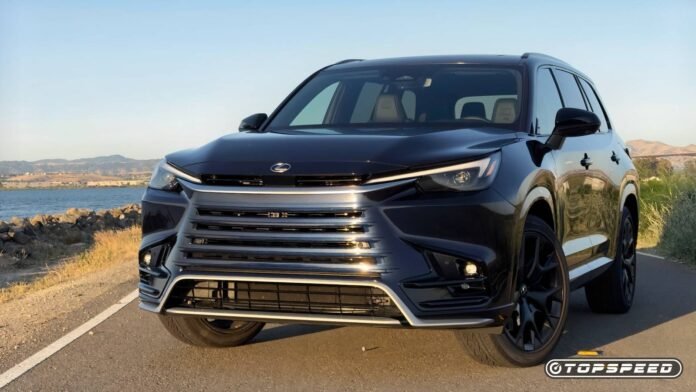
Designed specifically for the North American market, the Lexus TX was introduced in 2023 at a special event in Austin, Texas—rather than a traditional auto show. The first Lexus SUV to be constructed in the United States, the TX is closely related to the Toyota Grand Highlander, both of which employ Toyota’s GA-K platform. As can be said for the majority of the contemporary Lexus product portfolio, the TX is offered with a choice of gas-only (TX 350) or hybrid (TX 500h and 550h) powertrains. The base price for the Lexus TX 350 F-Sport AWD reviewed here was $64,410. The price as tested came to $69,430.

- Base Trim Engine
-
2.5L I4 ICE
- Base Trim Transmission
-
8-Speed Automatic
- Base Trim Drivetrain
-
Front-Wheel Drive
- Base Trim Horsepower
-
275 hp
- Base Trim Torque
-
317 lb-ft
- Make
-
Lexus
- Model
-
TX
- Segment
-
Midsize Luxury SUV
In order to provide you with an honest and unbiased review, the vehicle reviewed in this article was driven on a daily basis throughout the course of daily life for a period of one week. For detailed insight into testing procedures and data collection, please review our methodology policy.
2026 Lexus TX 350 F Sport AWD First Impressions
A polarizing design, the Lexus TX somehow manages to be both angular and curvilinear. The look is rather busy to my eye, and not at all what I would call handsome. However, Toyota has proven time and time again that one needn’t offer good looks to sell hundreds of thousands of units annually. Then again, beauty is—as has often been said—in the eye of the beholder. Therefore, responses will vary from person to person. Either way, though, regardless of how you feel about it, the Lexus TX does have presence.
Exterior Dimensions
|
Length |
203.5 Inches |
|
Width |
78.3 Inches |
|
Height |
70.1 Inches |
|
Wheelbase |
116.1 Inches |
|
Front Track |
67.4 Inches |
|
Rear Track |
67.8 Inches |
|
Curb Weight |
4,720 Pounds |
Driving Impressions And Performance
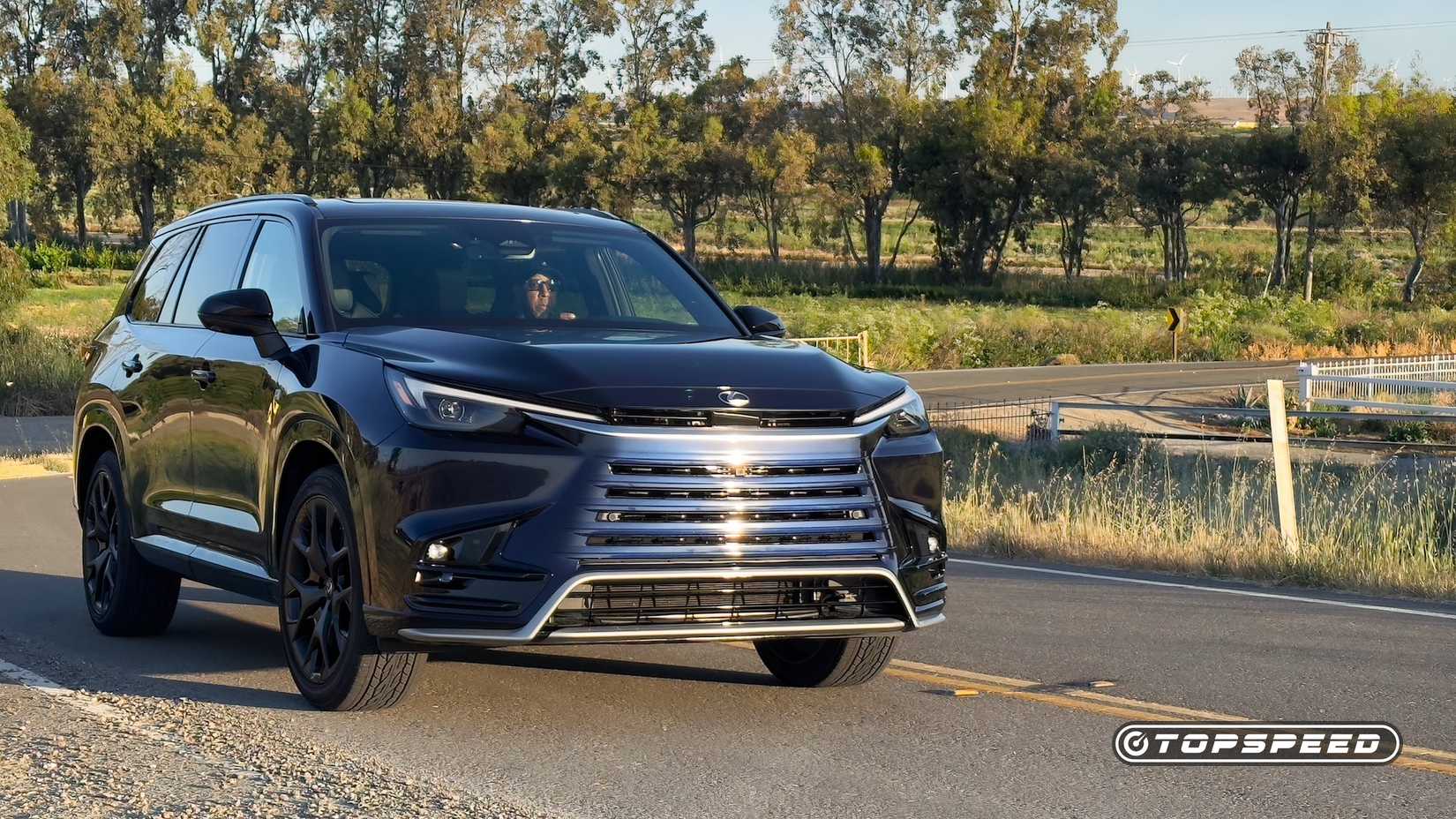
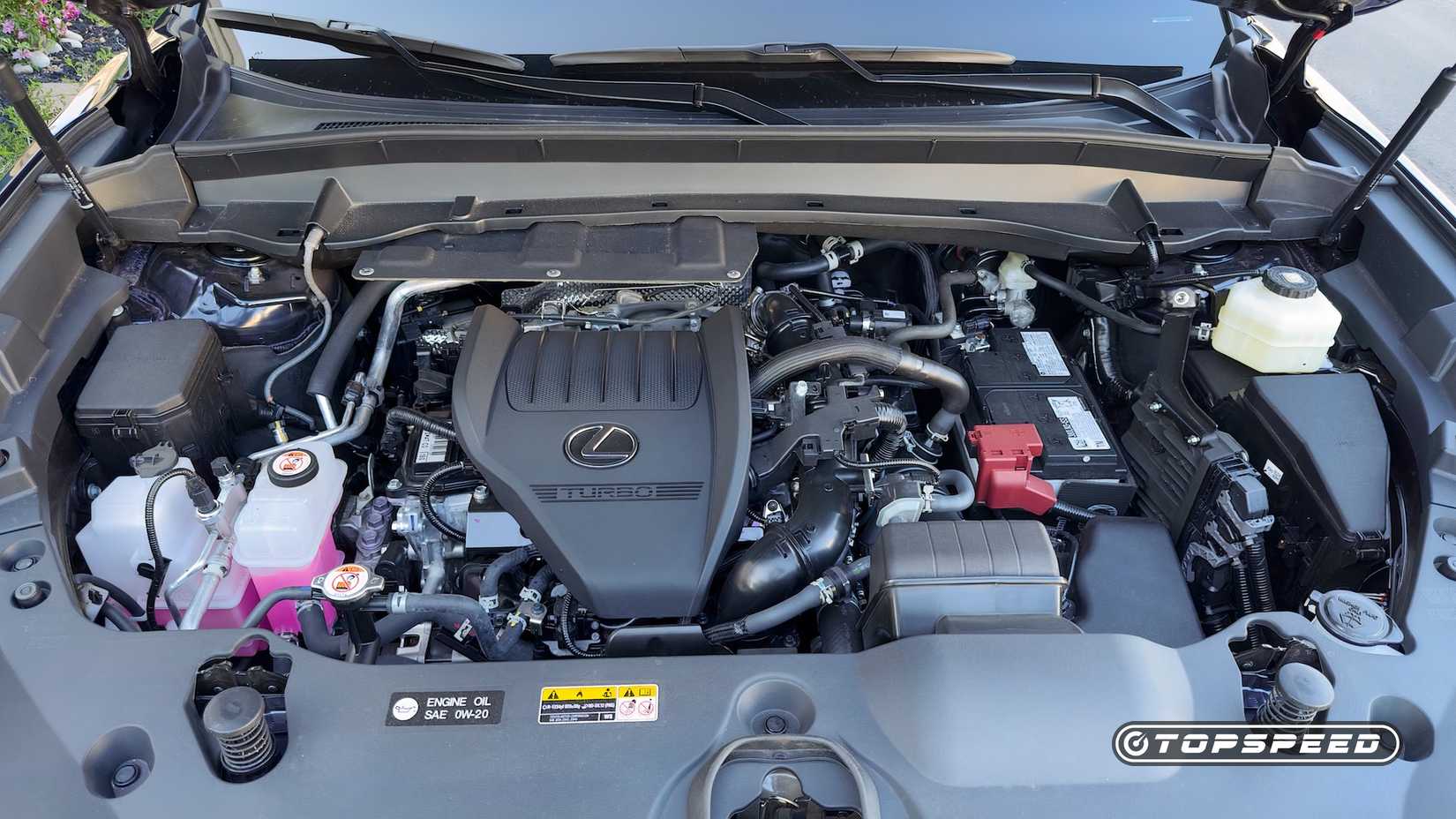
Even with the F-Sport nomenclature, which, by the way, refers to appearance mods more so than performance potential, the mission of the Lexus TX is to transport its occupants in as much comfort as possible. Output is sourced from a 275-horsepower, 2.4-liter turbocharged inline-four, which is also tuned to produce 317 lb-ft of torque at 1,700 rpm. An eight-speed automatic transmission routes thrust to all four wheels.
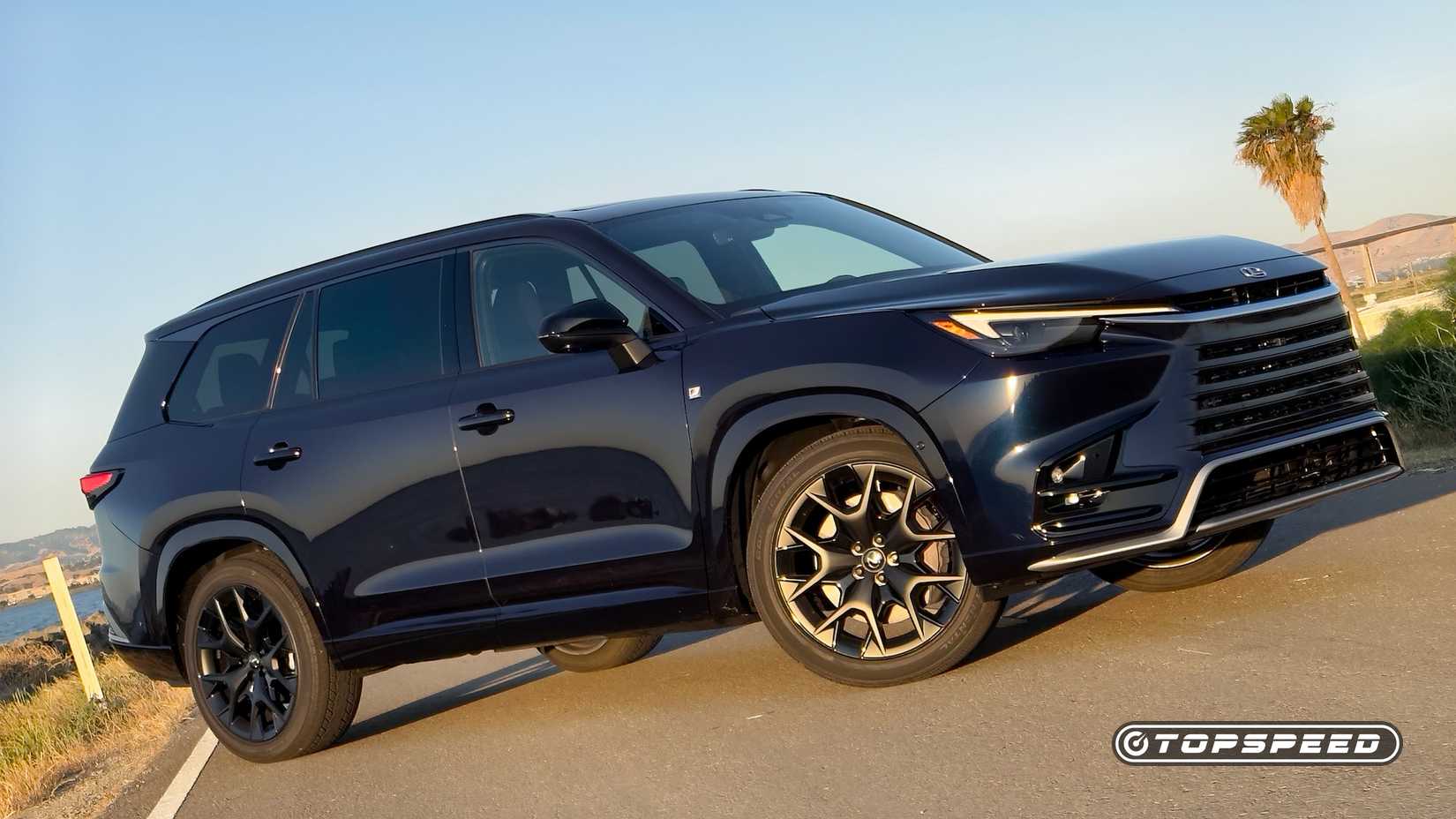
Quiet and well-mannered, the TX 350 felt adequately powered. Getting up to highway speed posed no concerns, and the engine exhibited the smoothness Lexus has taught us to expect from its vehicles. My Omega Speedmaster’s second hand was sweeping past the seven-second mark when the TX 350 hit 60 from a standing start.
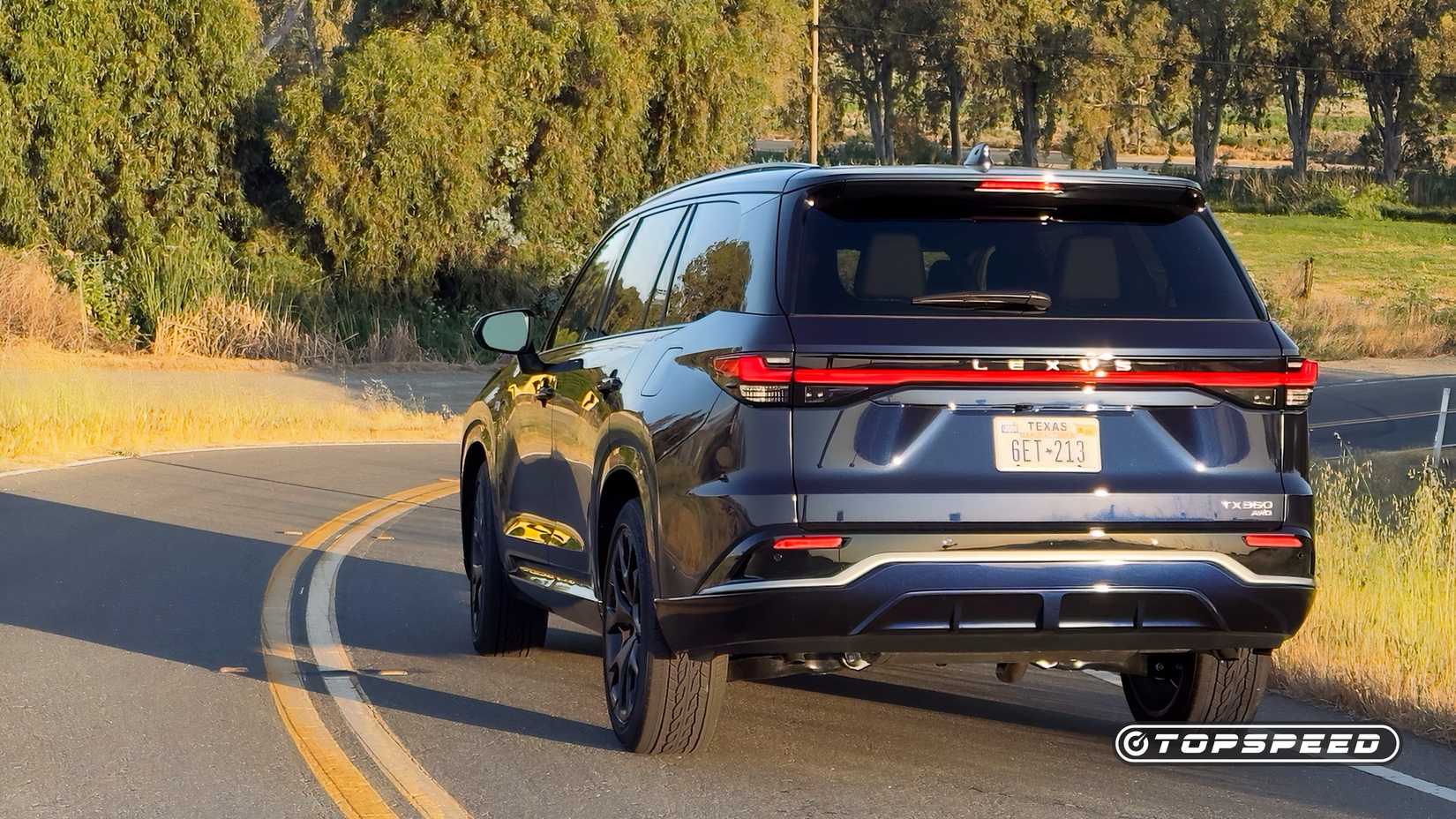
Predictably, while returning middling handling, the TX did excel at ride comfort. Every road is paved smoothly when you have a Lexus TX between you and the asphalt. What’s more, while the TX is a relatively large SUV, it didn’t feel ponderous in operation. While I wouldn’t call it agile per se, the Lexus was cooperative. The TX also proved easy to park—even on heavily congested San Francisco streets.
Performance Specifications
|
Engine |
2.4-liter Intercooled Turbocharged Inline Four-Cylinder |
|
Transmission |
Eight-Speed Automatic |
|
Horsepower |
275 HP @ 6,000 RPM |
|
Torque |
317 LB-FT @ 1,700 RPM |
|
Fuel Economy (CMB) |
22 MPG (Observed) |
|
0-60 MPH |
Seven Seconds |
|
Top Speed |
113 MPH (Governed) |
|
Towing Capacity |
5,000 Pounds |
|
Payload Capacity |
1,435 Pounds |
Lexus TX 350 Fuel Economy
According to the denizens of the Environmental Protection Agency (AKA the EPA), the Lexus TX 350 AWD is capable of traveling 20 miles on every gallon of fuel it consumes in the city, and 26 on the highway. Taken together, the Lexus is said to average an estimated 23 miles per gallon overall. This proved quite accurate in practice, as the all-wheel drive TX 350 returned an overall figure of 22 mpg under my stewardship.
|
City |
Highway |
Combined |
|
|
EPA Rated Economy |
20 MPG |
26 MPG |
23 MPG |
|
Fuel Economy As Tested |
22 MPG (Observed) |
Interior Design And Comfort
While my mother won’t be getting any letters extolling the comeliness of the TX 350’s interior treatment, it does read as a Lexus. Build quality is outstanding, the materials employed are premium, and the architecture says luxurious. The design angles the controls toward the steering wheel, giving the Lexus an aura of driver orientation.
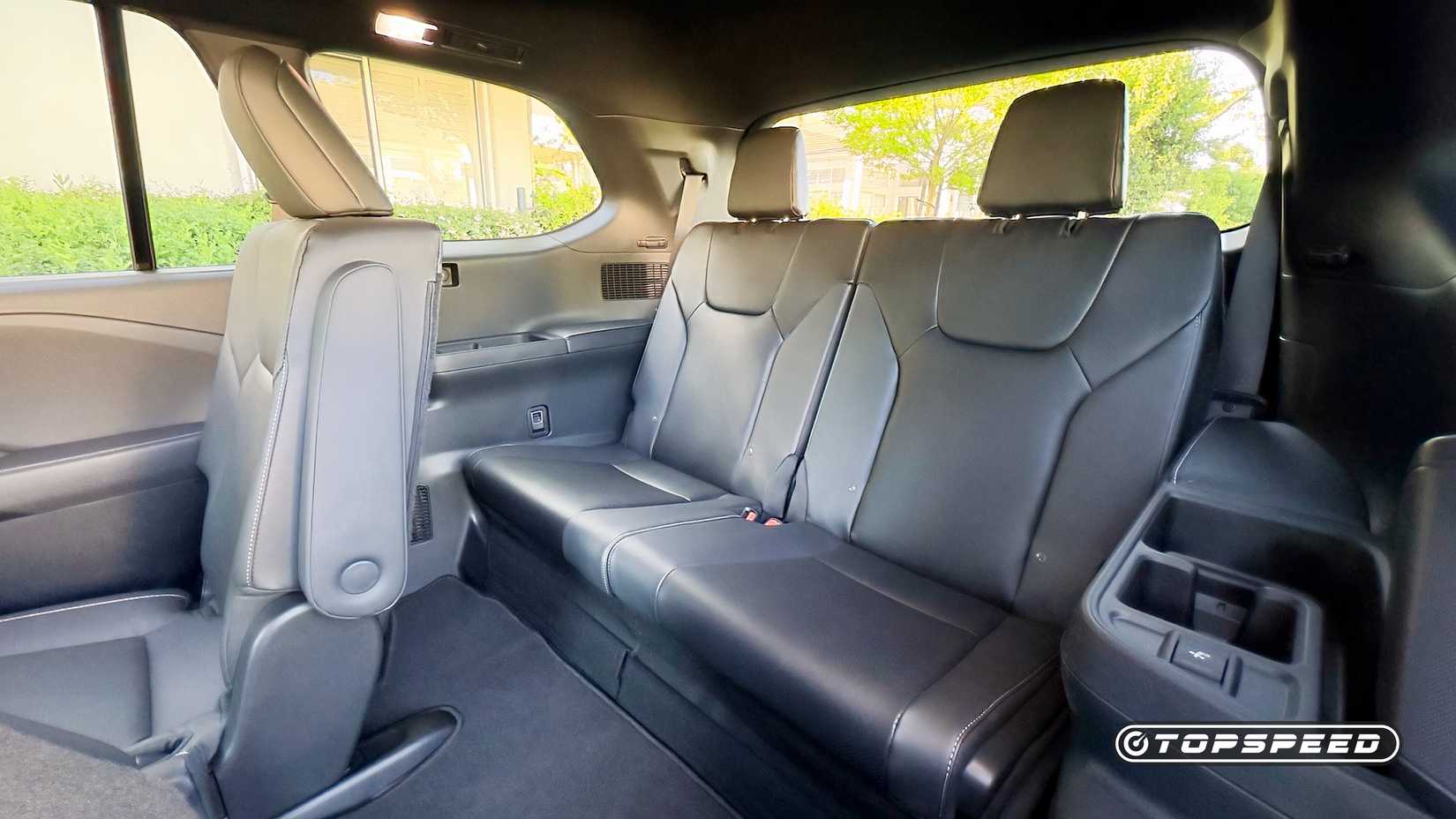
All six seating positions offered good comfort—including those in the third row. The front seats were heated and ventilated. The second-row captain’s chairs were also heated, as was the steering wheel. The TX 350’s low step-in height made ingress and egress easy to accomplish, even for the reclining seats in the third row. The panoramic glass roof added light to what otherwise would have been a pretty dark (though not quite dreary) interior.
Interior Dimensions
|
Front |
Rear |
|
|
Headroom |
40 Inches |
38.5 Inches |
|
Shoulder Room |
60 Inches |
59 Inches |
|
Hip Room |
56.5 Inches |
56.8 Inches |
|
Legroom |
41.6 Inches |
39.5 Inches |
Technology And Ease Of Use
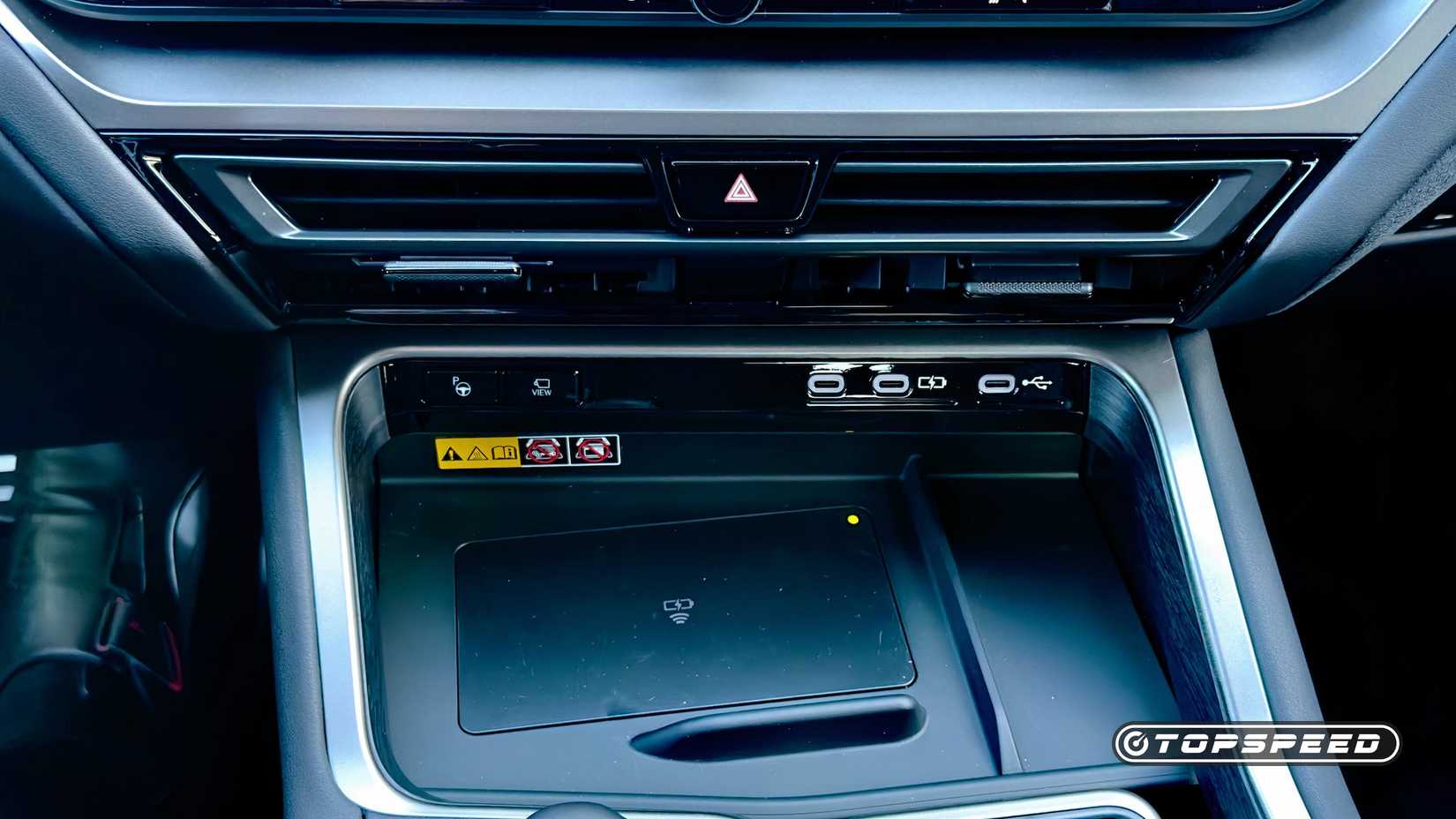
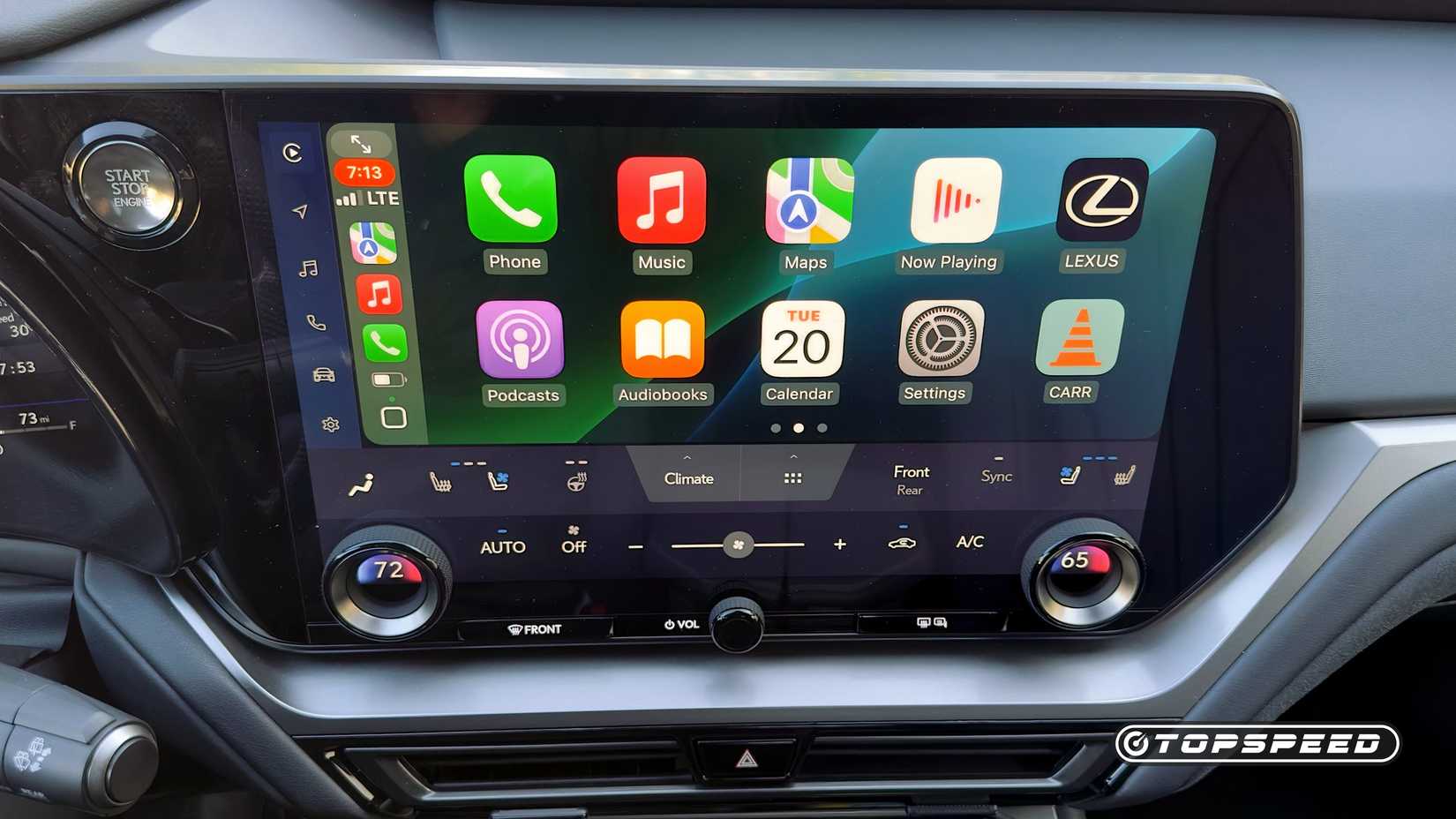
Thematic ambient lighting added nice pops of color at night, while ably complementing the 14-inch touchscreen infotainment system monitor. Bluetooth, along with wireless CarPlay and Android compatibility, were standard—as was wireless charging. The optional Mark Levinson 21-speaker audio system ($1,160) provided outstanding clarity and sound staging, regardless of the volume level I chose.
Standard driver’s aids included auto-leveling LED headlights and LED fog lights.Adaptive cruise control, automated emergency braking, and blind-spot monitoring with rear cross-traffic alert were standard, too. Options included the $895 convenience package, which added front cross-traffic alert and traffic jam assistance. The $1,280 technology package brought panoramic view cameras and remote parking.
None of these features required any special effort to operate. They all just functioned quietly in the background until their abilities were required. As a result, one could easily drive the TX and never know most of these features are there, which makes their ease-of-use rank very highly.
Cargo And Storage Space
The design team took full advantage of the dimensions of the TX to offer one of the most capacious cargo compartments you’ll find in this segment. The Lexus provides 20 cubic feet of carrying capacity—with the power folding third row seats deployed! Stow them away, you’ll pick up another 37 cubic feet, for a total of 57. Folding the captain’s chairs nets you another 40, which places an astounding 97 cubic feet of carrying capacity at your disposal. Further, the Lexus will carry up to 165 pounds of stuff on its roof (with the appropriate roof racks) and tow up to 5,000 pounds.
|
Minimum Cargo Capacity |
20.2 Cubic-Feet |
|
Cargo Capacity Third-Row Folded |
57.4 Cubic-Feet |
|
Cargo Capacity Second and Third-Rows Folded |
97 Cubic-Feet |
2026 Lexus TX 350 F Sport AWD Vs. Its Competitors
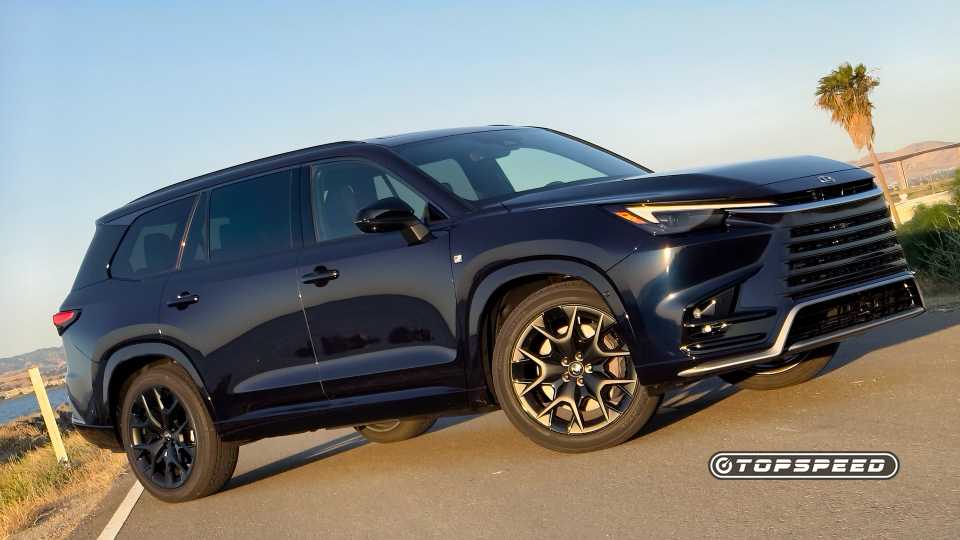
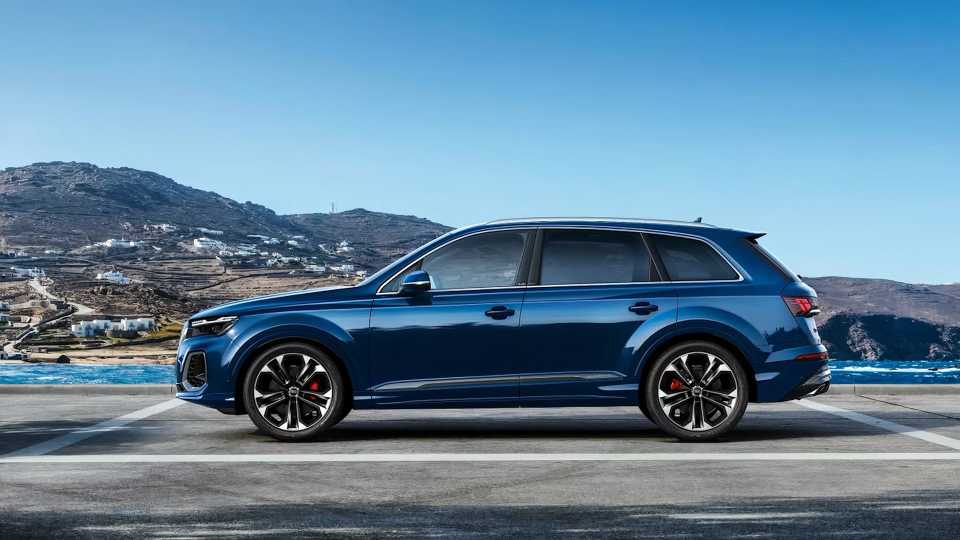
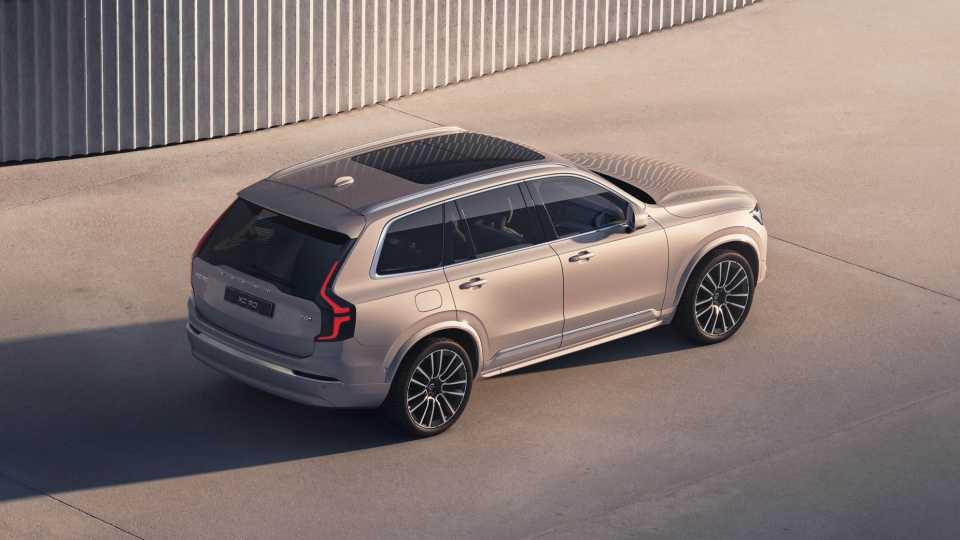
As good as the TX 350 is in all of those regards, the Lexus faces some pretty tough competition in the mid-size three-row luxury SUV category. Contenders such as the Audi Q7 and Volvo XC90 are consistently rated atop this class. With a base price of $63,890, the Audi can claim more driver engagement. Meanwhile, starting at $62,445, the Volvo can claim more handsome interior and exterior styling.
How The Lexus TX Compares To The Audi Q7

- Base Trim Engine
-
2L I4 ICE
- Base Trim Transmission
-
8-speed automatic
- Base Trim Drivetrain
-
All-Wheel Drive
- Base Trim Horsepower
-
261 HP
- Base Trim Torque
-
273 lb.-ft.
- Base Trim Fuel Economy (city/highway/combined)
-
20/26/22 MPG
- Make
-
Audi
- Model
-
Q7
- Segment
-
Midsize Luxury SUV
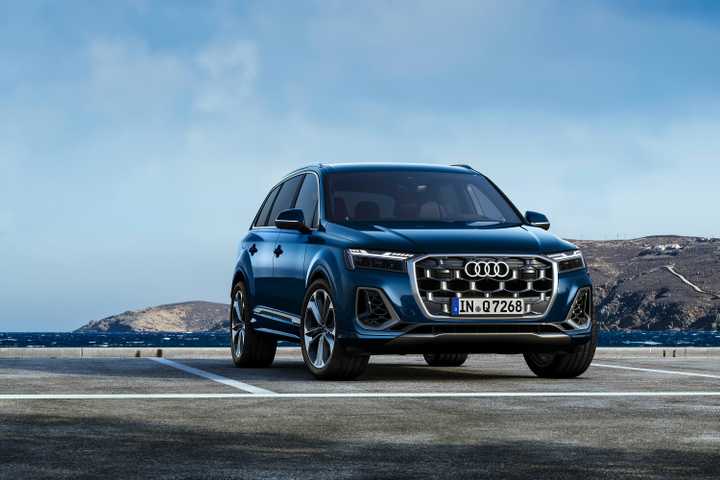
Powered by a 261-horsepower, 2.0-liter turbocharged four, the Q7 will do zero to 60 runs in just under six seconds, compared to just over seven for the TX 350. On the other hand, the Lexus is considerably more capacious for both passengers and cargo. However, Audi has a richly deserved reputation for offering some of the nicest interior treatments available. On the other hand, though, the TX 350’s powertrain warranty is better than that of the Q7, with six years or 70,000 miles of coverage, compared to the Audi’s four years or 50,000. Long story short, the Audi is sportier and better looking—both inside and out—while the Lexus is more comfortable and arguably a more responsible choice.
How The Lexus TX Compares To The Volvo XC90
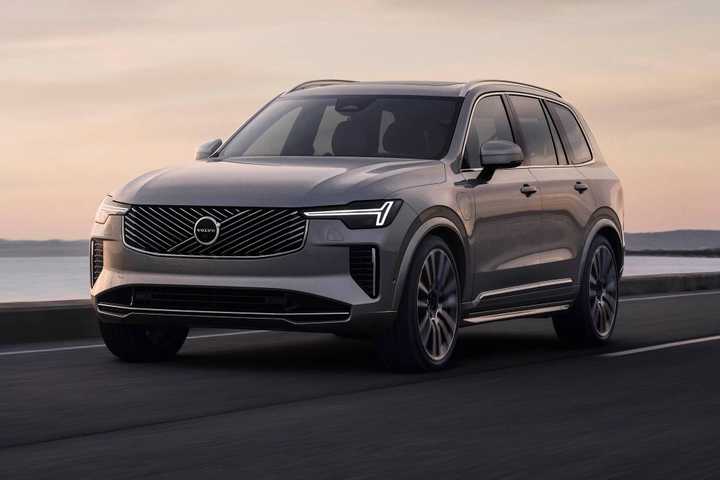

- Base Trim Engine
-
2L Drive-E I4 Hybrid
- Base Trim Transmission
-
8-speed automatic
- Base Trim Drivetrain
-
All-Wheel Drive
- Base Trim Horsepower
-
247 HP @5500 RPM
- Base Trim Torque
-
258 lb.-ft. @ 1800 RPM
- Base Trim Fuel Economy (city/highway/combined)
-
23/30/26 MPG
- Base Trim Battery Type
-
Lead acid battery
- Make
-
Volvo
- Model
-
XC90
The base model XC90, which is closest in price to the Lexus I drove, comes with a 2.0-liter turbocharged inline four-cylinder engine, which is supplemented by an electric motor. Total system output is 247 horsepower. This places the Lexus and Volvo neck and neck in terms of performance, but gives the Volvo a slight edge in fuel efficiency. Predictably, the Lexus offers more passenger and cargo capacity than the Volvo. However, the Volvo’s interior treatment is nicer, and its safety package is superior to those of both the Audi and the Lexus. The Lexus does win in terms of ride comfort, but the Volvo handles better while still besting the Audi in overall comfort. Additional wins for the Lexus are in the categories of reliability and ownership costs.
Our Recommendation For Which Model You Should Buy
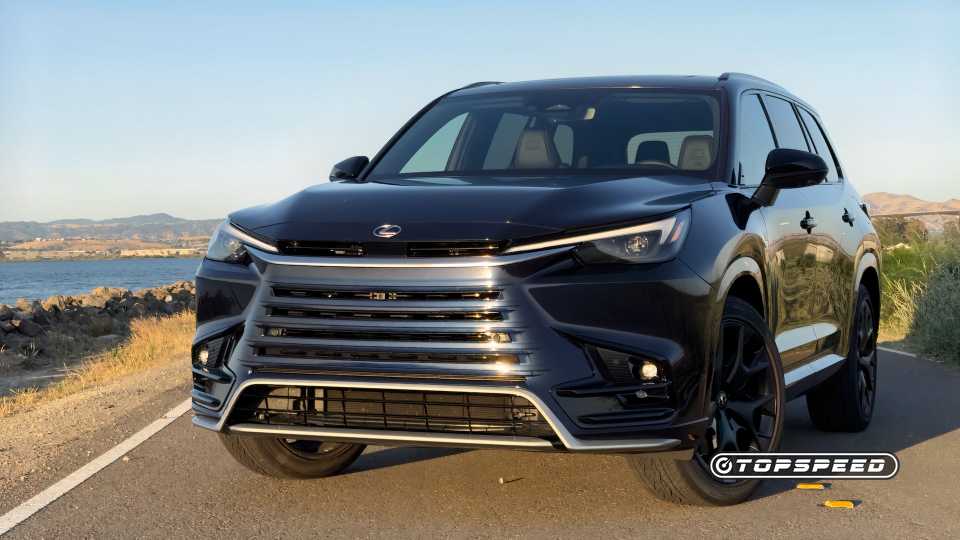
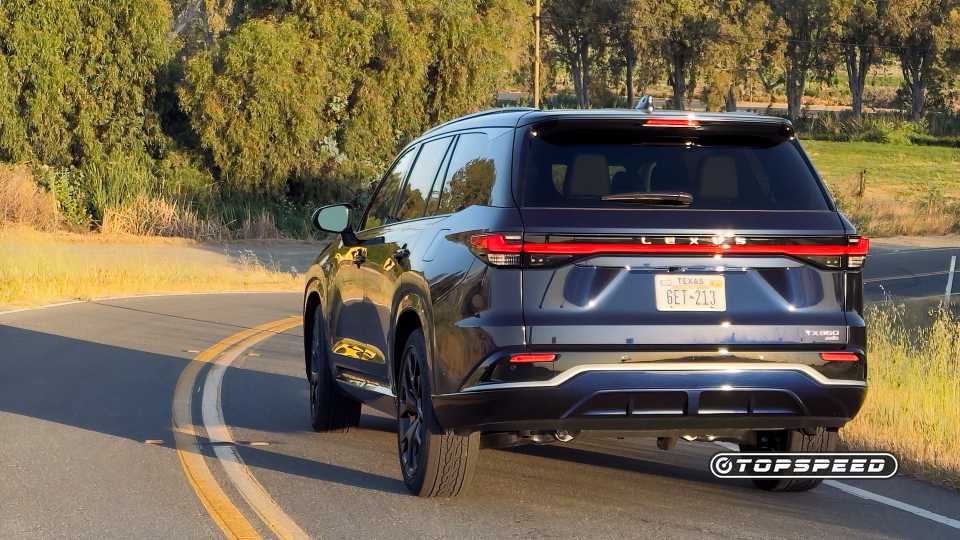
If you can get past its looks, the Lexus offers what can be argued to be the most compelling package when it is compared to the Audi and Volvo. The TX 350 excels in comfort, carrying capacity, family friendliness, and running costs—not to mention perceived reliability—if you can get past its looks. Factoring appearance into the equation, the nod would have to go to the Volvo, as it too offers a high degree of family friendliness—along with better aesthetics and similar performance.
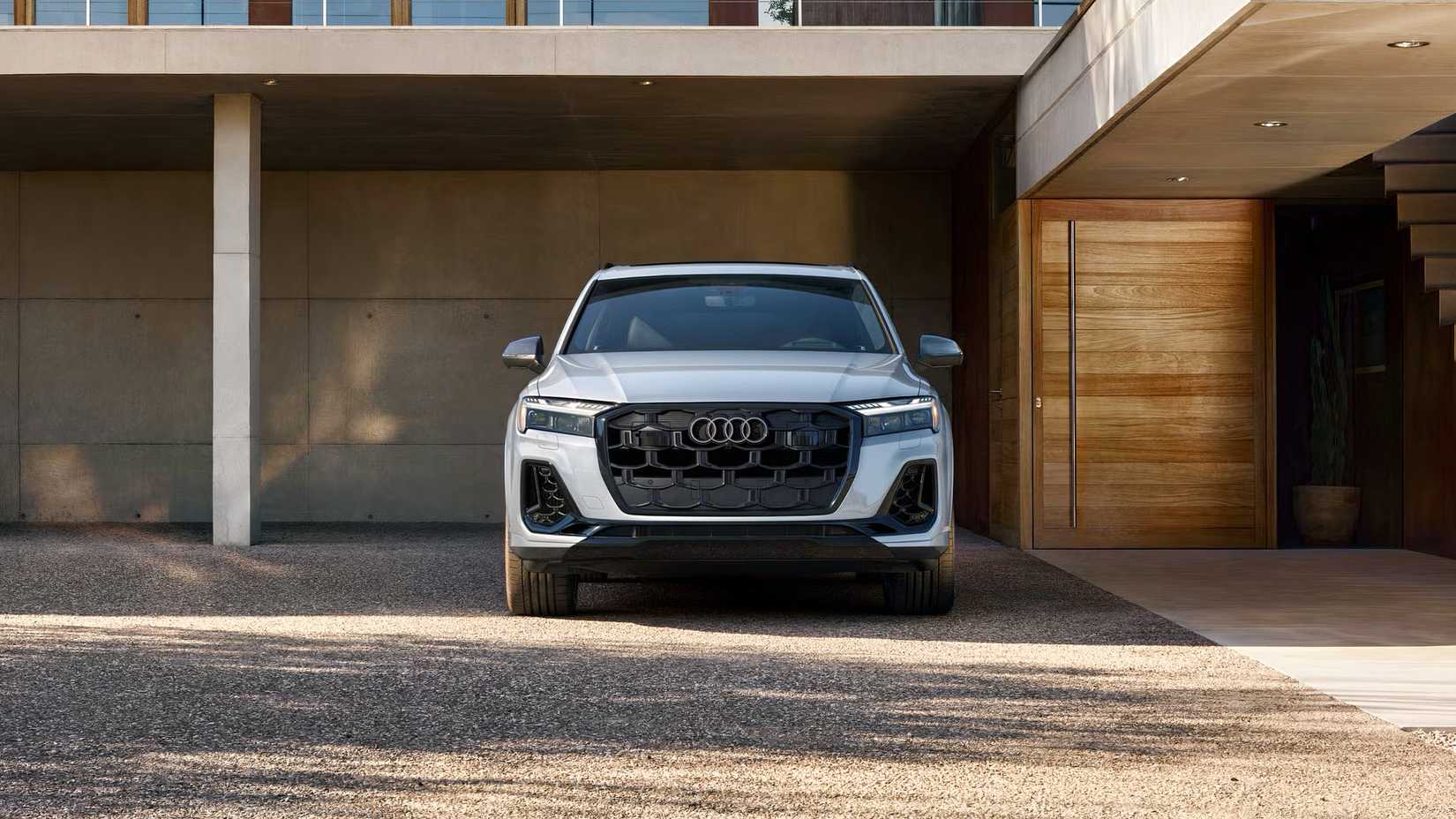
On the other hand, if driving enjoyment ranks most highly on your list of gotta-haves, the Audi is appointed just as luxuriously, and it’s similarly equipped. Fundamentally, it comes down to whether looks and driving enjoyment matter more to you than sheer practicality. Me, myself, personally—because I love to drive—I’d go with the Audi.