
As far as most North Americans are concerned, the Ridgeline was Honda‘s first pickup truck. However, it turns out Honda’s first production automobile was a pickup truck. The company introduced the Honda T360 in June 1963, which predated its S500 sports car by four months. Produced for the Japanese domestic market, the T360 was what is known as a kei truck.
The brand’s first compact pickup along the lines of today’s Ridgeline was a rebadged Isuzu, offered only in Thailand, as the Tourmaster. Sadly, it didn’t do very well, for a number of reasons, the most significant of which was that Isuzu offered its own version of the truck there for less money. In production from 1996 to 1998, somewhere around 1,900 examples were sold in total. Meanwhile, Isuzu moved 100,000 copies of the same truck in a single year.
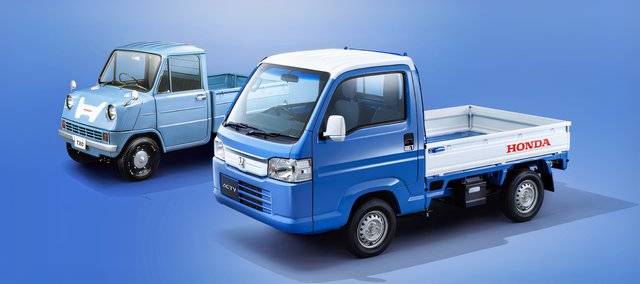
While Honda continued to produce kei trucks until the demise of the Acty in 2021, Tourmaster was pretty much it, as far as “normal” sized pickups go, until the Ridgeline was introduced as the SUT Concept at the 2004 North American International Auto Show. The production Ridgeline bowed in 2006, which means the 2026 Honda Ridgeline Trailsport, reviewed here, marks 20 years of production of Honda’s mid-size pickup. Pricing starts at $45,995.
- Base Trim Engine
-
3.5L V6 ICE
- Base Trim Transmission
-
9-speed automatic
- Base Trim Drivetrain
-
All-Wheel Drive
- Base Trim Horsepower
-
280 HP @6000 RPM
- Base Trim Torque
-
262 lb.-ft. @ 4700 RPM
- Base Trim Fuel Economy (city/highway/combined)
-
18/24/21 MPG
- Make
-
Honda
- Model
-
Ridgeline
- Segment
-
Midsize Pickup Truck
In order to provide you with an honest and unbiased review, the vehicle reviewed in this article was driven on a daily basis throughout the course of daily life for a period of one week. For detailed insight into testing procedures and data collection, please review our methodology policy.
2026 Honda Ridgeline TrailSport First Impressions
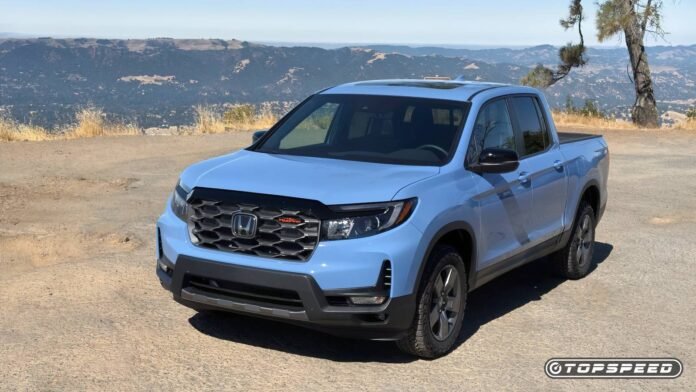
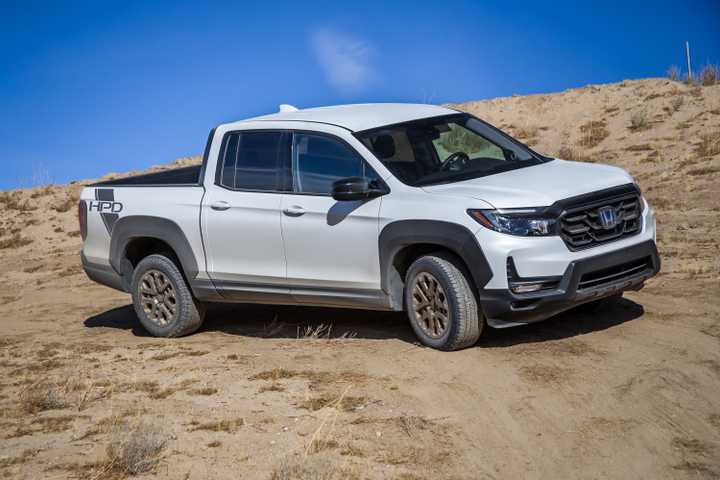
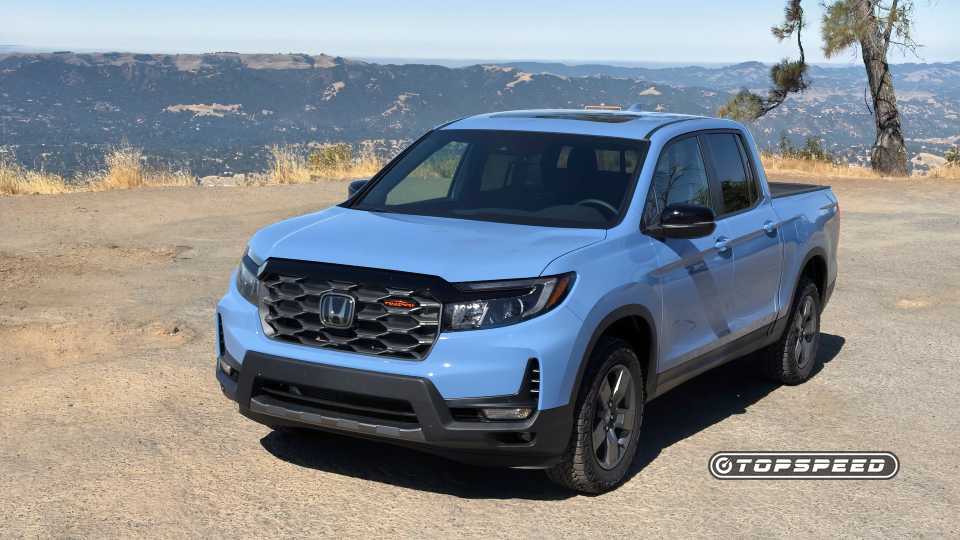
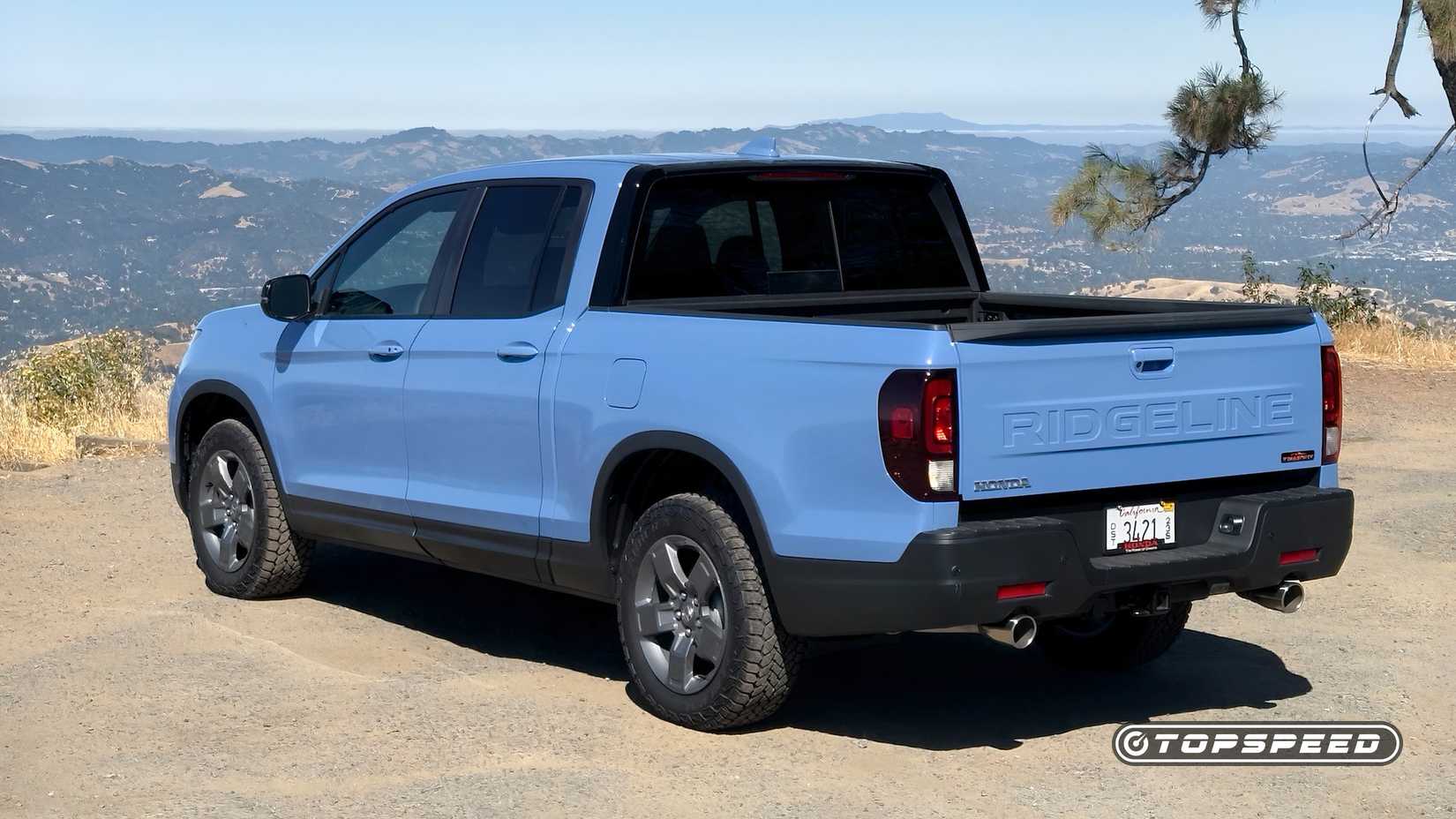
Looking more like a compact SUV with a truck bed than a traditional pickup, the Ridgeline handily bridges the divide between SUVs and pickups. Handsomely styled—in a Honda sort of way—the Ridgeline simultaneously conveys an aura of strength and civility. With that said, aside from the orange badging, the TrailSport package barely changes the outward appearance of the Ridgeline. Most of the modifications reside beneath the skin. These include revised suspension settings, a skid plate underneath the oil pan, and a set of knobby all-terrain tires.
Exterior Dimensions
|
Length |
210.2 Inches |
|
Width |
78.6 Inches |
|
Height |
70.8 Inches |
|
Wheelbase |
125.5 Inches |
|
Front Track |
66.9 Inches |
|
Rear Track |
66.8 Inches |
|
Curb Weight |
4,495 Pounds |
Driving Impressions And Performance
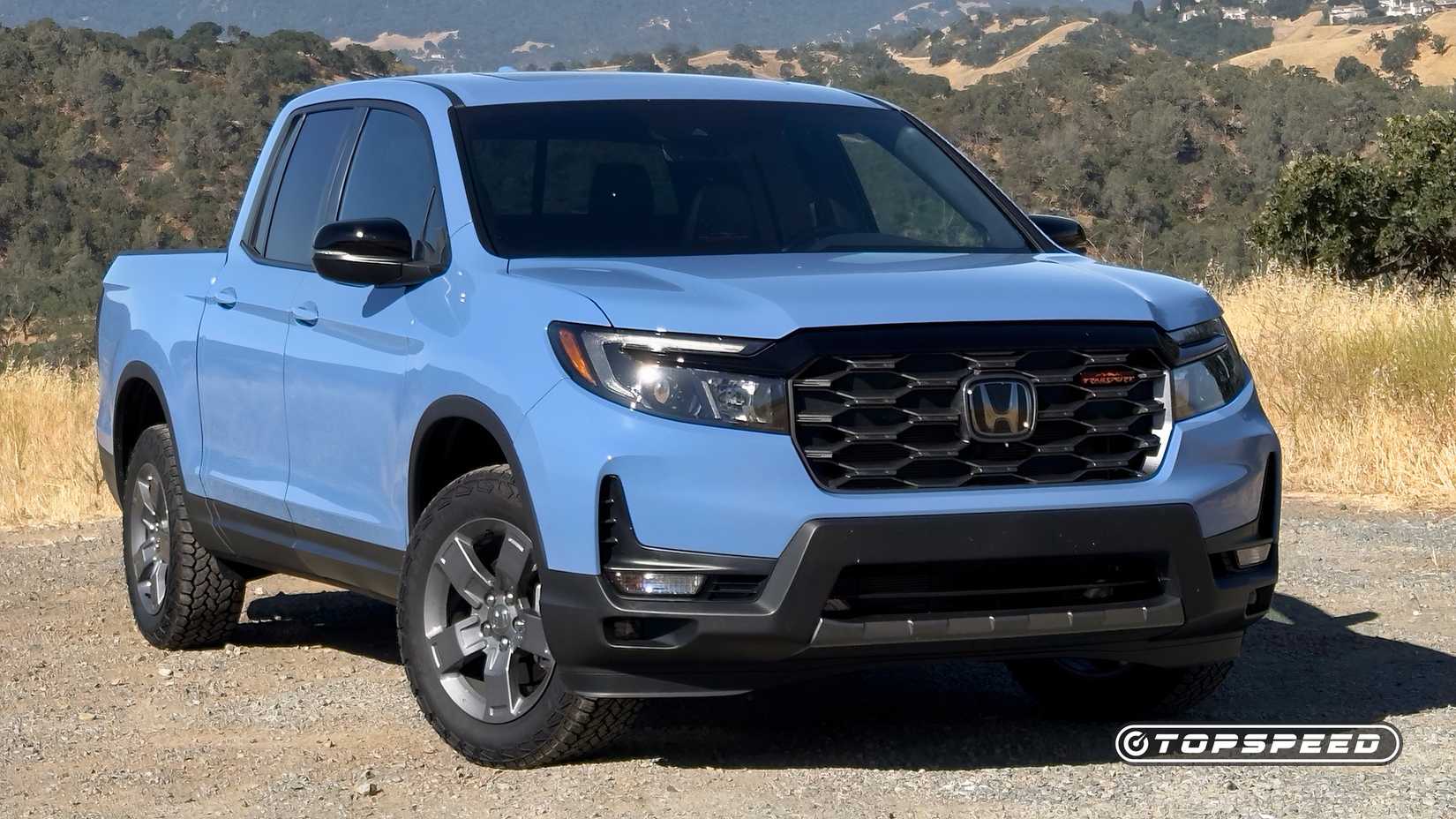
Given those upgrades, one might reasonably expect the TrailSport Ridgeline’s ride, handling, and noise levels to be adversely affected. Happily, though, they are not. The General Grabber A/T Sport all-terrain tires were developed specifically for this application, seemingly to preserve the Ridgeline’s civility on pavement. They don’t “sing” at speed on the highway, nor do they diminish the Ridgeline’s handling characteristics. And yet, they still provide admirable grip when encountering a moderate amount of sand, mud, or snow.
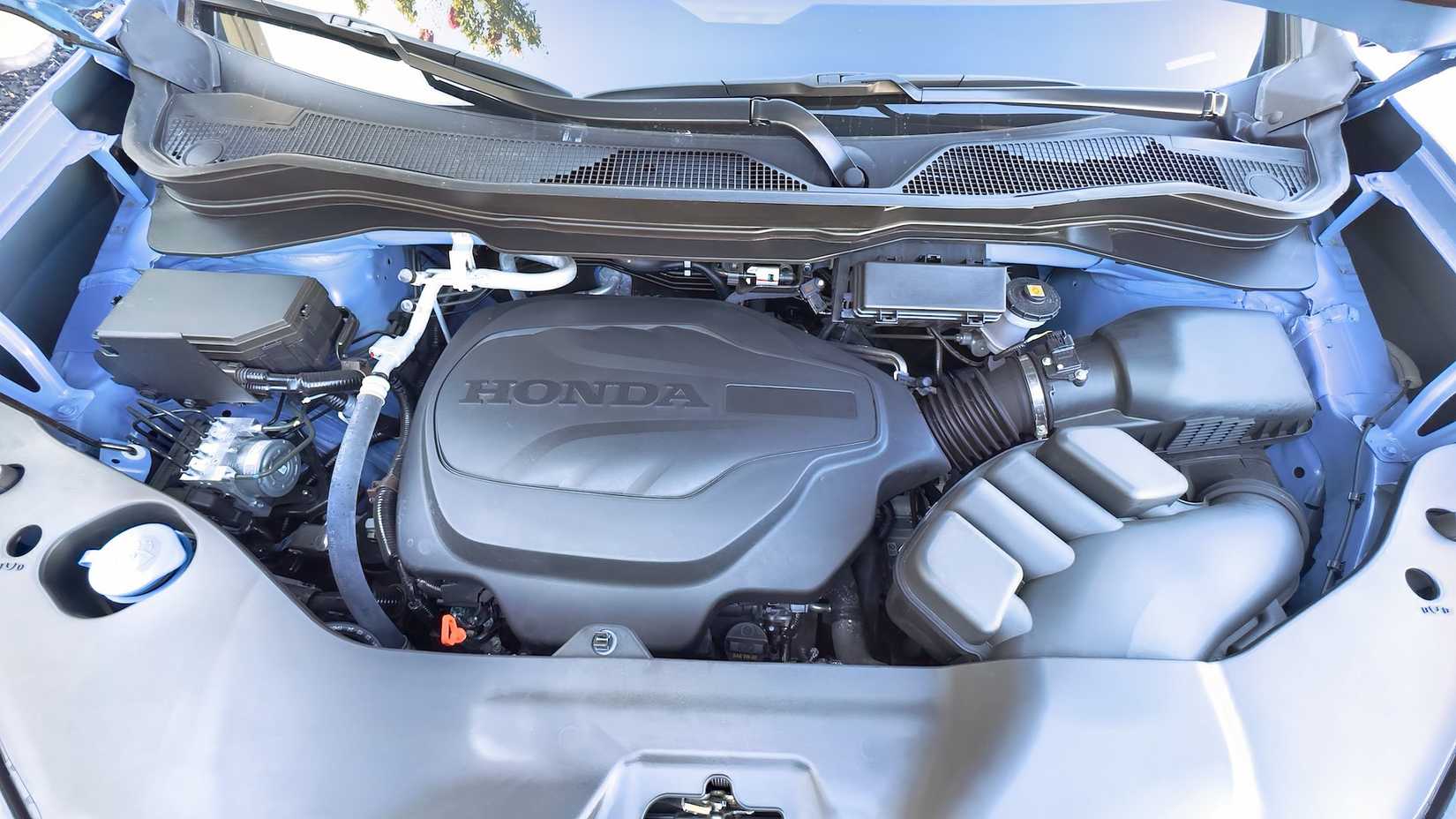
The engine is the same smooth-running 280-horsepower, 3.5-liter V6 found in the base Ridgeline models. With it, I saw six-second runs to 60 from rest. A nine-speed automatic transmission and Honda’s torque vectoring all-wheel drive system complete the powertrain. Running the engine to redline is required to achieve maximum thrust, as it needs 6,000 revs to generate peak horsepower.
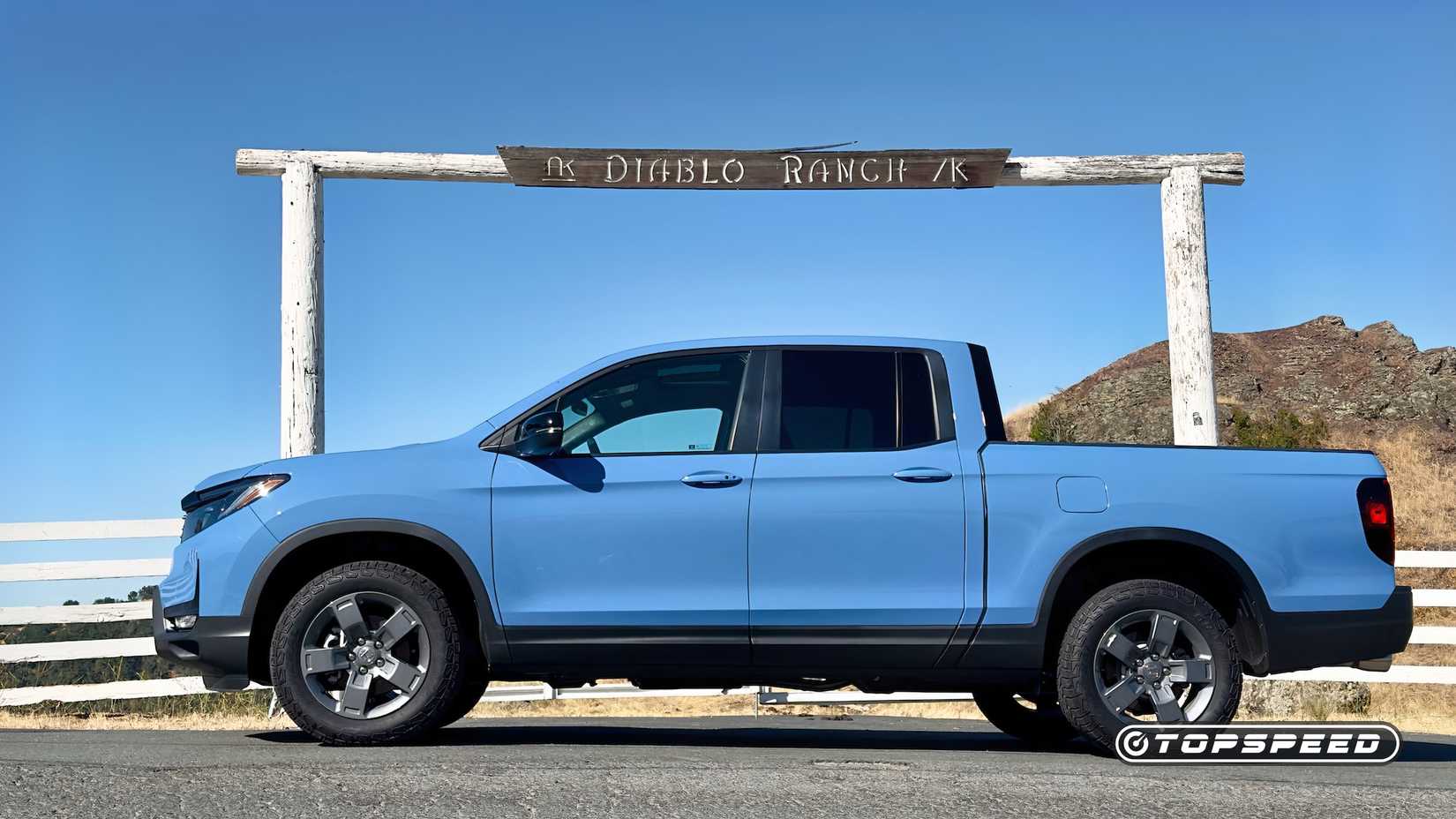
The engine’s full 262 lb-ft of torque comes on at 4,700. Fortunately, the engine winds smoothly to redline and sounds nice doing so. Keeping it real though, you won’t be tackling the likes of the Rubicon Trail in the Ridgeline TrailSport. However, the Hondawillcomport itself proficiently in the types of situations the vast majority of people will ask it to take on.
Performance Specifications
|
Engine |
3.5-liter V6 |
|
Transmission |
Nine-speed automatic |
|
Horsepower |
280 HP @ 6,000 RPM |
|
Torque |
262 LB-FT @ 4,700 RPM |
|
Fuel Economy (CMB) |
21.1 MPG (Observed) |
|
0-60 MPH |
Six Seconds |
|
Top Speed |
130 MPH |
|
Towing Capacity |
5,000 Pounds |
|
Payload Capacity |
1,583 Pounds |
Honda Ridgeline TrailSport Fuel Economy
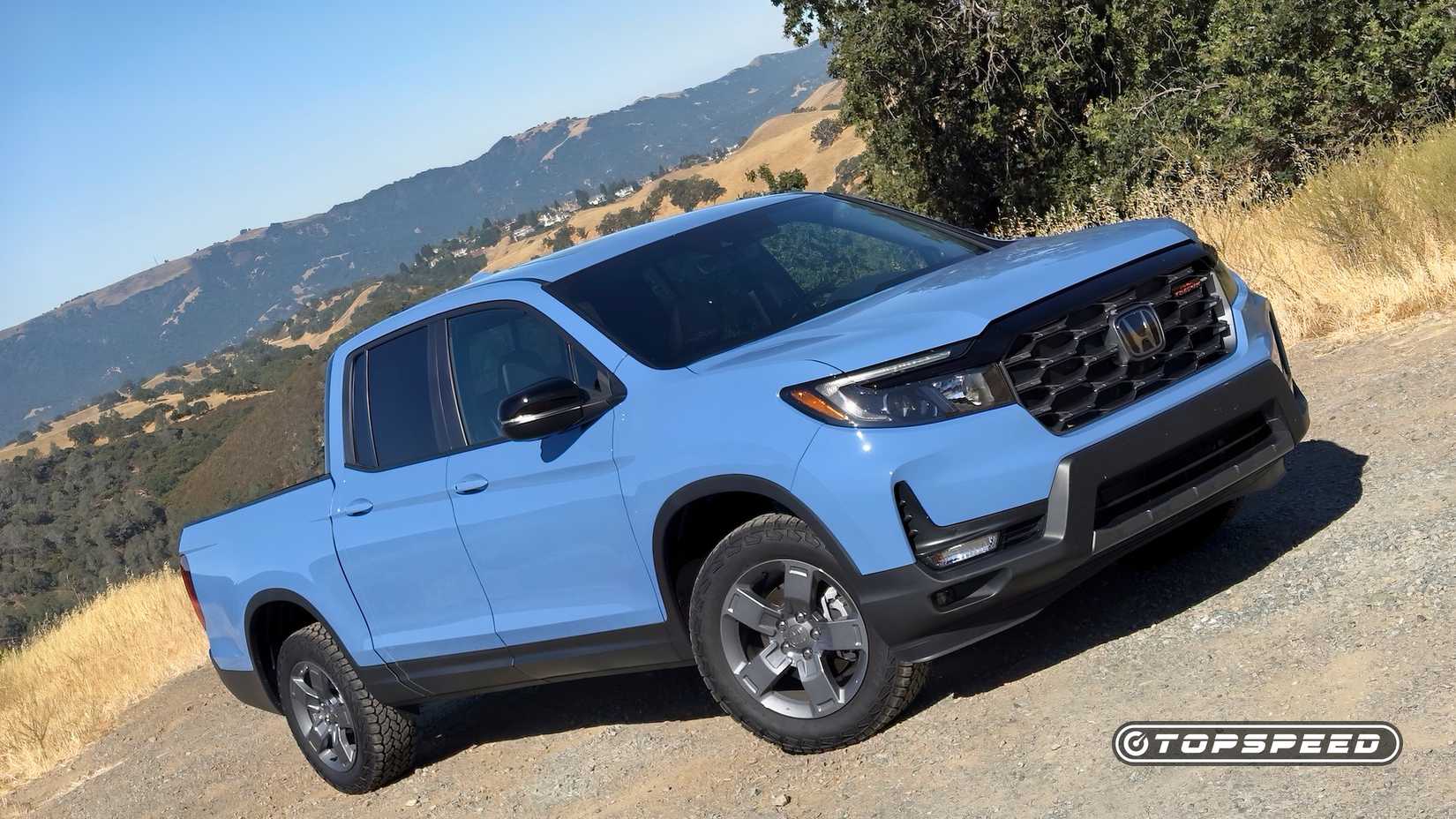
The Ridgeline TrailSport’s EPA fuel economy estimates are 18 mpg in the city, 23 on the highway, and 20 combined. Honda’s Variable Cylinder Management system works in conjunction with its Intelligent Variable Valve Timing and Lift Electronic Control system (i-VTEC) to make the V6 operate like a three-cylinder engine in steady-state cruising and under light acceleration to reduce its fuel consumption. As a result, the Ridgeline’s trip computer said the sophisticated pickup delivered 21.1 miles for each gallon of fuel it consumed under my stewardship.
|
City |
Highway |
Combined |
|
|
EPA Rated Economy |
18 MPG |
23 MPG |
20 MPG |
|
Fuel Economy As Tested |
21.1 MPG (Observed) |
Interior Design And Comfort
Aptly delivering a well-concocted blend of comfort and practicality, the Ridgeline TrailSport’s seats are upholstered in leather with orange contrast stitching. TrailSport-specific interior features include a power moonroof, a heated steering wheel, power-adjustable heated front seats, and driver’s seat memory settings. You’ll also find heavy rubber TrailSport monogrammed floor mats along with orange stitching on the steering wheel and door panels.
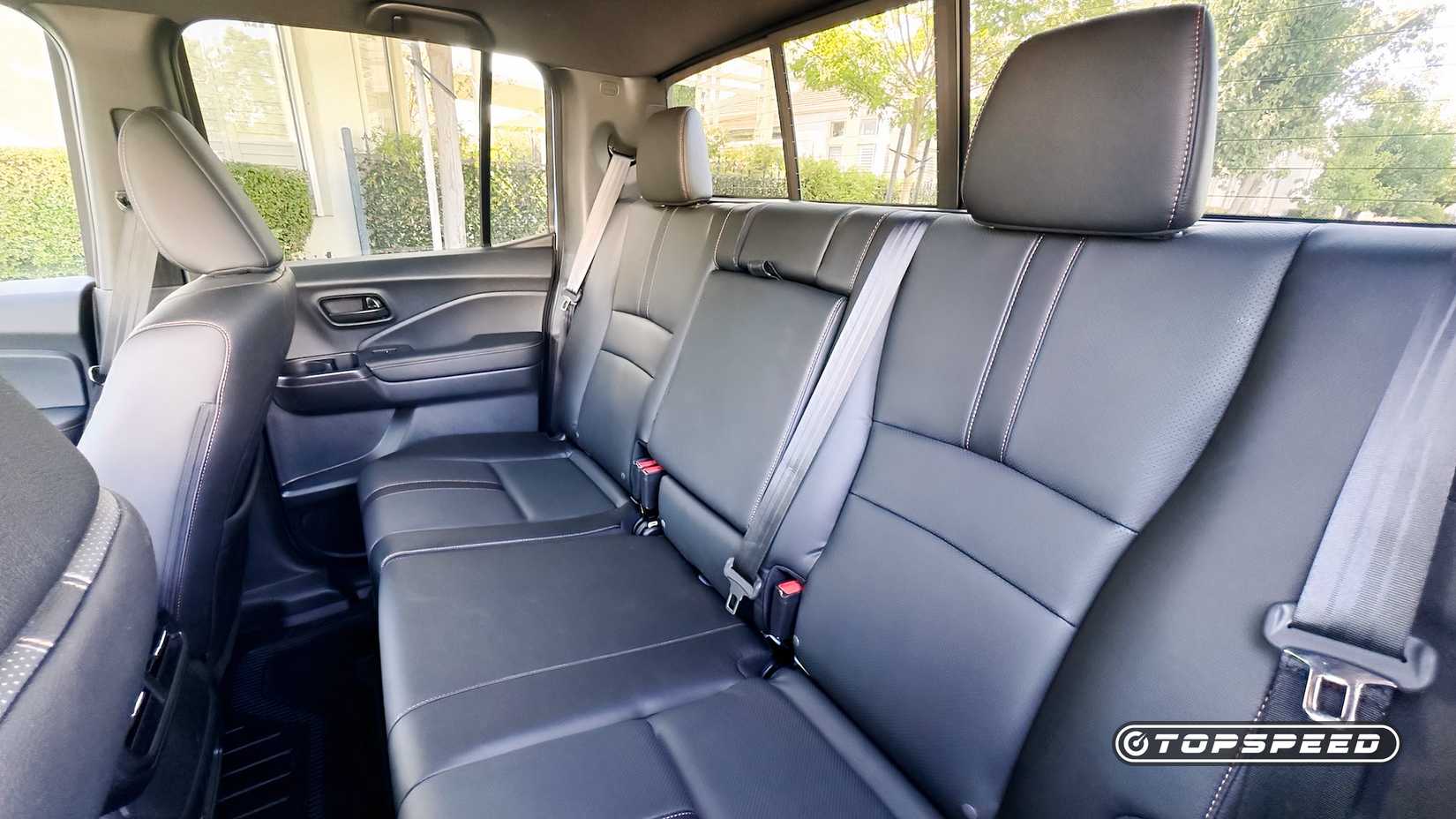
The back seat will accommodate two grownups, but the rear doors could open wider to facilitate easier ingress and egress. The rear seat could also be a bit more comfortable, but it does a couple of neat cargo management tricks I’ll get into a bit later. The driving position is well sorted, with great outward visibility and an unobscured view of the instrumentation. All primary controls are well-marked and logically positioned.
Interior Dimensions
|
Front |
Rear |
|
|
Headroom |
39.5 Inches |
38.8 Inches |
|
Shoulder Room |
62 Inches |
61.5 Inches |
|
Hip Room |
59.1 Inches |
56.6 Inches |
|
Legroom |
40.9 Inches |
36.7 Inches |
Technology And Ease Of Use
The obligatory touchscreen—here measuring nine inches diagonally—dominates the center stack. The operating system it displays supports Bluetooth as well as wireless CarPlay and Android compatibility. Navigation is standard in TrailSport models, along with a wireless charging pad. By the way, that touchscreen will also mirror your smartphone. Standard safety features include adaptive cruise control, lane-keeping assist, and blind-spot monitoring. Front and rear parking sensors are numbered among the Ridgeline’s options.
Cargo And Storage Space
Ridgeline’s tailgate is capable of swinging open like a door or lying flat like a traditional tailgate. The 5.3-foot truck bed is fitted with tie-down hooks, lighting, and a storage compartment in its wall. There is also a lockable hidden compartment beneath the bed, which offers 7.3 cubic feet of storage space.
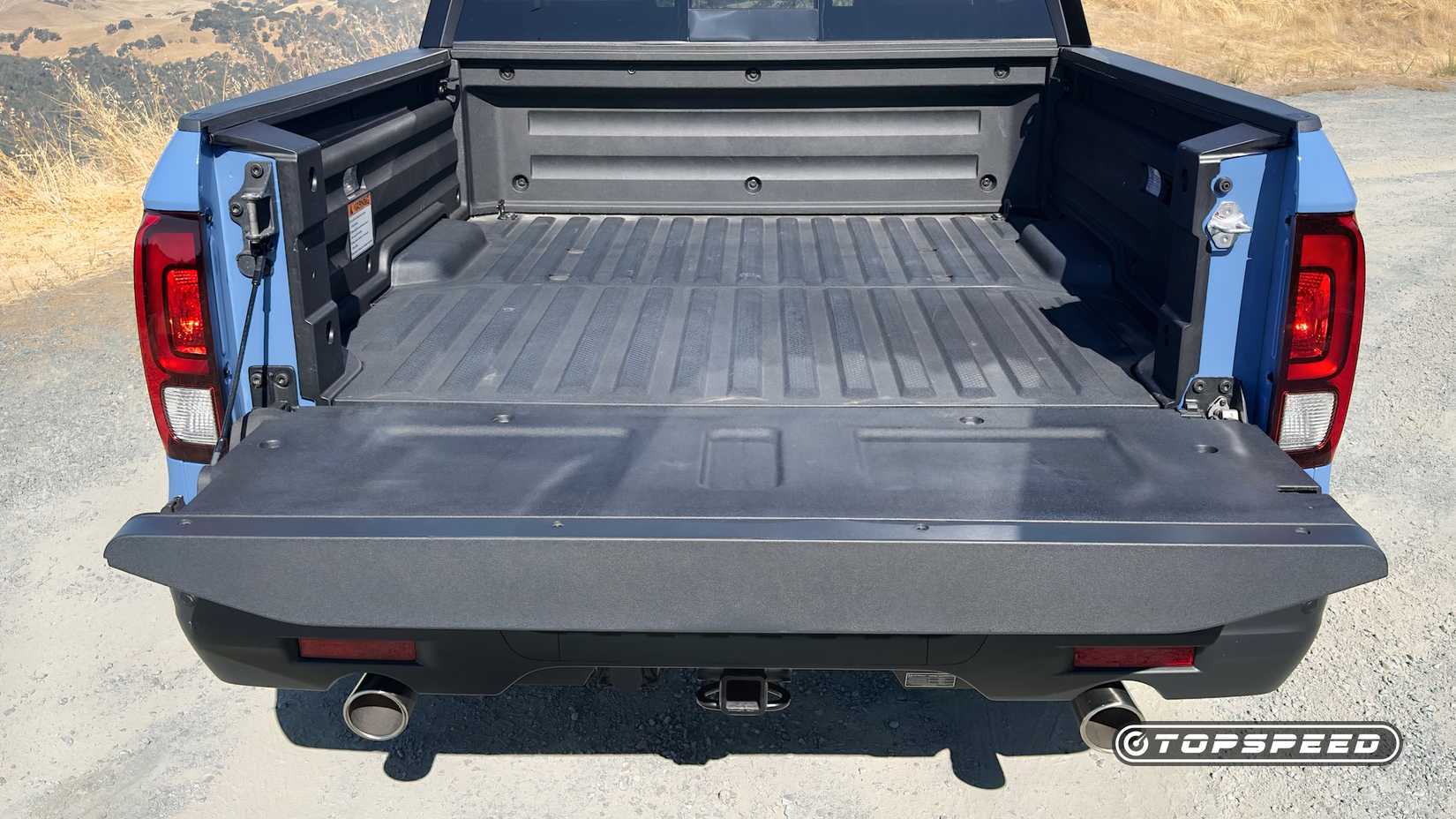
At Lowe’s, the Ridgeline handily accepted a 4×8 sheet of plywood. Inside the cabin, the rear seat flips up to accommodate cargo, and there’s enough room underneath the seat to store smaller items out of sight when it is deployed. The Ridgeline TrailSport will tow up to 5,000 pounds and offers a 1,521-pound payload capacity.
|
Cargo Capacity |
33.9 Cubic-Feet |
|
Cargo Bed Length |
64 Inches |
2026 Honda Ridgeline TrailSport vs. Its Competitors
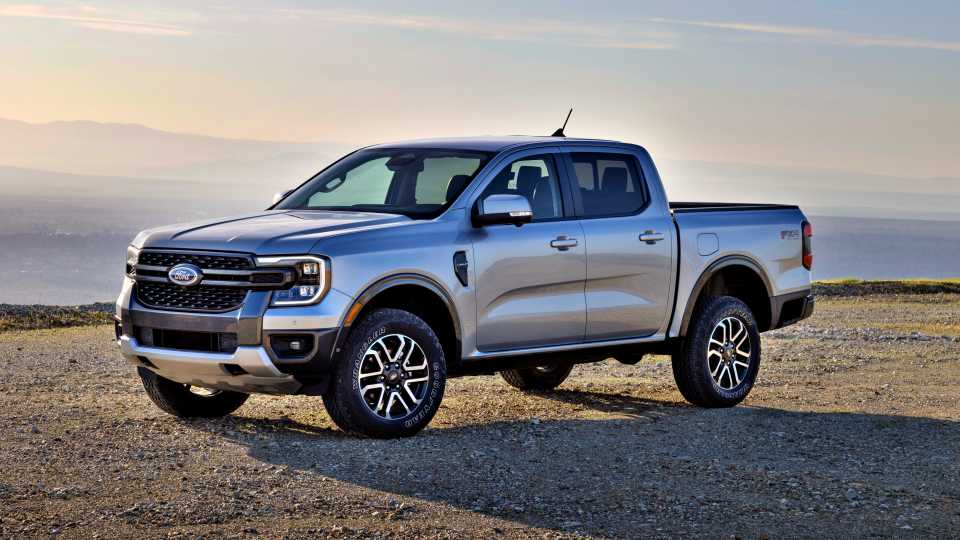
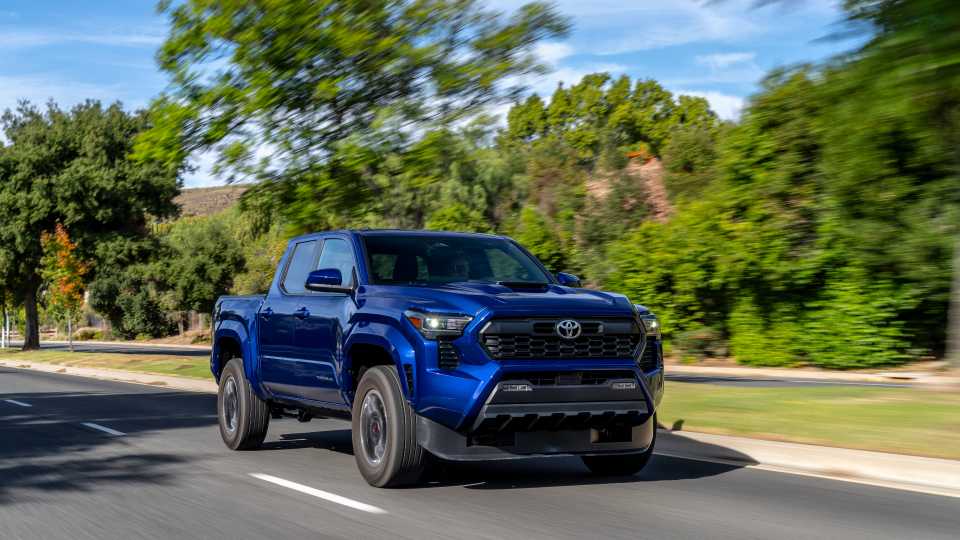
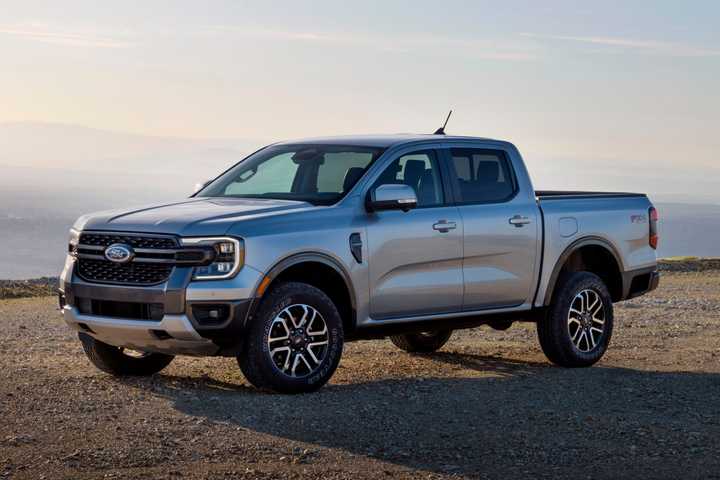
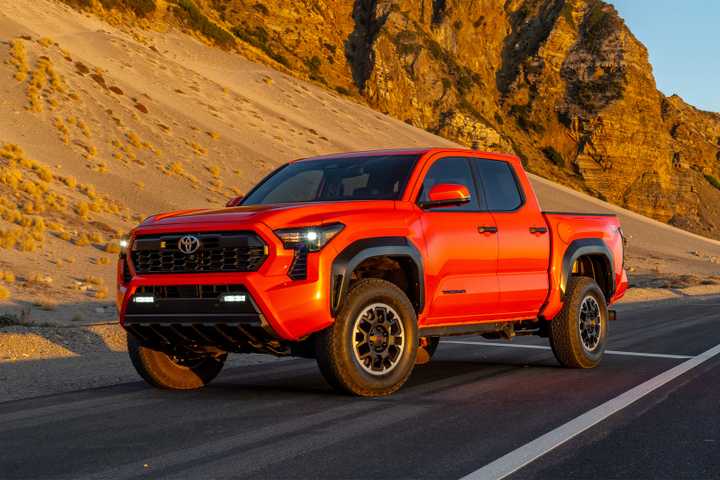
The Ridgeline TrailSport’s most formidable competitors are the Ford Ranger Lariat 4×4 with a starting price of $47,455, and the Toyota Tacoma TRD Sport, which starts at $40,315. The Ridgeline stands out here for pavement-focused drivers because of its car-like ride and handling, owing to its unibody construction. However, while the Ranger and Tacoma do employ body-on-frame platforms, they also exhibit competence on pavement—slightly more so the Toyota than the Ford—while being far more capable off-road than the Honda.
How The Honda Ridgeline TrailSport Compares To The Ford Ranger Lariat 4×4

- Base Trim Engine
-
EcoBoost 2.3L ICE
- Base Trim Transmission
-
10-speed automatic
- Base Trim Drivetrain
-
Other
- Base Trim Horsepower
-
270 HP @5500 RPM
- Base Trim Torque
-
310 lb.-ft. @ 3000 RPM
- Base Trim Fuel Economy (city/highway/combined)
-
21/25/22 MPG
- Base Trim Battery Type
-
Lead acid battery
- Make
-
Ford
- Model
-
Ranger
The Ridgeline TrailSport represents an entirely different approach to the idea of a midsize pickup truck. The Ridgeline is optimized for comfort, passenger space, and day-to-day utility, while the Ranger is tailored more toward towing and ruggedness. In terms of output, the Ranger Lariat 4×4 gets 270 horsepower and 310 lb-ft of torque from its turbocharged 2.3-liter inline four. Full disclosure, though, the Ford is the more expensive offering, but it also tows up to 7,500 pounds and can handle a 1,788-pound payload.
How The Honda Ridgeline TrailSport Compares To The Toyota Tacoma TRD Sport
- Base Trim Engine
-
2.4L I-FORCE I4 ICE
- Base Trim Transmission
-
8-speed automatic
- Base Trim Drivetrain
-
Rear-Wheel Drive
- Base Trim Horsepower
-
228 HP @6000 RPM
- Base Trim Torque
-
243 lb.-ft. @ 1600 RPM
- Base Trim Fuel Economy (city/highway/combined)
-
20/26/23 MPG
- Make
-
Toyota
- Model
-
Tacoma
- Segment
-
Midsize Pickup Truck
In a direct comparison between the Ridgeline TrailSport and the Tacoma TRD Sport, the Honda is the better choice if you want a comfortable, AWD-based truck that drives more like a car or an SUV. The Tacoma TRD Sport is more truck-like with stronger towing, a more traditional truck feel, and more off-road-oriented hardware. The Toyota is also more powerful than the Honda, producing 278 hp and 317 lb-ft of torque from its 2.4-liter turbocharged four. Additionally, the Tacoma will tow up to 6,400 pounds and haul a 1,700-pound payload.
Our Recommendation For Which Model You Should Buy
Between these three, the Honda Ridgeline TrailSport serves as the most comfortable and practical daily driver, with what is most aptly termed soft road capability. The Toyota Tacoma TRD Sport’s aggressive styling and street-tuned handling are also desirable, albeit in a different way. Meanwhile, the Ranger Lariat 4×4 delivers the best technology suite, as well as the highest maximum towing power. The Ford also offers the purest expression of a pickup truck among this group.
Thus, as is so often the case, the best choice really comes down to your particular set of needs and proclivities. If you value quiet and comfort more than sheer ruggedness, go with the Honda. The Toyota nicely blends the attributes of the Honda and the Ford but doesn’t exceed them in any category, making it perhaps the best of both worlds. Meanwhile, the Ford is the one to choose if you need a mid-size offering that delivers like a traditional pickup truck.