
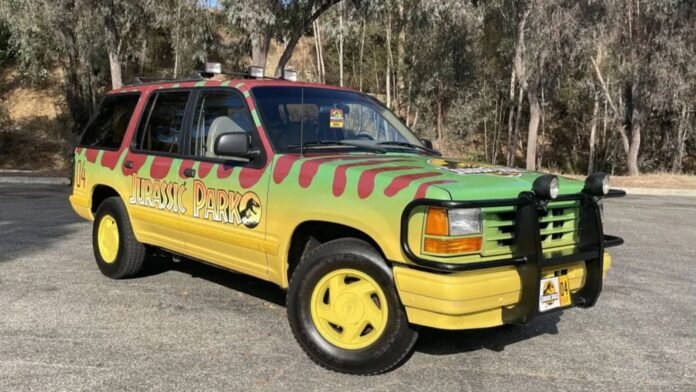
In a world where the average new SUV is packed to the ceiling with screens, driver aids, subscription prompts, and complexity that rivals a nuclear sub, and all averaging around $60,000 for the pleasure, there’s something undeniably compelling (or tempting) about the SUVs of the 1990s. These were machines built when an SUV was little more than a truck with a roof on the back half, not a rolling supercomputer worshiping at the altar of luxury. Generally speaking, they’re simple, analog, easy to work on, and — in many cases — still practical for family use. At a time when fewer households can afford a new car, the old school has never looked so relevant.
In 2026’s chaotic economy, where car prices have stretched past many budgets, nostalgia isn’t just a fuzzy feeling but a cultural anchor that reminds us that America hasn’t always been like it is now. These ’90s SUVs offer more than cargo space and 4×4 cred. They represent a counter-argument to the homogenized, digital modern fleet dominating our roads and parking lots: vehicles you can fix in your driveway, understand without a manual, and — with patience — keep running long past the dream of value retention. What follows aren’t museum pieces. These are machines that, with sensible maintenance and clear expectations, can still deliver utility to families today.
Second-Generation Toyota 4Runner
The 4Runner Will Never Be Irrelevant
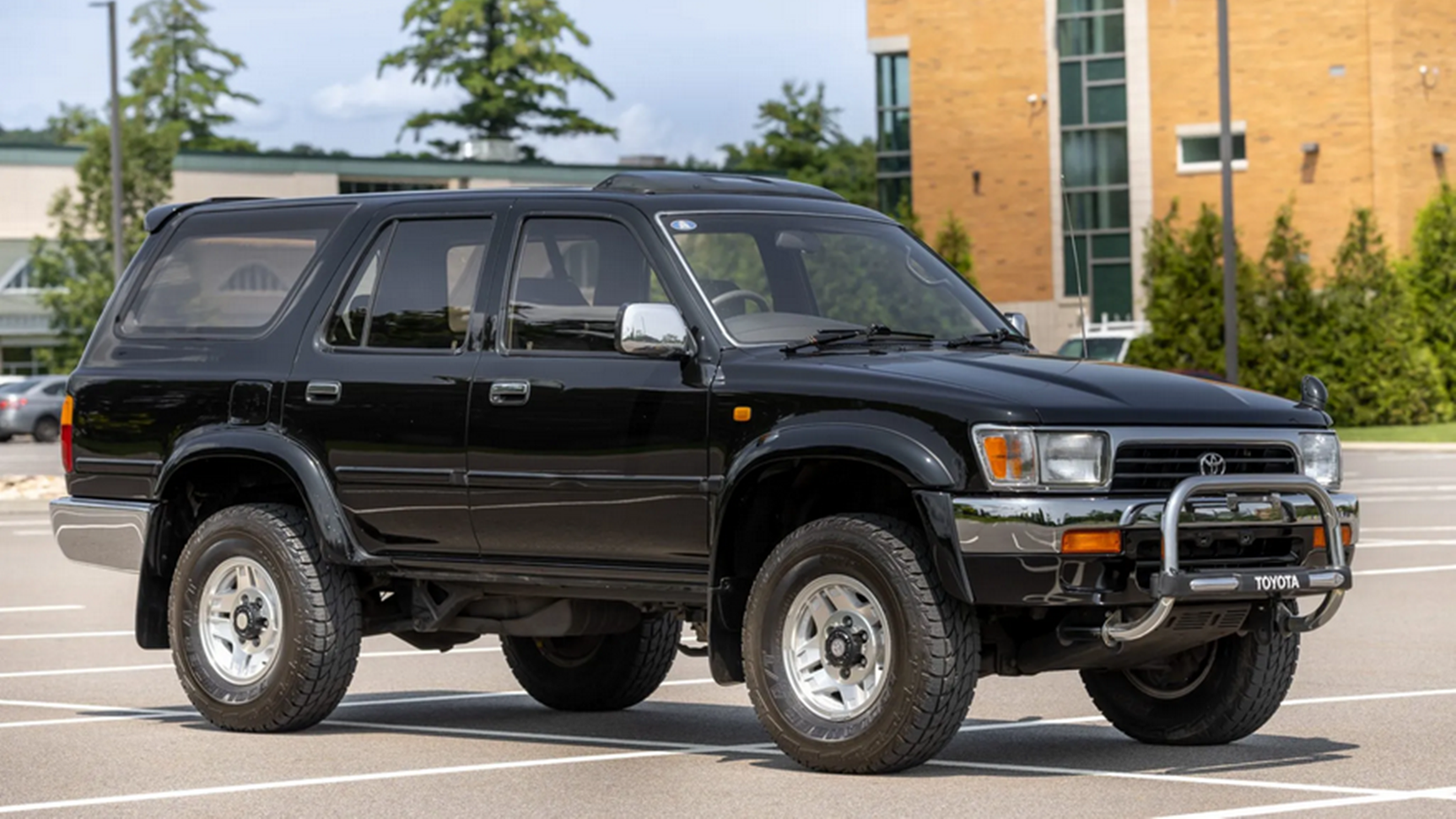
The second-gen (1990-1995) Toyota 4Runner carries a reputation that straddles two eras: part old-school truck, part foundational SUV. Built on a body-on-frame chassis shared with the Tacoma and typical Toyota toughness of the era, it trades refinement for predictability. Its simple powertrains — whether the 2.4-liter four or the more common 3.0/3.4-liter V6 — are easy to understand and maintain without specialized diagnostic gear. For families who grew up on dashboards without a tablet’s worth of touchscreens, the 4Runner feels immediately familiar.
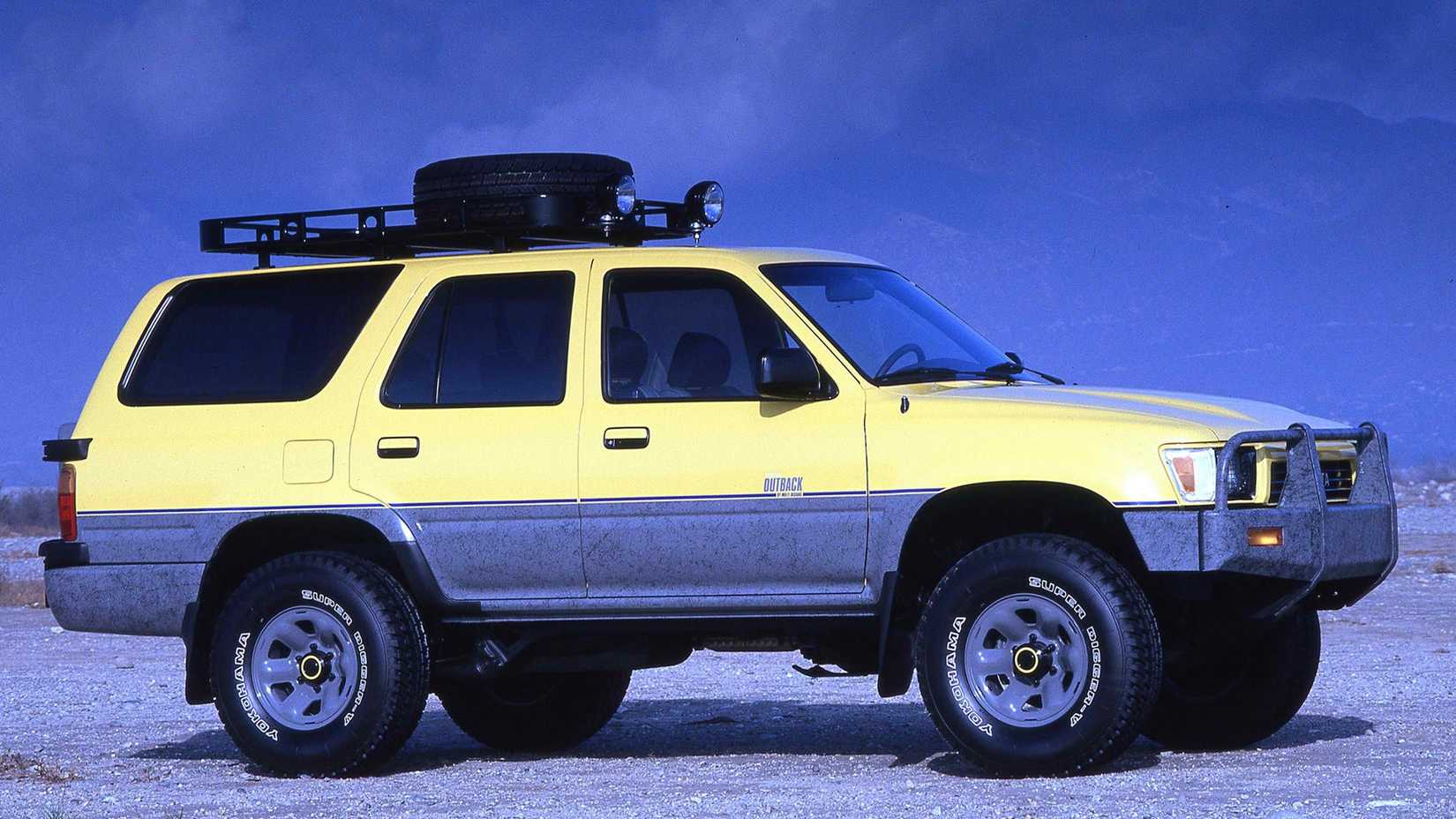
Modern reviewers and owners alike praise its ability to rack up miles with regular maintenance, and owner satisfaction ratings from sources tracking consumer sentiment show very positive long-term impressions from original owners and revivalists alike. Many report significant mileage and continued usefulness despite age, often accompanied by nostalgic attachments that inform why these trucks still command interest decades later. Yes, fuel economy is rough, and digital creature comforts haven’t even been dreamt up yet. Yet these ’90s SUVs still host mega cargo room that swallows strollers and suitcases, mechanical simplicity that doesn’t demand dealer visits for minor gremlins, and a presence that feels like old reliability tested by miles and time rather than marketing hype.



Second-Generation Jeep Cherokee XJ
The Hard Box With Character And Backseats
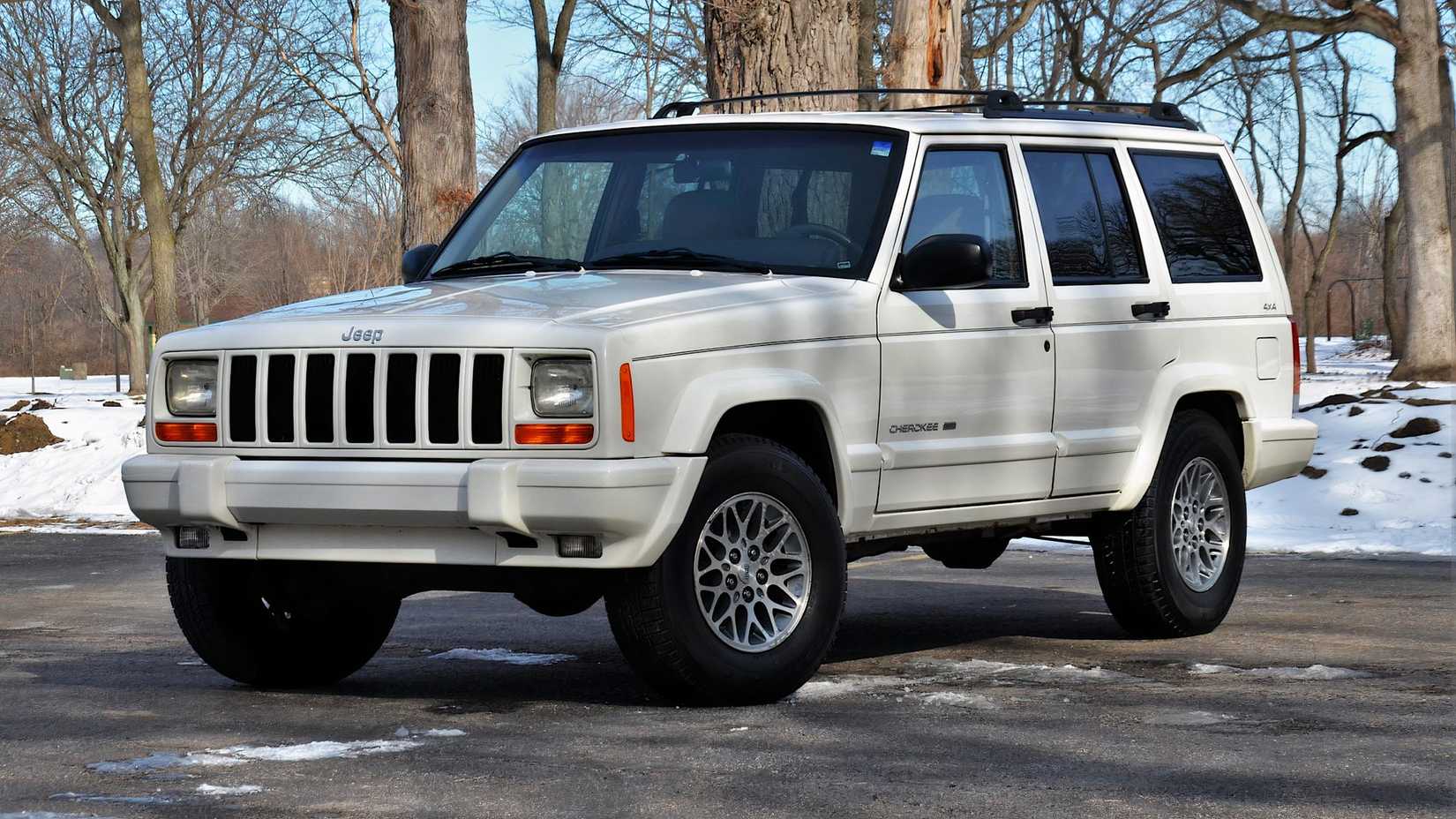
The Jeep Cherokee XJ is one of the most recognizable SUVs of the 90s for good reason: it’s a practical, straightforward design with a strong footprint in both utility and character. The XJ’s unibody frame, while simple, provided a blend of “carlike handling” (for the time) and 4×4 SUV capability that resonated with families and adventurers alike. Under the hood, the 4.0-liter inline-six — an engine that inspired countless aftermarket swaps and long-life tales — is often cited as bulletproof when treated with basic maintenance.
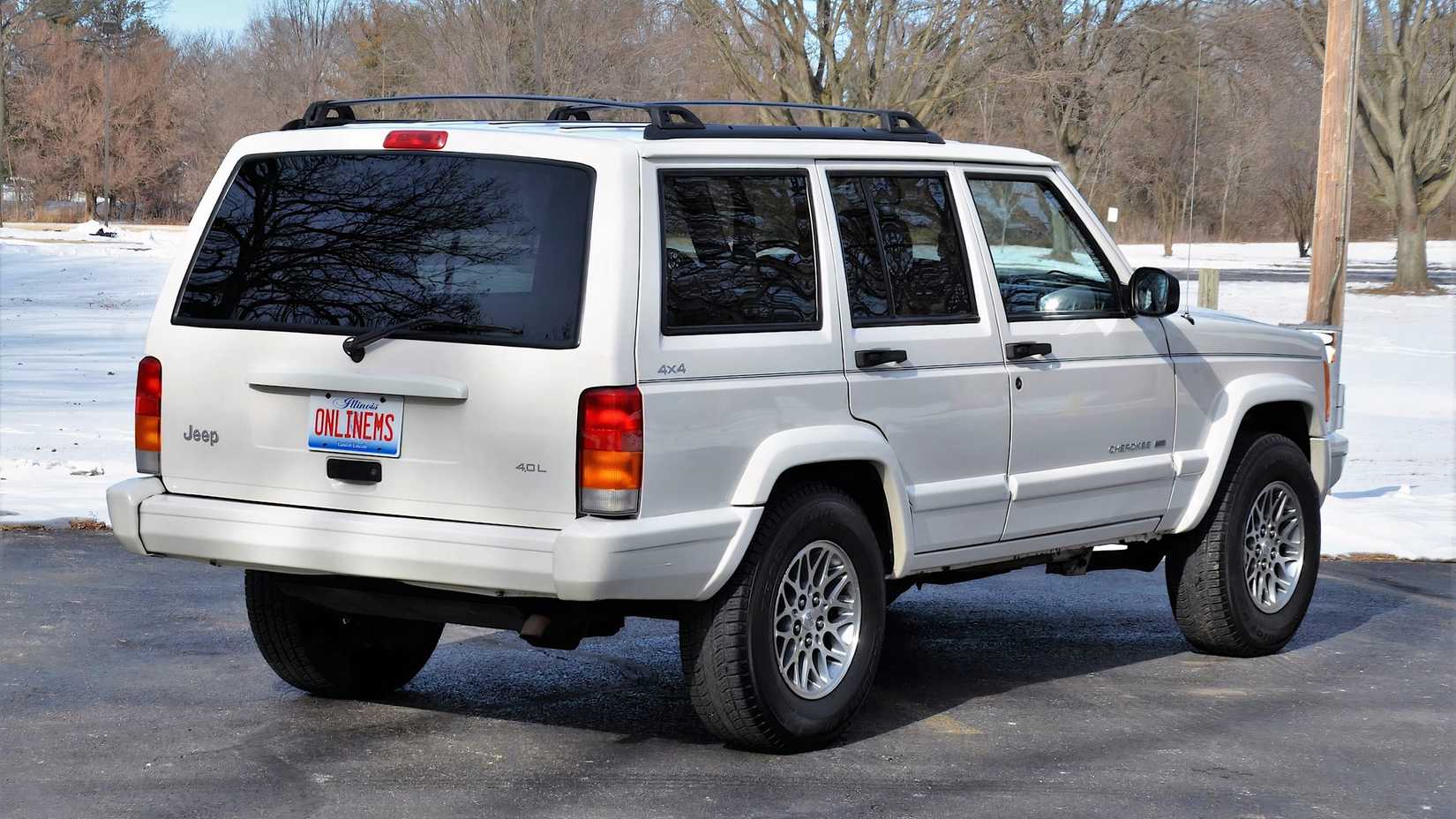
Sure, the Cherokee isn’t super modern or refined or classy. Its safety and comfort levels aren’t up to today’s standards, and if you’re hauling kids in high-speed traffic daily, a ’90s SUV will never live up to a new crossover’s refined ride and crash-test ratings. But these aren’t normal times, and for families in 2026 who need a capable second vehicle, weekend warrior, or budget-conscious primary rig, the Cherokee feels like a legitimately decent option by being simple, easy to repair, affordable, and full of character. Not for nothing, there’s also a larger social thread here; as digital overload creeps into every cabin, the XJ’s analog charms — simple HVAC sliders, mechanical linkages, no screens to freeze or confuse — start to feel less like a compromise and more like a refuge.
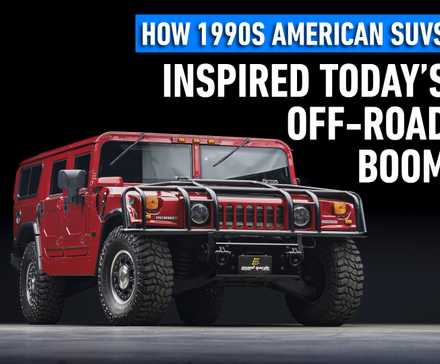
How 1990s American SUVs Inspired Today’s Off-Road Boom
There’s a reason SUVs continue to dominate most of the automotive market as a whole. The 1990s had a serious influence.
Eighth-Generation Chevrolet Suburban
The Ancient Giant That’s Still Going
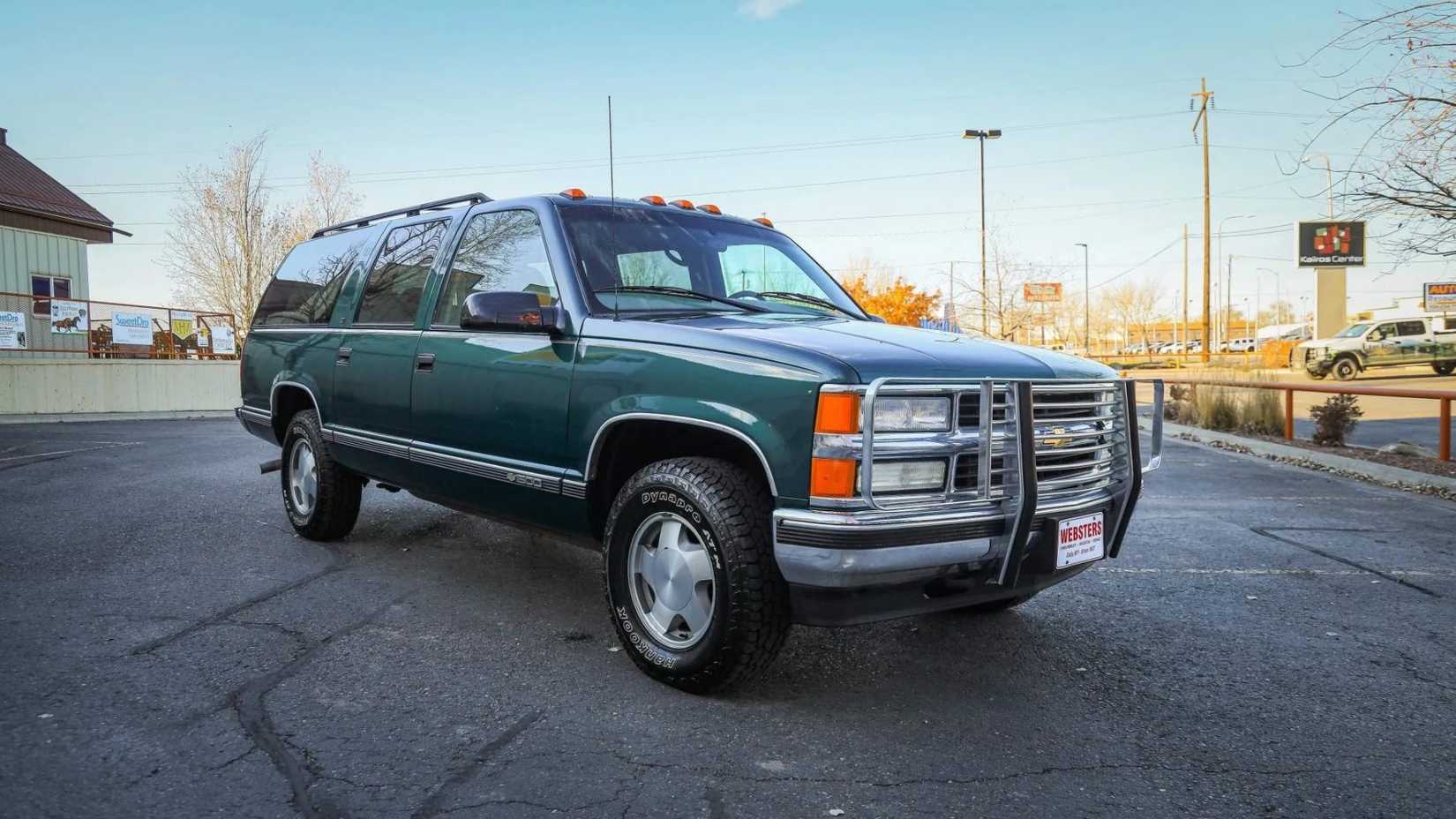
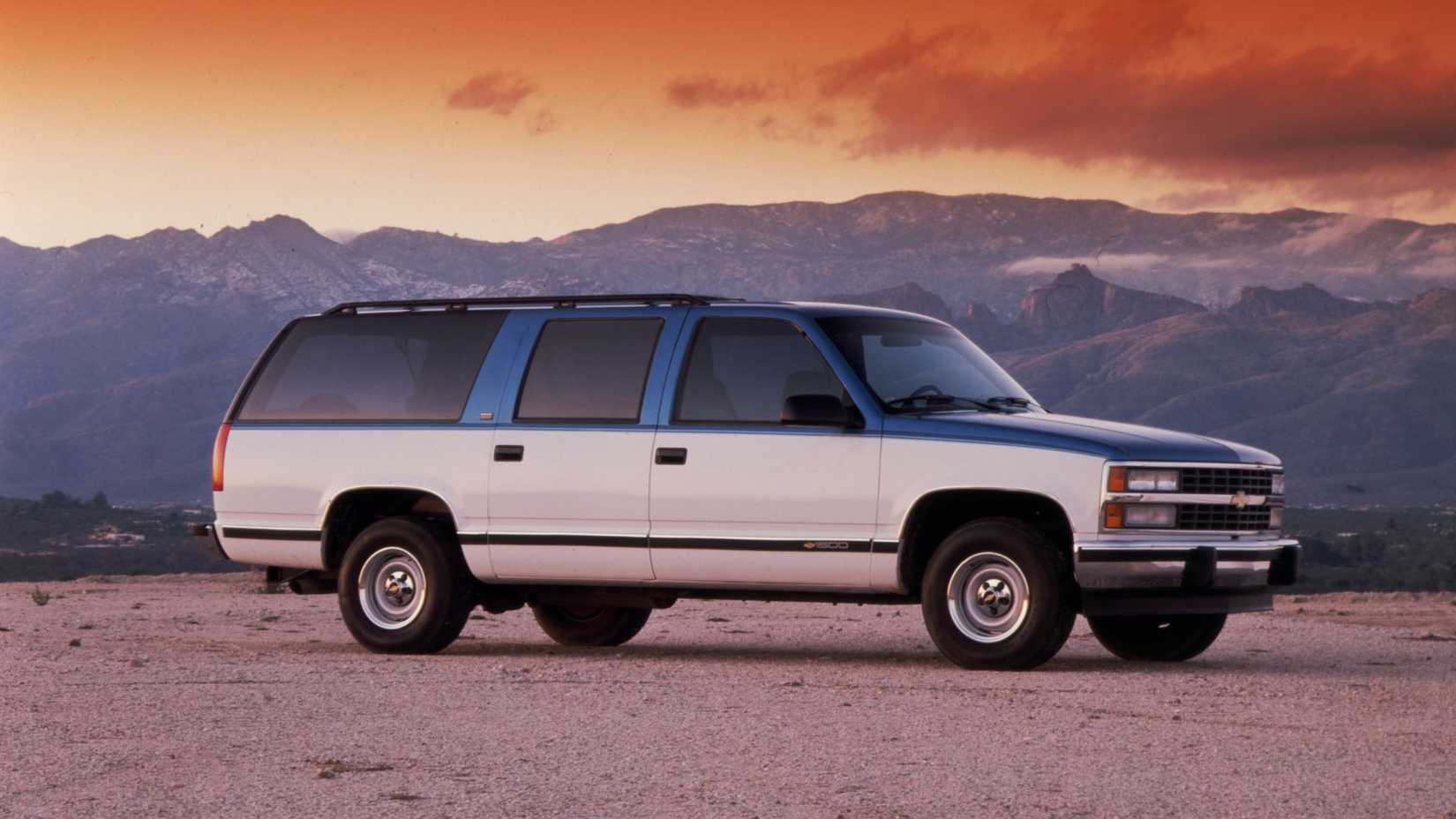
If there was ever a ’90s SUV built specifically for family lore-building, it was the Chevrolet Suburban. This eighth-generation (1992-1999) behemoth became the formula for “everyone and everything” transportation: cavernous interior, seating for up to nine, and V8 grunt that could haul toys, trailers, and human beings in equal measure. With every inch of steel and chrome, the Suburban was engineered to be a hauler first and a commuter second.
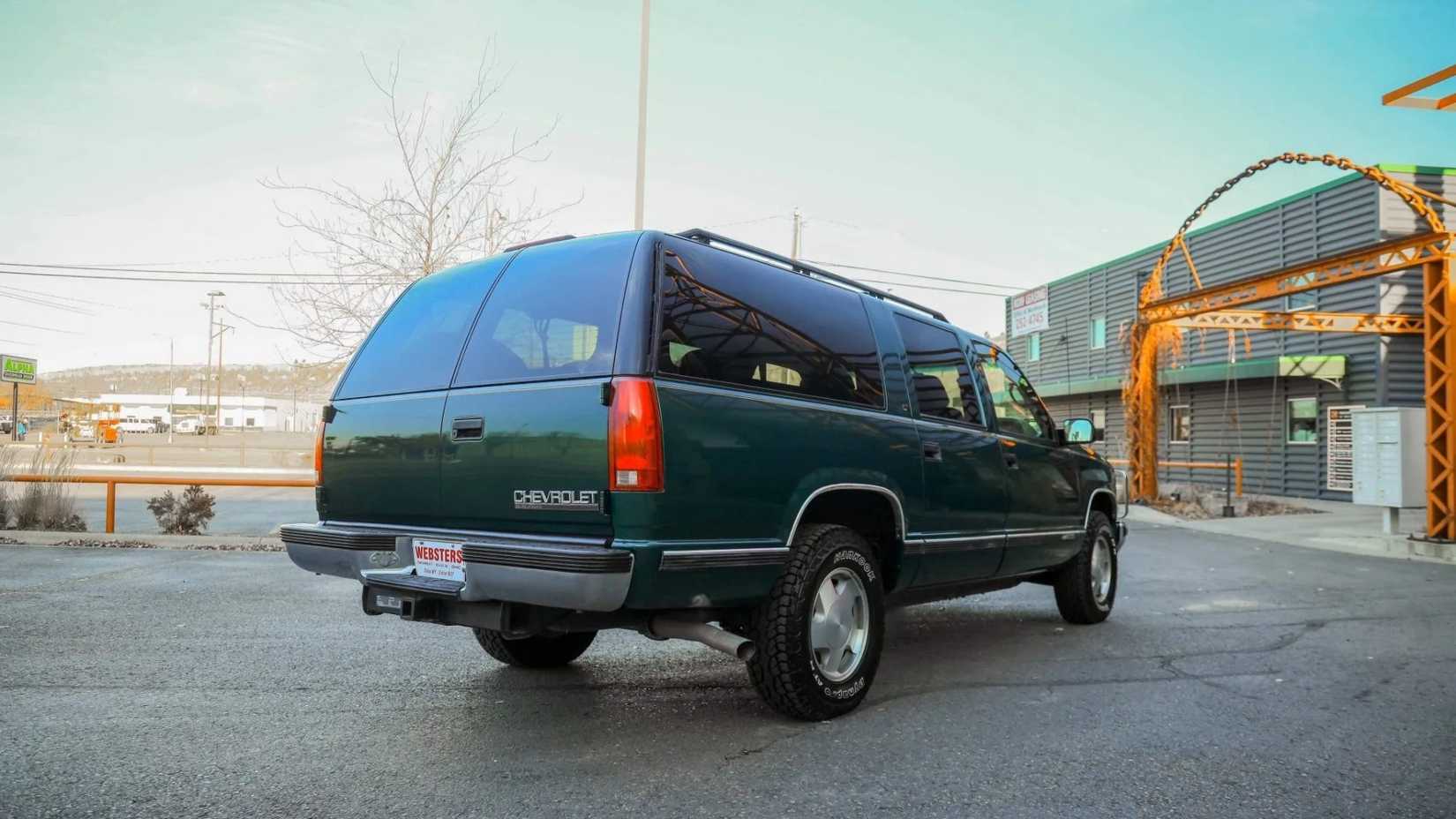
Owners, like me, who keep these trucks alive in 2026 do it because they need room and torque that modern compact SUVs can’t match — a full-size roof rack, boat on the hitch, ski bags in the back, and peace of mind that everything fits without spending $60,000. These budget machines are roving family command centers. Yes, fuel economy is wild by today’s standards, and electronics are sparse, but families who grew up with one remember exactly why they mattered. There’s a visceral confidence in seeing a mammoth silhouette in your mirrors that today’s LED grids and gimmicky tech can’t touch. Critically, real-world owner feedback and long-term data indicate that — when maintained — these trucks often shrug off miles and weather with grace, reinforcing that ’90s engineering wasn’t just about power, but about dependable utility.
Lexus LX (J100)
Luxury Ruggedness For Adventure Families On A Budget
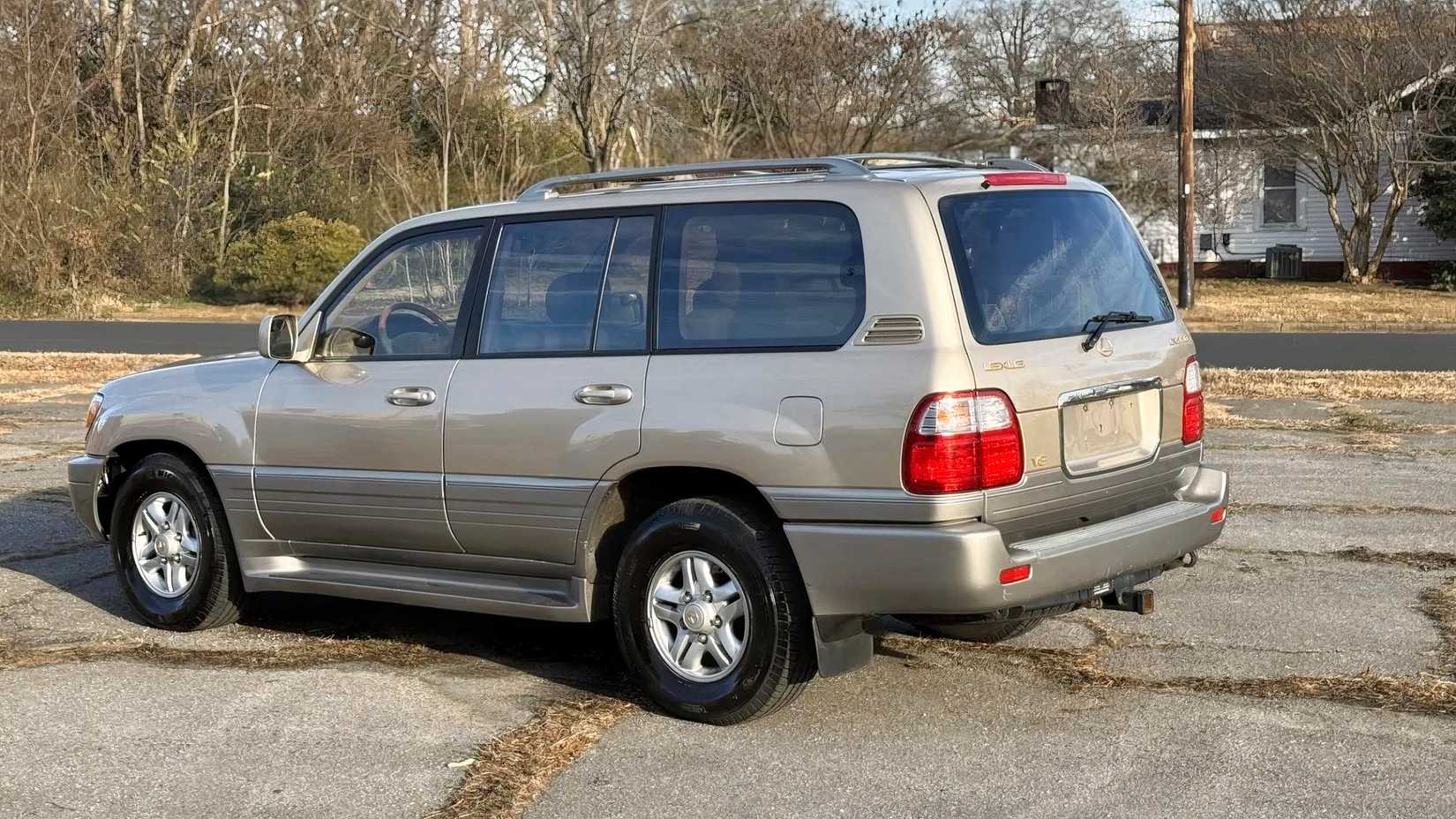
In the late 90s, Lexus took Toyota’s Land Cruiser bones and added a layer of luxury that felt almost subversive for the era. The J100 LX arrived with either a 4.7-liter V8 or a V6 of the same displacement, plenty of torque, and an interior that didn’t make you feel like you were perched on a pickup frame. Its engineering pedigree comes straight from Toyota’s famously tough 4×4 lineage, and period quality awards from J.D. Power and other testers underscore that this wasn’t a half-hearted luxury attempt — it was serious capability wrapped in leather and wood trim.
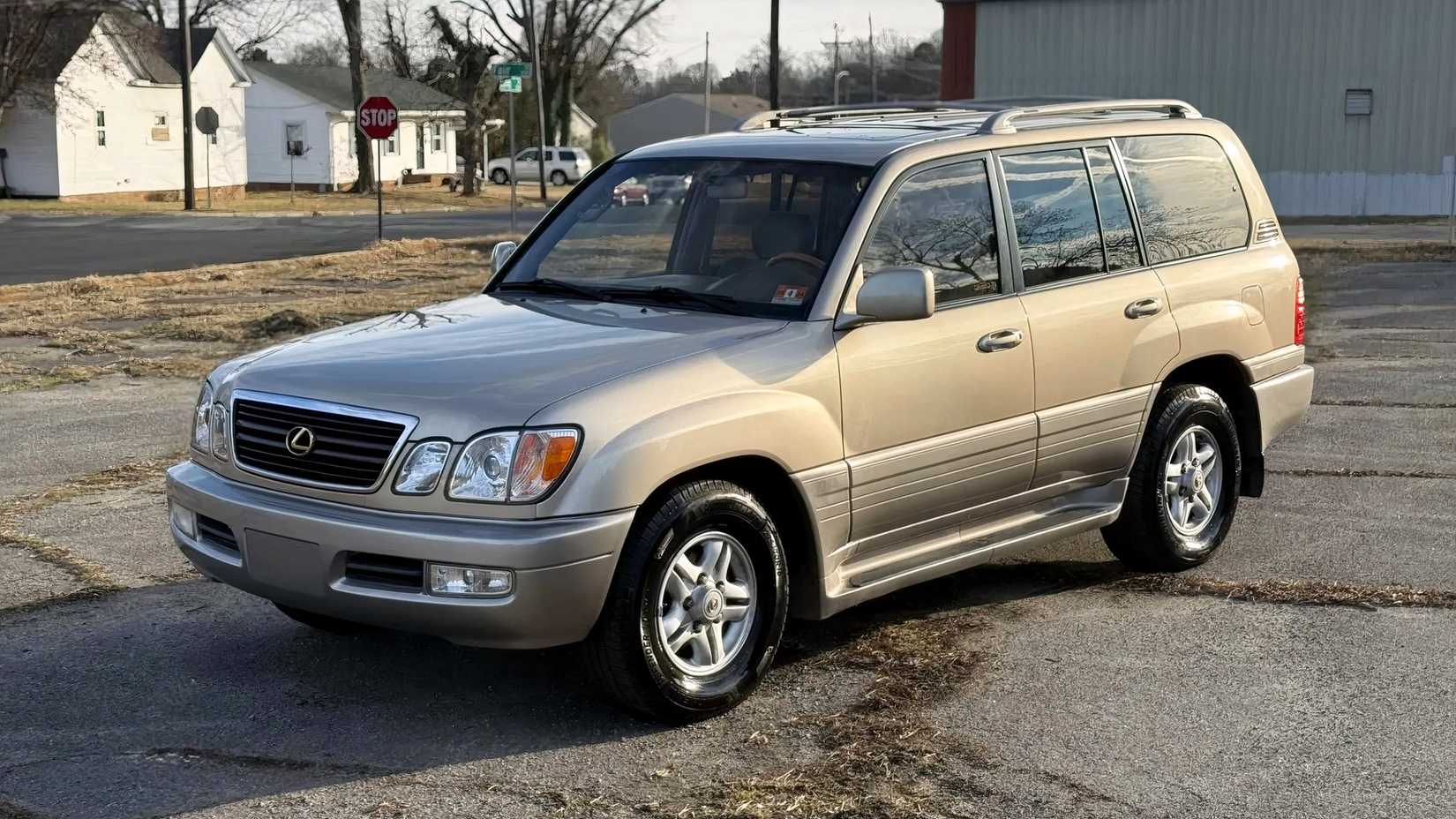
For families, this SUV was a proper first: a vehicle that could roam backcountry trails or marina parking lots with equal authority, and do so with fewer rattles and complaints than typical trucks of the era. It bridged the gap between analogue toughness and creature comforts that still feel satisfying two decades on. In 2026, the LX is still a compelling choice for those who want off-road capability, luxury, all in a three-row SUV that costs under $20,000 today. That said, its longevity in family service today depends heavily on maintenance history and rust condition, but its underlying engineering remains robust when cared for properly.

A Forgotten ’90s Sports Car That Was Ahead Of Its Time
This Japanese legend is the embodiment of less is more.
First-Generation Toyota RAV4
A Compact Classic That Started It All
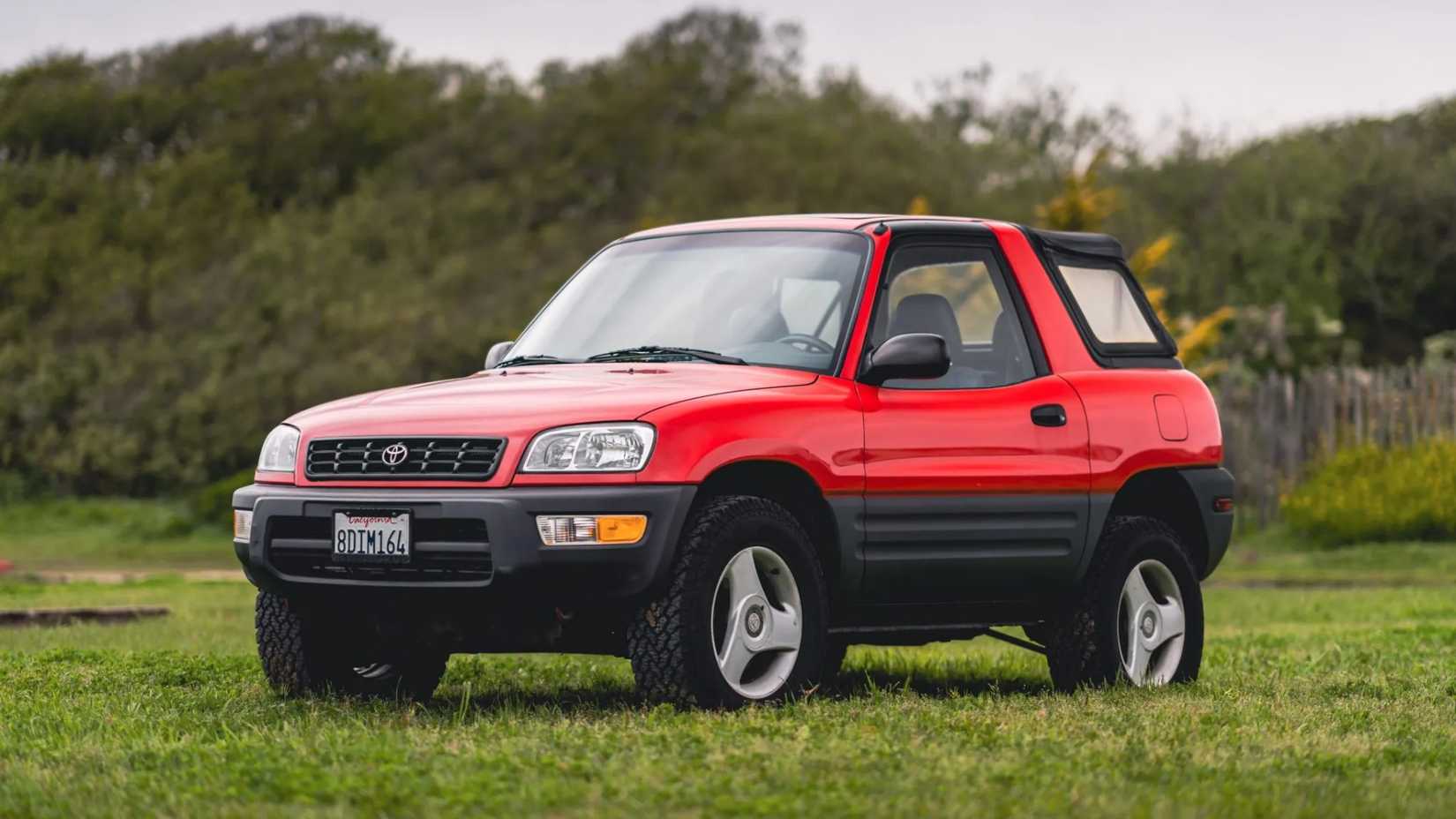
Admittedly, this one might not be the best option for families with multiple children, or any for that matter, but it still belongs here for a couple of reasons. The first-gen Toyota RAV4 represents another ’90s cultural shift: consumers realized SUVs didn’t have to be massive tanks. This compact pioneer combined nimble handling, friendly size, and a reliability thread that Toyota has woven into its DNA ever since. Early RAV4s were equipped with modest four-cylinder engines and delivered surprisingly sprightly performance for the era, with capability that felt larger than their footprint.
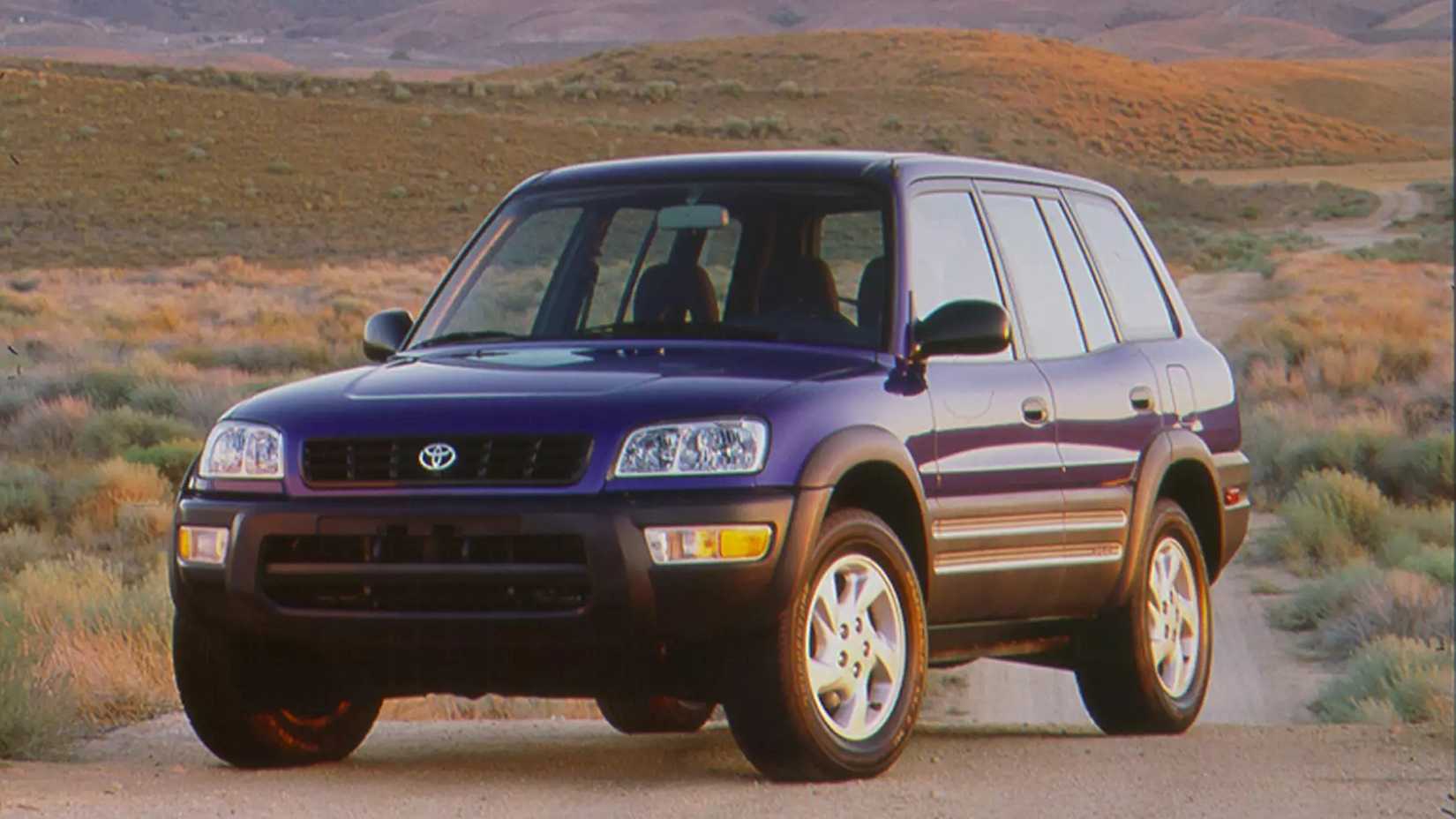
Families in 2026 who embrace an old RAV4 aren’t chasing power or hauling full-size trailers. They’re buying simplicity, size, and often the last of the easily manageable small SUVs before the segment ballooned into the bloated crossovers of today. With basic mechanics, simple drivetrains, and a cab that feels analogue rather than digital, the ’90s RAV4 captures a moment when an SUV could be small, useful, and reliable — without a suite of screens between you and the road.
Honorable Mention: (1996-2006) Jeep Wrangler TJ 4.0-Liter
Practicality Isn’t Everything
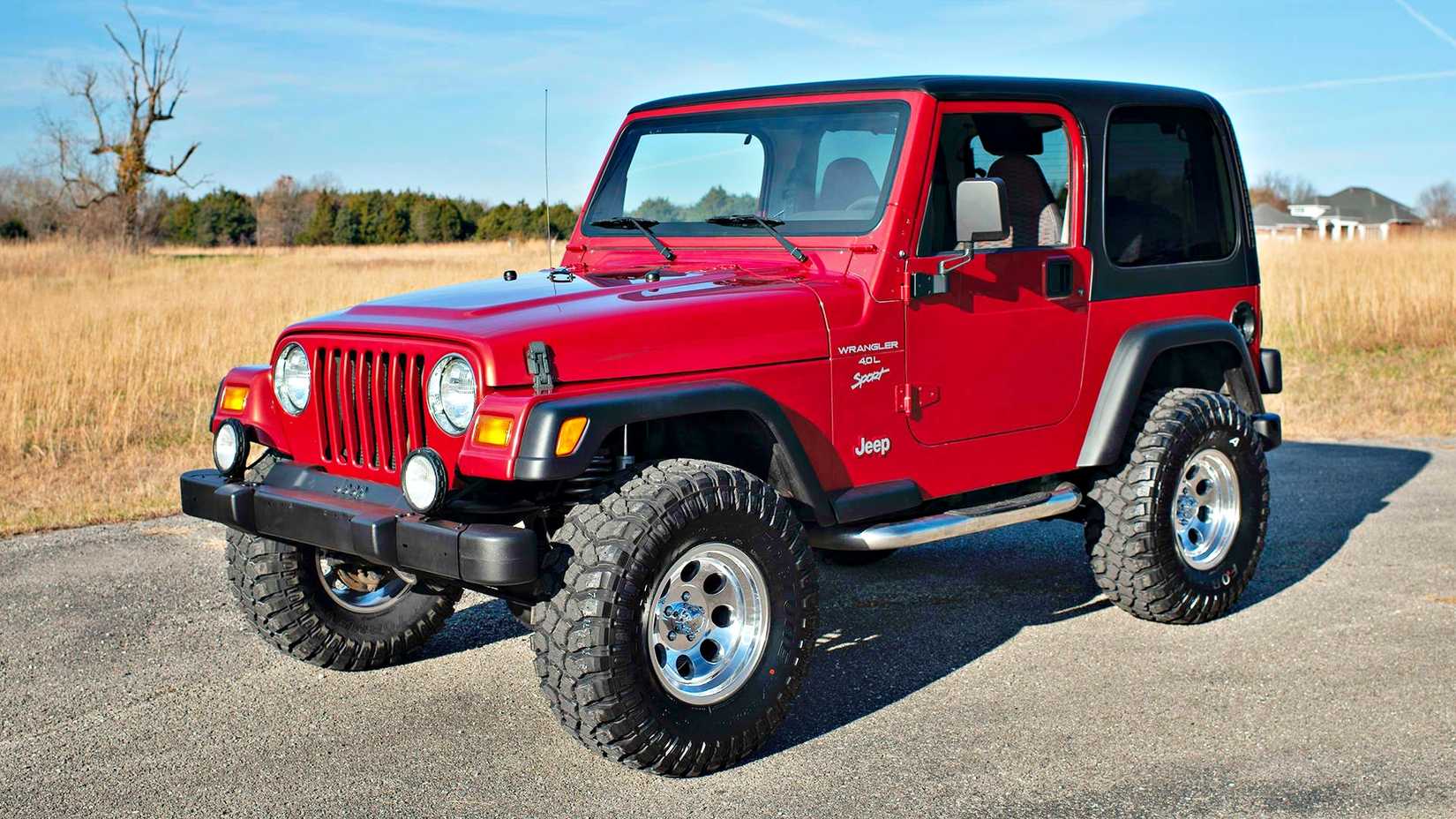
Some vehicles transcend categories. The 1999 Jeep Wrangler with the venerable 4.0-liter inline-six isn’t a perfect family hauler — rear seat space is tight, and it’s far from refined, it’s loud and rough, but it earns an honorable mention for character, simplicity, and mass appeal. Now that I think about it, it’s a pretty bad family SUV, unless what your family needs is something fun, unique, and utterly radical for the weekend. Its engine is one of the most beloved designs of the era, easy to work on, and with parts everywhere. Fact is, many families use Wranglers as second vehicles, adventure rigs, or weekend haulers because they’re fun, durable, and uniquely engaging.
Why American SUVs From The ’90s Are Becoming Collectibles
Vintage swagger and early concepts shine in the American SUV’s retro landscape of the 1990s.
Why These SUVs Still Matter In 2026
We live in an era where new family SUVs — with their touch screens, subscription-locked features, and networks of systems that require dealer attention — can feel alien and expensive to maintain, much less purchase in the first place. The ’90s SUVs above offer something different: mechanical transparency, parts that can be swapped by shade-tree garages, and a nostalgia that’s not just sentimental but practical. These aren’t perfect cars by modern standards — safety features, fuel economy, and daily-driver comfort might be lacking — but under the right roof and with realistic expectations, they remain vehicles that put capability and ownership control back into the hands of working-class families.
If the economy keeps compressing budgets and nostalgia continues its cultural resurgence, these analog SUVs will become more than just relics. They’re signs of a mainstream cycle that desperately needs bending back toward simplicity — durable, adaptable, and defiantly ready to play your Beastie Boys tapes.
Sources: Bring a Trailer, JD Power