
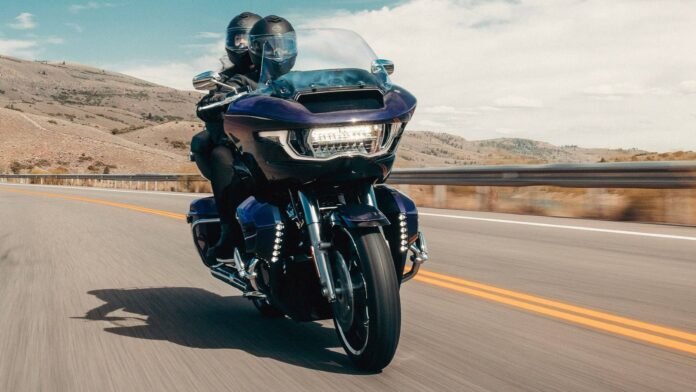
Highway riding isn’t just about speed; it’s about how a bike behaves when you hold that speed for hours. The difference between a bike that can do highway speeds and one that’s built for it becomes obvious the longer you stay in the saddle. Fatigue, stability, and airflow all start to matter more than outright performance.
A true highway machine feels composed and effortless once it settles into its rhythm. Instead of constantly managing the motorcycle, you’re simply along for the ride, letting it do what it was designed to do. That sense of ease is what separates a proper long-distance tourer from everything else on the road.
What Makes A True Highway Machine?
Horsepower mightget you up to speedquickly, but stability is what keeps you there comfortably. A long wheelbase, low center of gravity, and substantial weight all contribute to a planted, confidence-inspiring ride that doesn’t get unsettled by crosswinds or rough pavement. On lighter motorcycles, those same conditions can feel unpredictable, forcing you to stay alert and make constant corrections. A proper touring bike removes that tension, tracking straight and steady so you can focus on the journey instead of managing every input.
Wind Protection Changes Everything
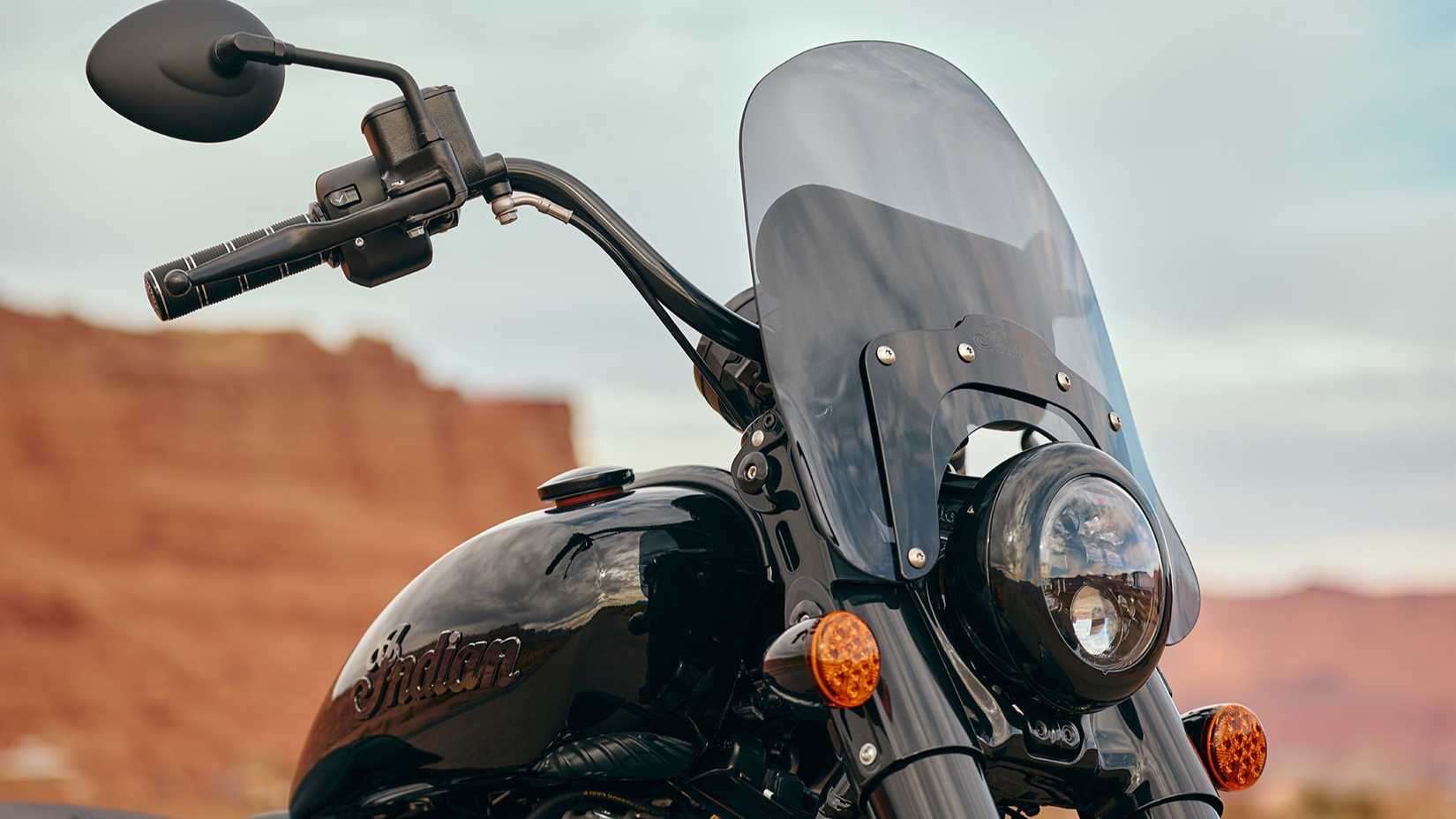
Wind fatigue builds slowly, but it hits hard over time. Without proper protection, your body ends up fighting the air at speed, leading to sore shoulders, tired arms, and reduced focus the longer you ride. A well-designed fairing transforms that experience completely by managing airflow rather than just blocking it. The result is a calmer riding environment with less buffeting, reduced noise, and significantly less strain, making long-distance travel far more sustainable.
Comfort Isn’t Optional At This Level
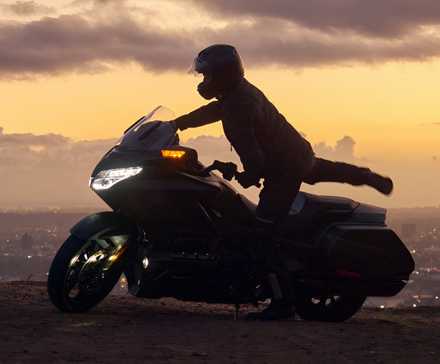
Honda
Comfort isn’t a luxury when you’re covering serious distance, it’s a requirement. Seat support, riding position, and the ability to shift your posture all play a role in how long you can stay on the bike without fatigue setting in.
Full-size touring machines are built with this in mind, offering wide seats, relaxed ergonomics, and thoughtful touches like floorboards that allow you to stretch out. These details may seem small at first, but they make a massive difference over hours of riding.
The Touring Motorcycle That Feels Like A Gold Wing Without The Price Tag
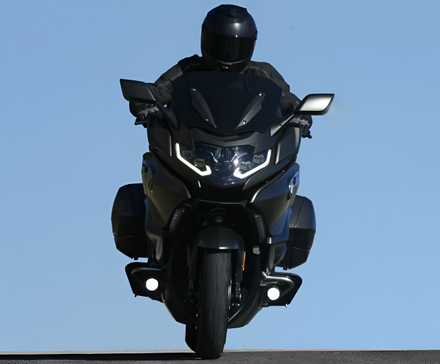
This BMW touring bike has a lot of similarities with the Gold Wing, including a six-cylinder engine and a unique suspension setup.
Most Bikes Aren’t Designed To Live At Highway Speeds
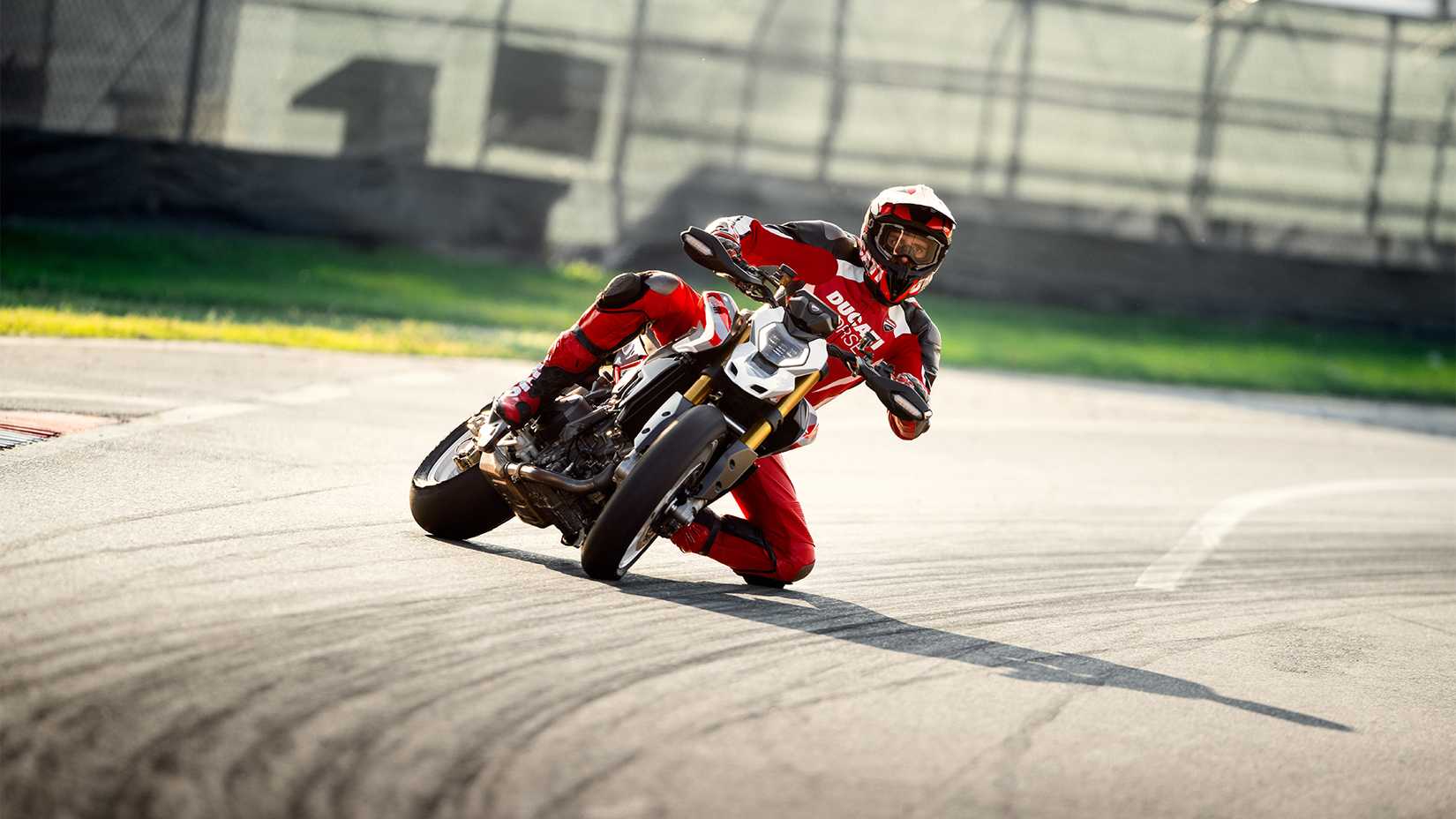
Many motorcycles can handle short highway bursts, but very few are designed to stay there comfortably. Over time, the limitations of bikes built for other purposes start to show, whether it’s a lack of wind protection, cramped ergonomics, or instability at speed. That’s where purpose-built touring bikes stand apart. They aren’t trying to balance multiple roles. Instead, they focus entirely on delivering a consistent, comfortable experience over long distances.
Naked Bikes And Sport Bikes Have Their Limits
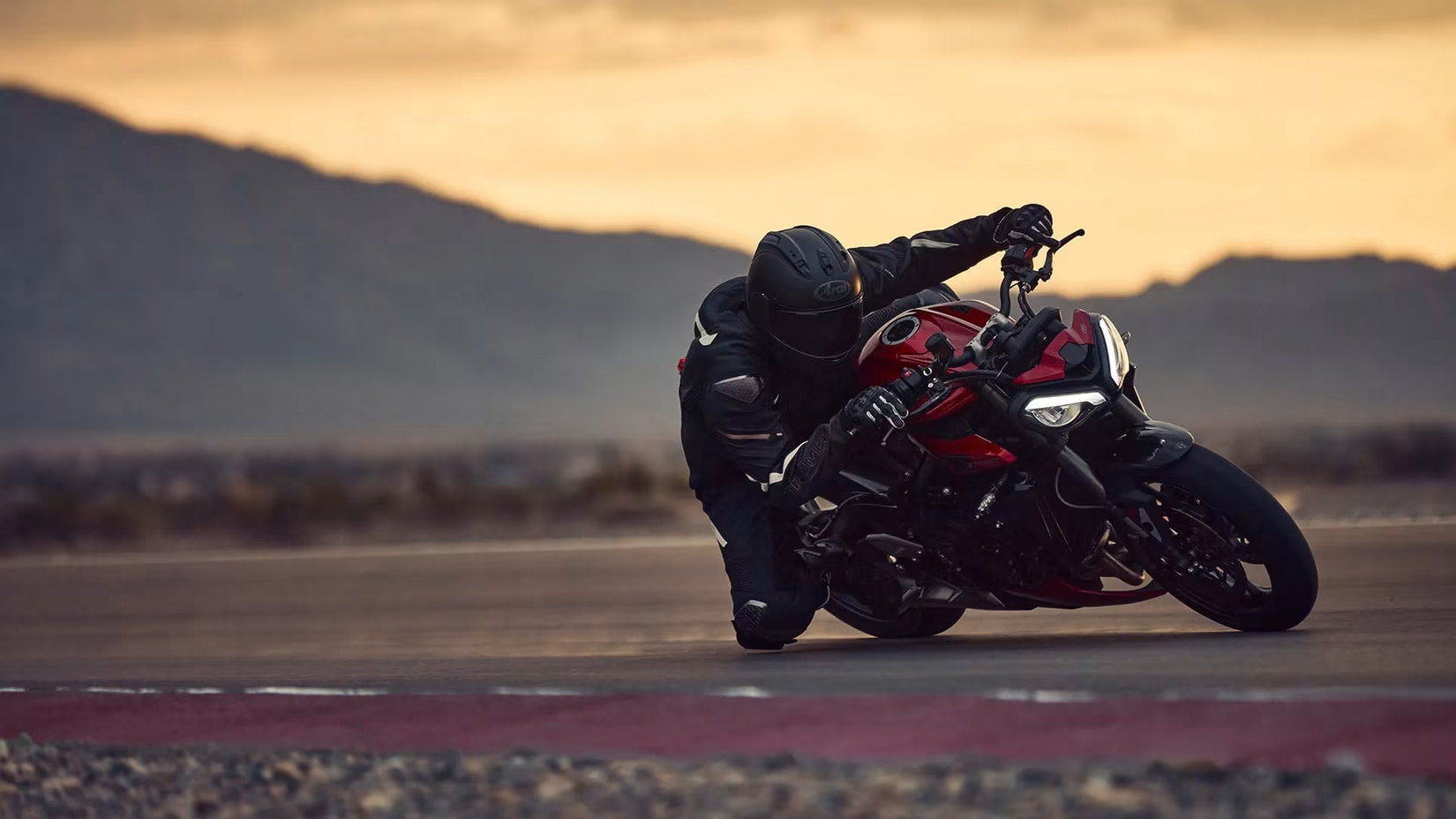
Naked bikes offer an engaging, raw riding experience, but they leave you fully exposed to the elements. At highway speeds, the constant wind pressure becomes exhausting, especially over extended periods. Sport bikes bring high performance, but their aggressive riding positions aren’t built for comfort. The forward-leaning stance puts strain on your wrists and back, turning long highway rides into something you endure rather than enjoy.
Middleweight Tourers Still Compromise
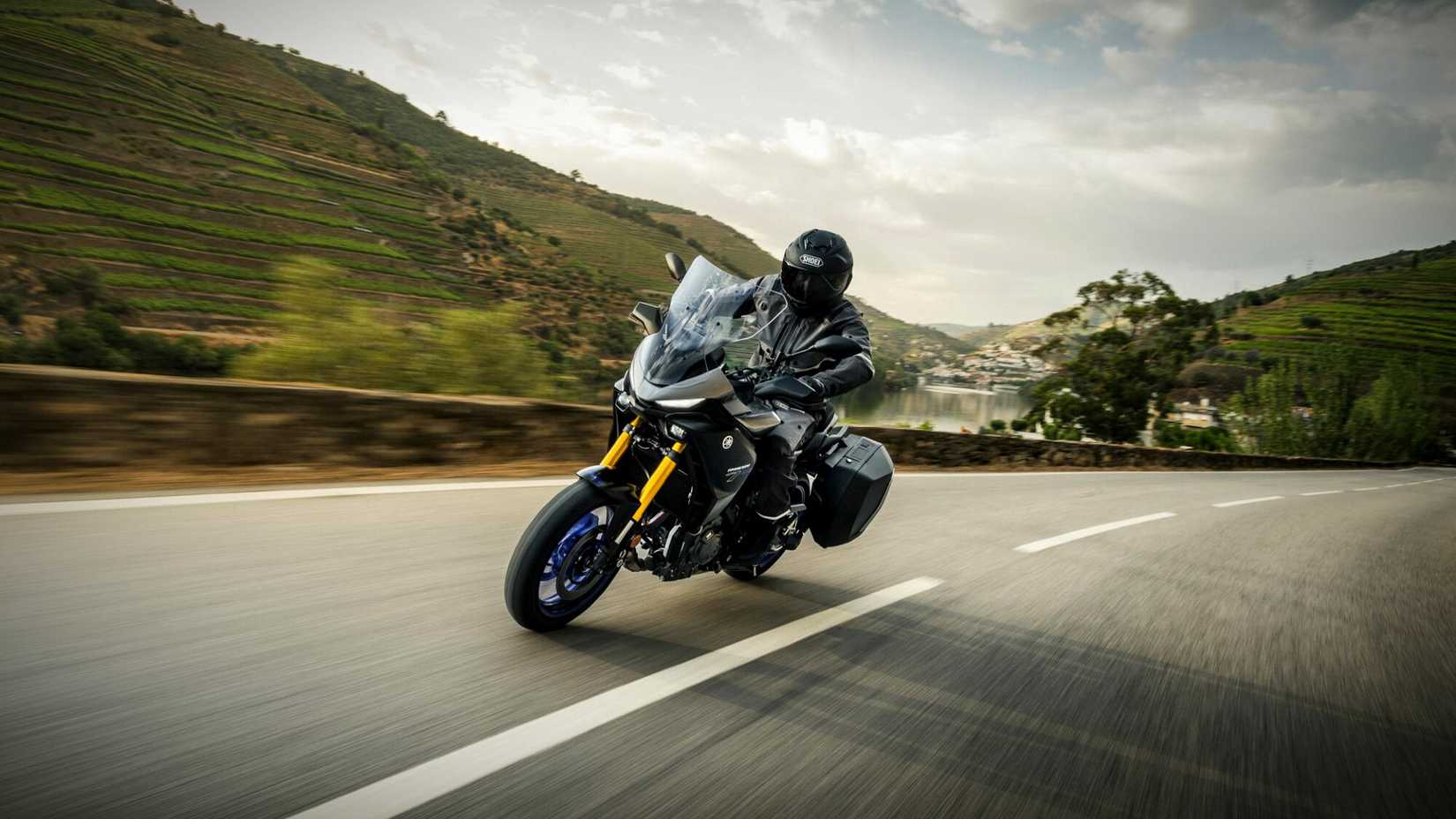
Middleweight tourers try to strike a balance between comfort and practicality, and they succeed to a point. They’re easier to manage and often more accessible, which makes them appealing to a wider range of riders. However, when it comes to sustained highway riding, they still fall short of full-size tourers. Their lighter weight and smaller fairings mean less stability and reduced wind protection, which becomes noticeable over longer distances.
Why True Touring Bikes Are Different
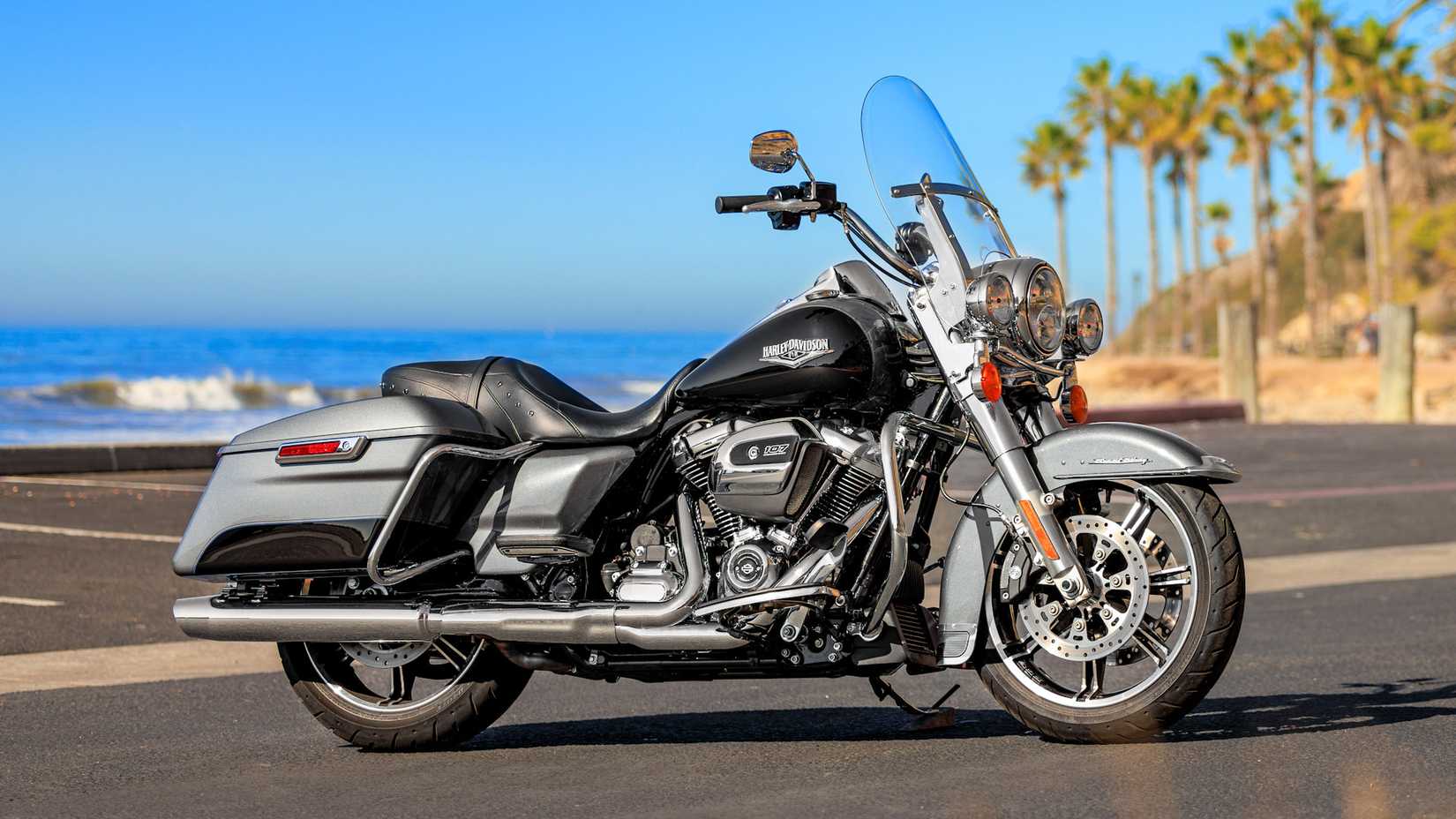
Full-dress touring bikes are built with a singular focus on long-distance travel. Everything about them, from their size to their features, is designed to reduce fatigue and improve stability at speed. That purpose-driven approach gives them a completely different feel on the highway. They aren’t just capable of long rides, they’re built to make those rides as effortless and comfortable as possible.
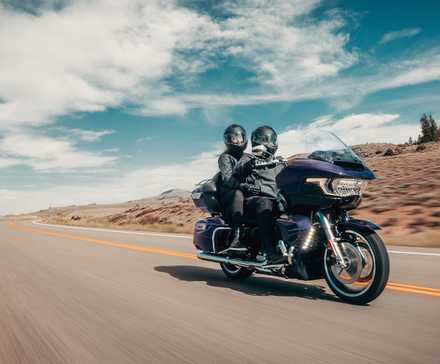
The Best Motorcycle For Riding 80 MPH All Day
Harley-Davidson’s Road Glide Limited proves you don’t need superbike speed—just effortless power and comfort to cruise at 80 mph all day.
The Harley-Davidson Road Glide Limited Is The Perfect Highway Cruiser
Harley-Davidson
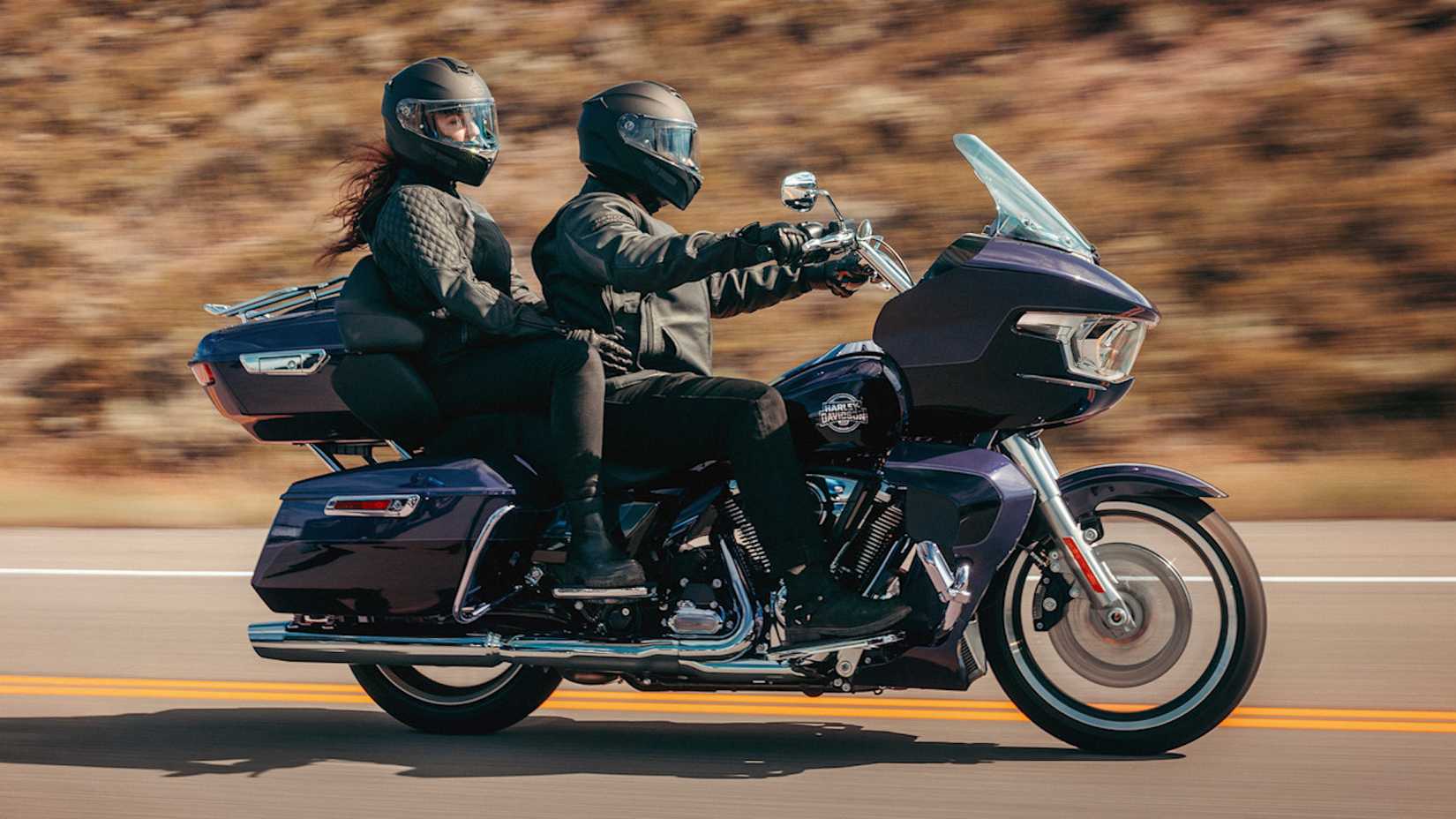
The Harley-Davidson Road Glide Limited embodies everything a highway-focused motorcycle should be. It doesn’t try to be lightweight or sporty, instead leaning fully into its role as a long-distance touring machine. Once you get it up to speed, the design philosophy becomes clear. It’s not about excitement in short bursts; it’s about delivering a consistent, comfortable experience mile after mile.
The Milwaukee-Eight Is Engineered For The Open Road
Harley-Davidson
At the heart of the Harley-Davidson Road Glide Limited now sits the Milwaukee-Eight VVT 117, a 1,923cc V-twin that represents a clear step forward from the older 114. It produces around 106 horsepower and a strong 131 pound-feet of torque, with peak torque arriving low in the rev range at just over 3,000 rpm, which tells you exactly where this engine is meant to live.
That low-end torque is what defines the experience. You don’t need to build revs or work the gearbox to make progress. Whether you’re rolling on the throttle to overtake or just holding a steady pace on the highway, the engine responds immediately with a smooth, effortless surge of power. It’s tuned for real-world riding, not peak numbers, and that makes a huge difference over long distances.
|
Engine |
Milwaukee-Eight 117 V-twin, air/oil-cooled |
|
Displacement |
1,923cc |
|
Output |
106 horsepower / 131 pound-feet @3,000 rpm |
|
Transmission |
6-speed manual |
|
Drive Layout |
Belt drive |
The addition of variable valve timing brings a noticeable layer of refinement to the whole setup. It helps broaden the powerband, giving you strong pull down low while keeping things smooth and composed as speeds climb. It also improves efficiency and heat management, which matters when you’re dealing with a big-displacement V-twin in real-world conditions.
What really stands out, though, is the character. You still get that unmistakable V-twin pulse, but it’s more controlled and less intrusive than before. At highway speeds, vibrations settle into a steady rhythm instead of becoming tiring, and the engine just locks into a relaxed cadence that feels perfectly matched to long-distance cruising.
The Large Bodywork Improves Aerodynamics At Speed
Harley-Davidson
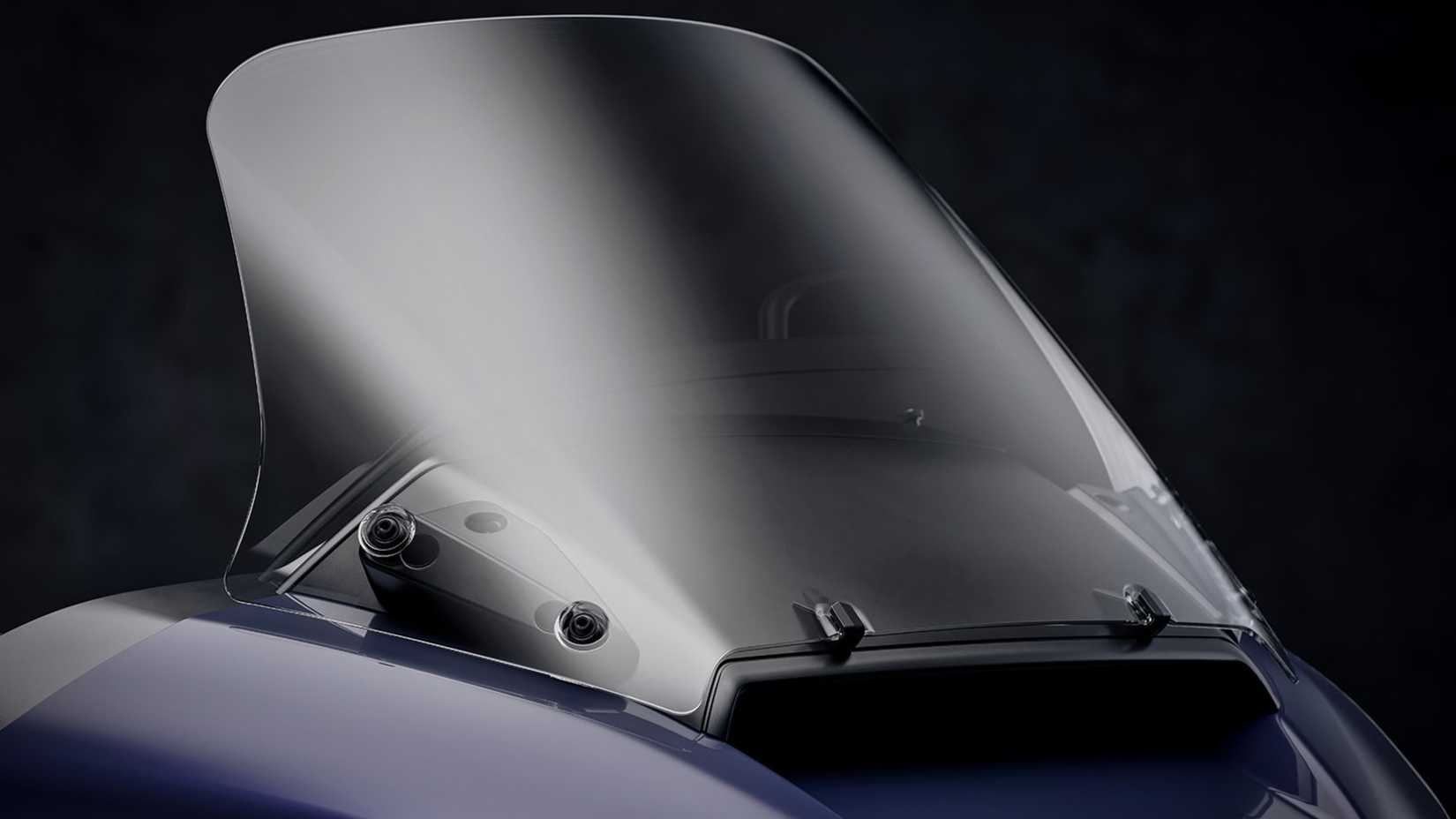
The Road Glide’s fairing and windscreen play a crucial role in its highway performance. Because it’s fixed to the frame, it keeps steering inputs light and consistent even at higher speeds. More importantly, it creates a stable pocket of air around the rider. This reduces wind buffeting and turbulence, allowing you to stay comfortable and focused even after hours on the highway.
Touring Tech That Actually Matters
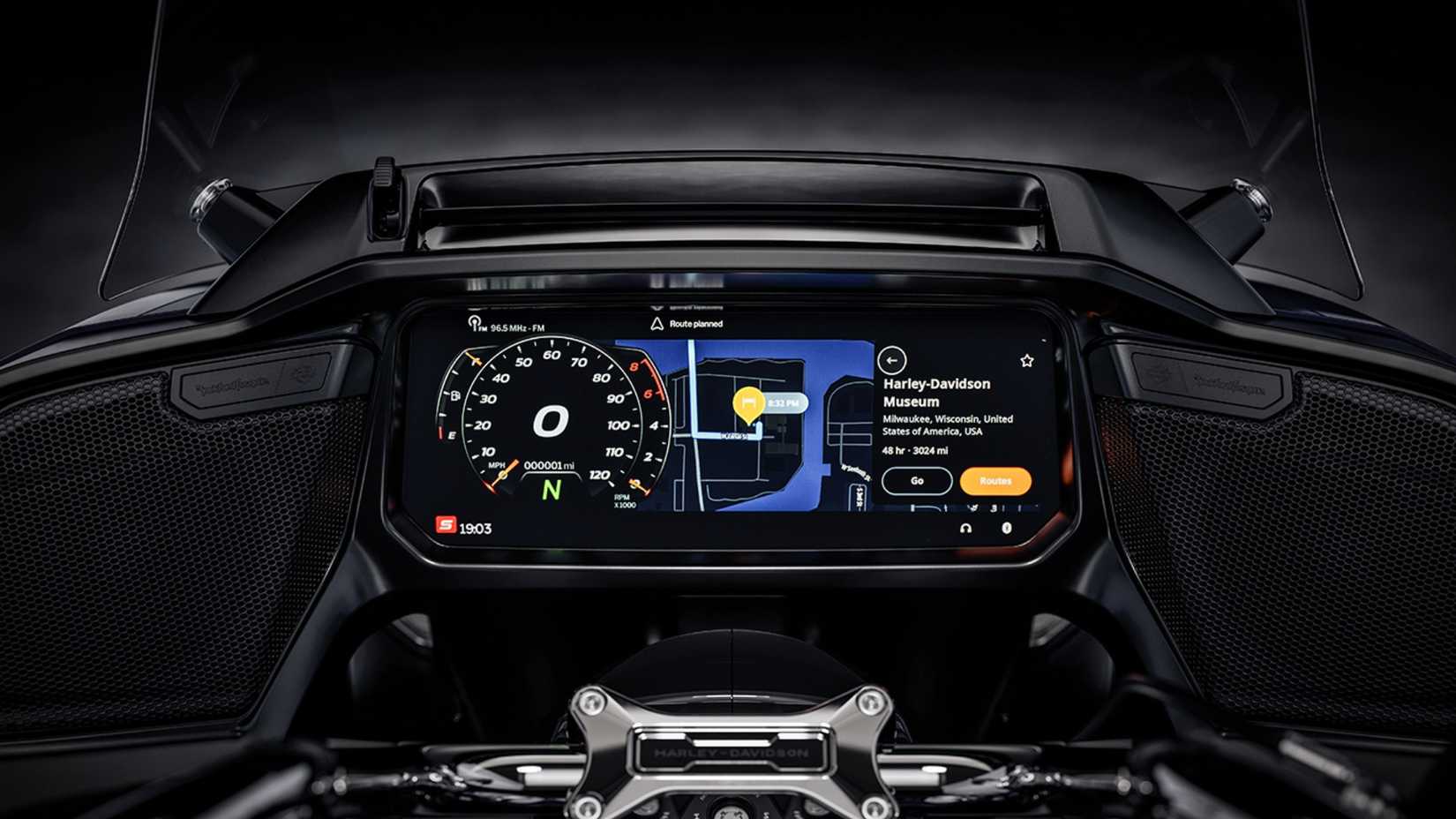
The Harley-Davidson Road Glide Limited gets a much-needed tech overhaul, ditching the old Boom! Box system in favor of a completely new interface built around a 12.3-inch TFT display running Harley’s Skyline OS. It’s a big step forward, both visually and functionally, bringing the bike in line with what you’d expect from a modern premium touring machine.
The system integrates navigation, Apple CarPlay, and connectivity features into a cleaner, faster, and more intuitive layout. It feels less like a legacy motorcycle system and more like something you’d find in a high-end car, which makes a big difference when you’re spending hours on the road.
Built For Crossing States, Not Just City Limits
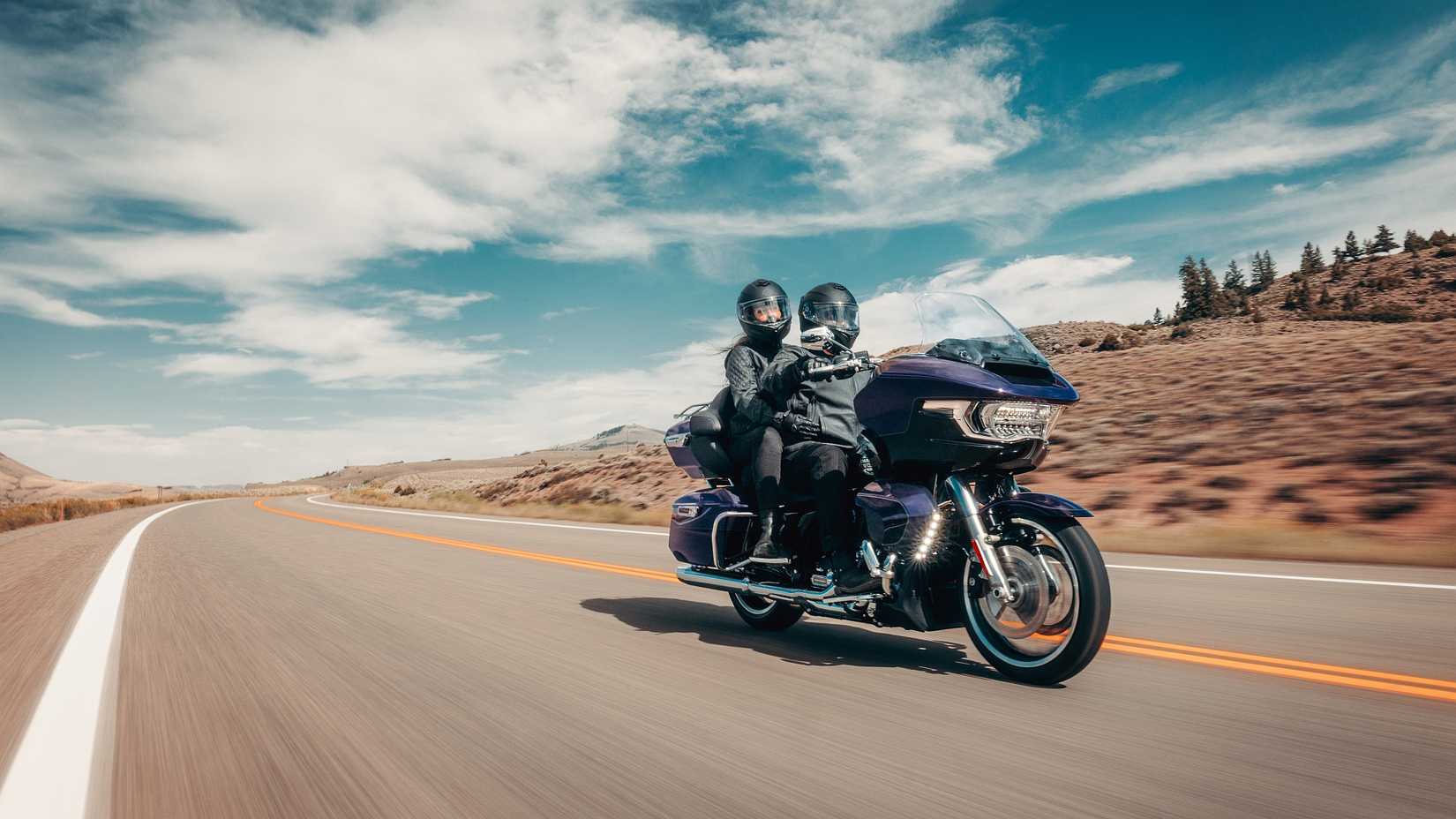
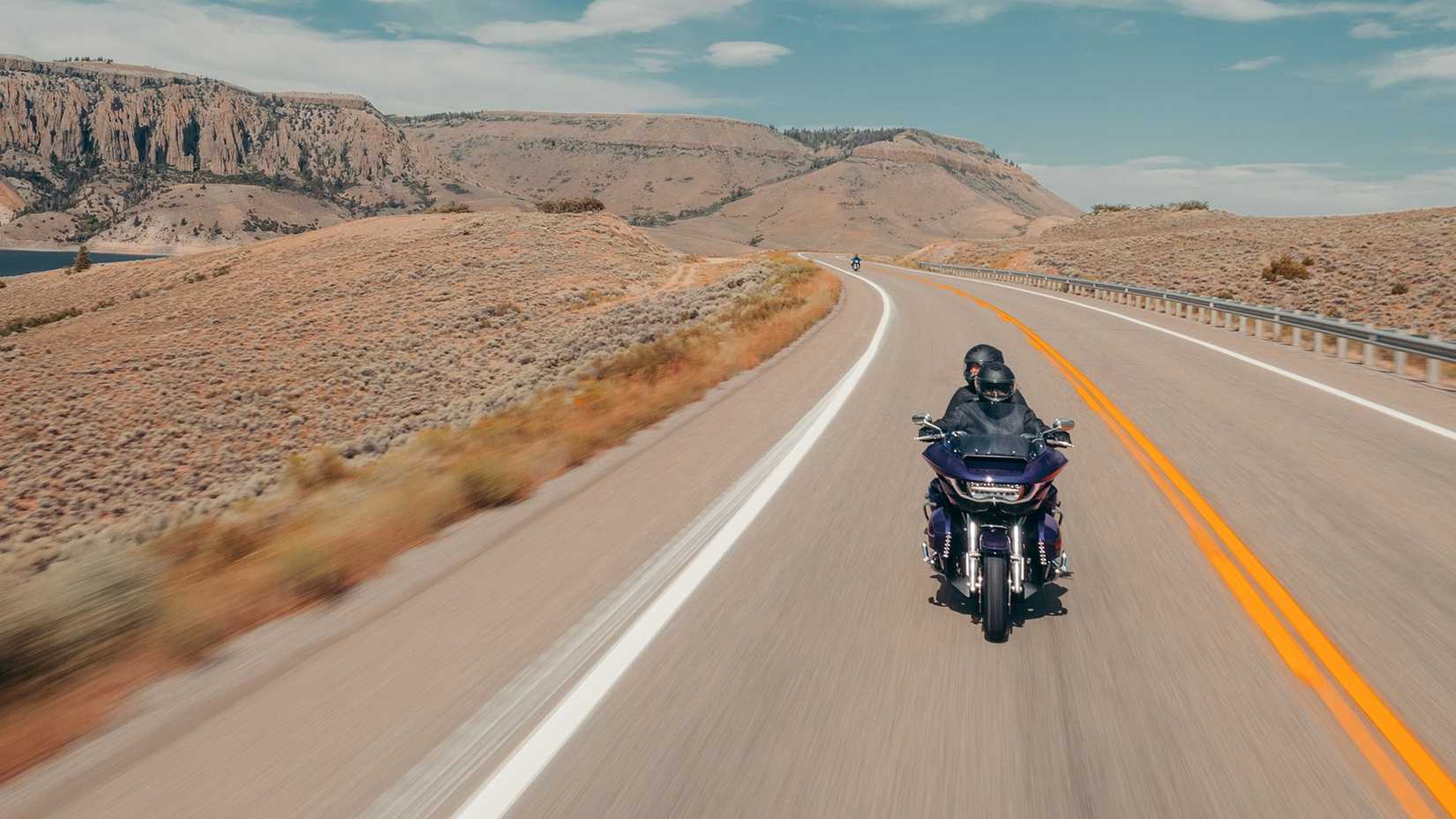
This is a motorcycle that truly comes alive outside of urban environments. It’s built for open highways, long routes, and the kind of riding where distance becomes part of the experience.
When it comes to braking and suspension, the Road Glide Limited keeps things simple but effective in a way that suits its mission perfectly. Up front, dual disc brakes provide strong and predictable stopping power, while the rear disc helps keep everything balanced under heavy deceleration. It’s not overly aggressive, but it doesn’t need to be. The setup is tuned for smooth, controlled braking, especially when you’re hauling a fully loaded bike at highway speeds.
|
Chassis |
Steel double cradle frame |
|
Wheels and Tires |
Front: 130/60B19 | Rear: 180/55B18 |
|
Suspension |
Front: 49mm telescopic forks | Rear: Emulsion shocks with hand-adjustable preload |
On the suspension side, the 49mm front forks and rear emulsion shocks are all about comfort and stability rather than outright performance. The rear preload adjustability is especially useful when riding two-up or with luggage, letting you dial in the ride for added weight. It soaks up imperfections well and keeps the bike composed over long distances, reinforcing that planted, confidence-inspiring feel the Road Glide Limited is known for.
Storage For Real-World Touring
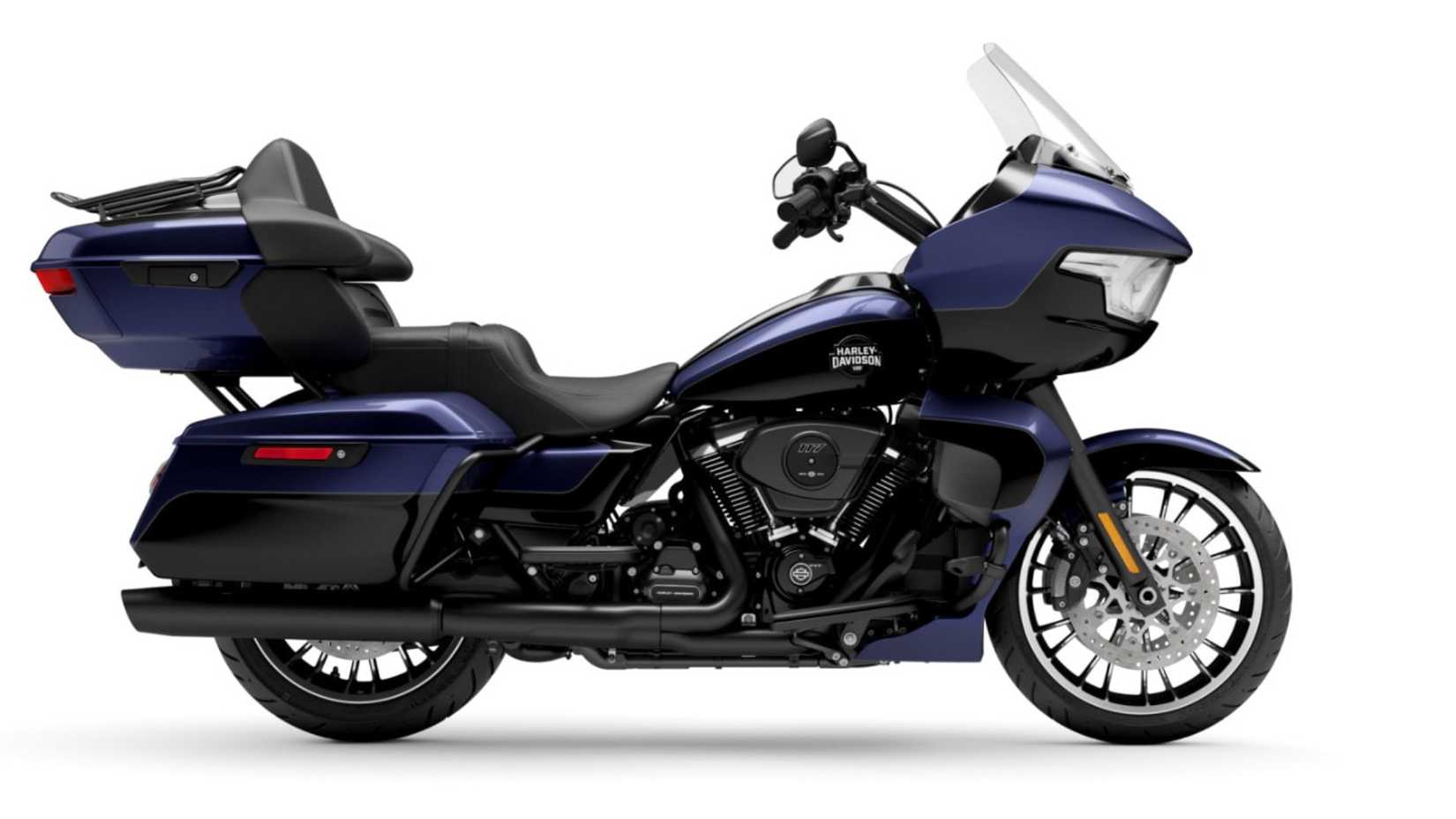
The combination of hard saddlebags and a top case provides substantial storage for multi-day trips. You can carry everything you need without compromising comfort or balance. This level of practicality turns the bike into more than just a mode of transport. It becomes a tool for real-world touring, capable of supporting extended journeys with ease.
Why It’s Just “Perfect” At Highway Speeds
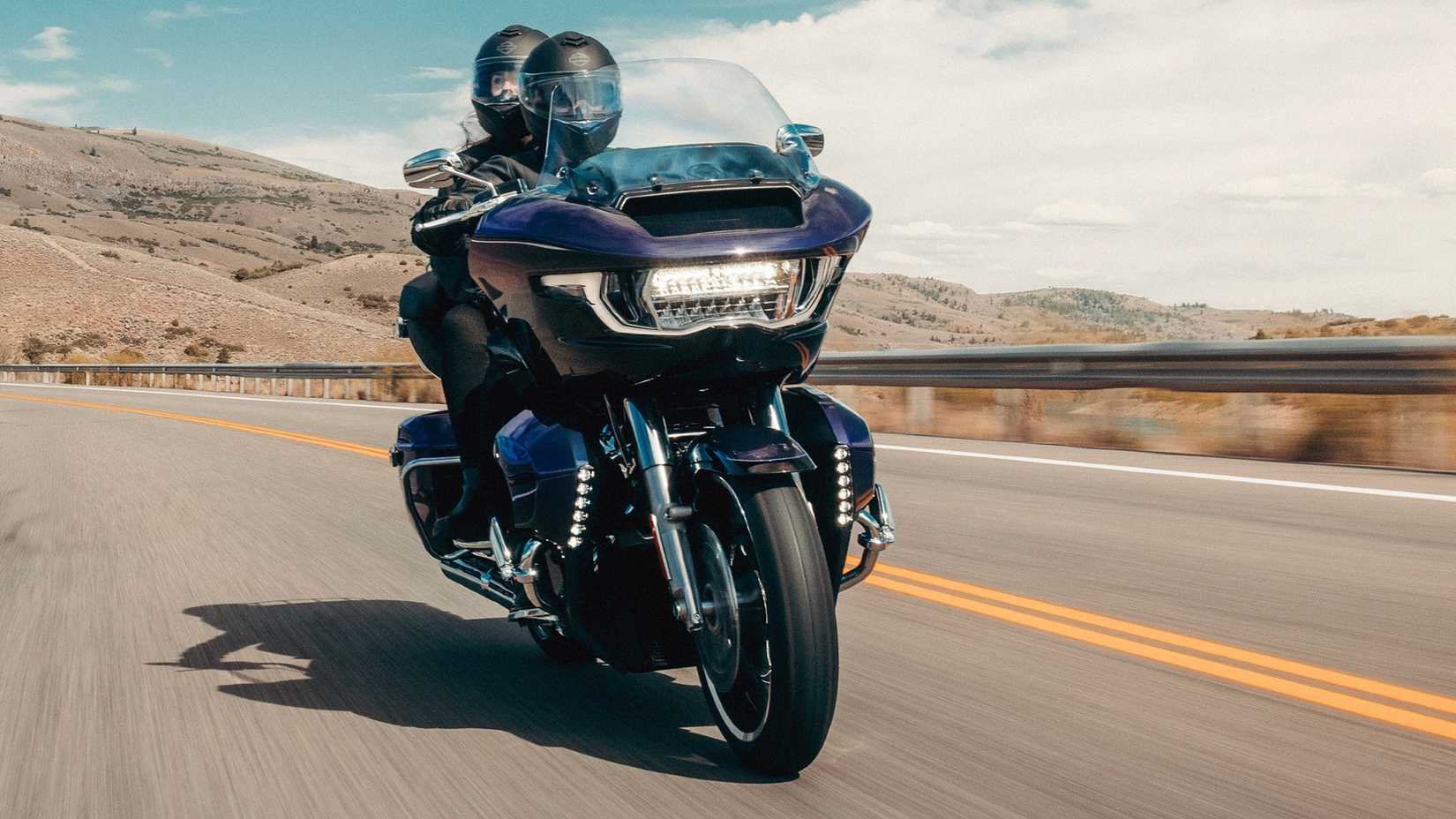
There’s a point where everything on the bike starts working in harmony. The engine, chassis, and aerodynamics all align to create a smooth, effortless riding experience. It’s a feeling that only really reveals itself at speed, where the bike operates exactly as intended. At highway pace, the engine smooths out, vibrations settle, and the fairing effectively shields you from the wind. What felt large and heavy at low speeds transforms into something stable and composed.
This is where the Road Glide Limited makes the most sense. It’s designed to perform best in this environment, and it shows in how naturally it handles sustained high-speed travel.
The Touring Bike That Mechanics See The Least
The touring bike that quietly earns a reputation for reliability, barely seen in service bays.
You Get Exactly What You Pay For
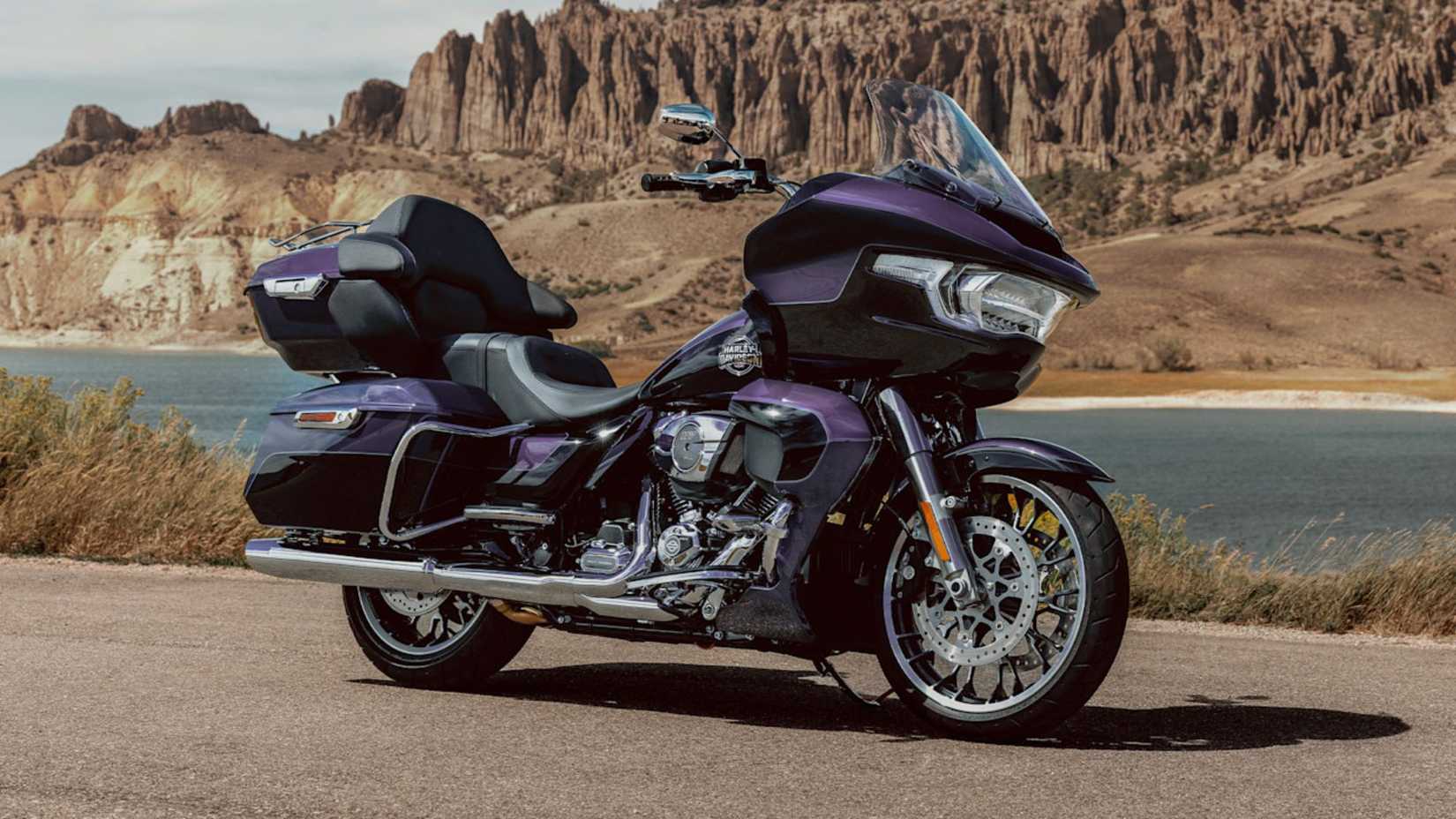
With an MSRP of $32,999, the Road Glide Limited sits firmly in the premium touring segment, and it doesn’t try to hide it. This is a bike built for riders who value long-distance comfort, stability, and refinement above all else, and its pricing reflects that focus.
Other Motorcycles Worth Considering
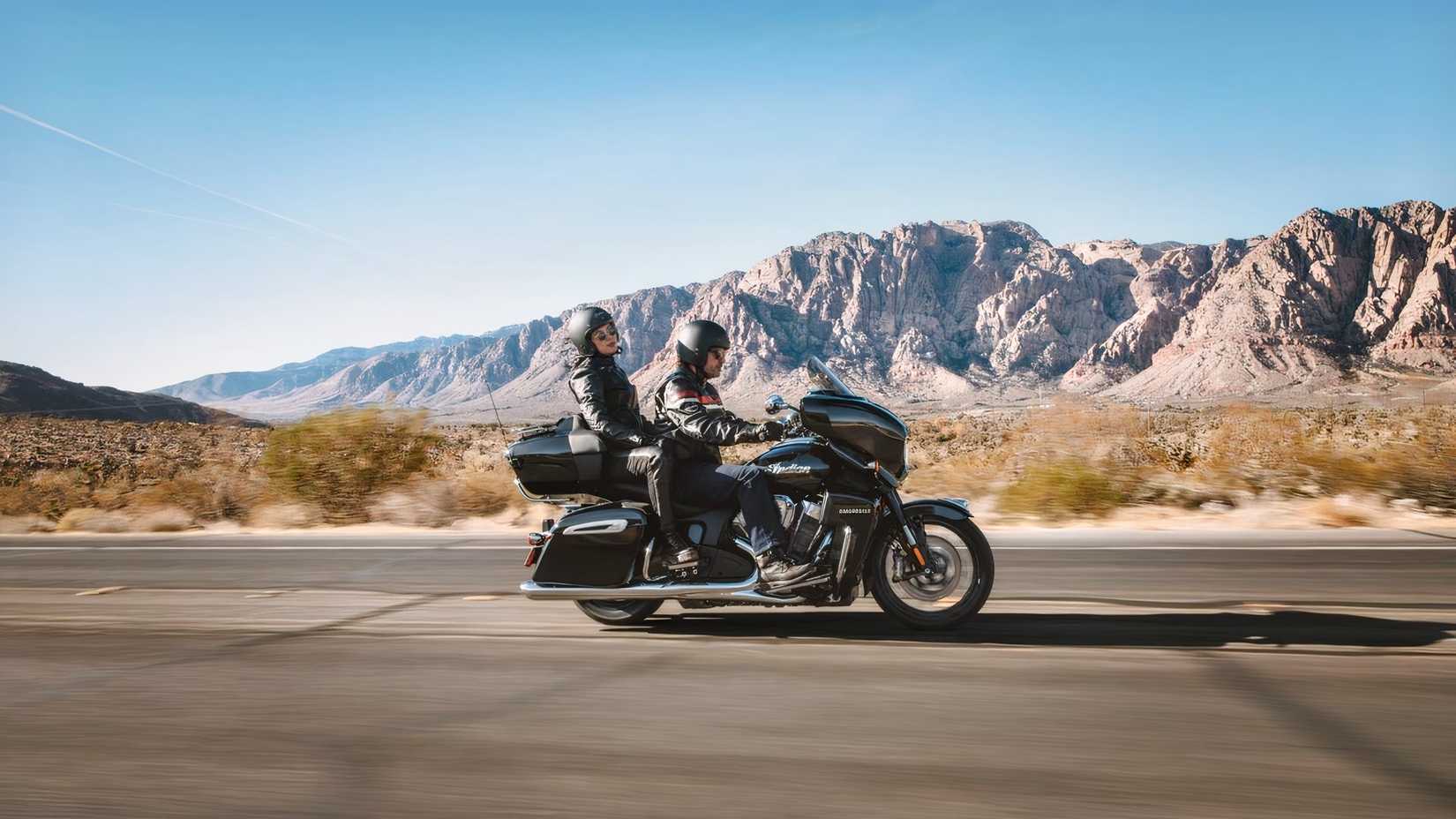
When you compare it to alternatives like the Indian Roadmaster, the BMW K 1600 Grand America, and the Honda Gold Wing Tour, the landscape of premium touring bikes starts to come into focus. They all promise long-distance comfort, but each one delivers that promise in a very different way.
The Indian Roadmaster, starting at $34,999, is arguably the closest rival in spirit to the Road Glide Limited. It leans hard into classic American touring with its Thunderstroke V-twin, offering strong low-end torque and relaxed cruising character. It’s loaded with comfort features and has a slightly more traditional aesthetic, but it can feel heavier and less aerodynamic at speed, which affects how planted it feels on long highway runs.
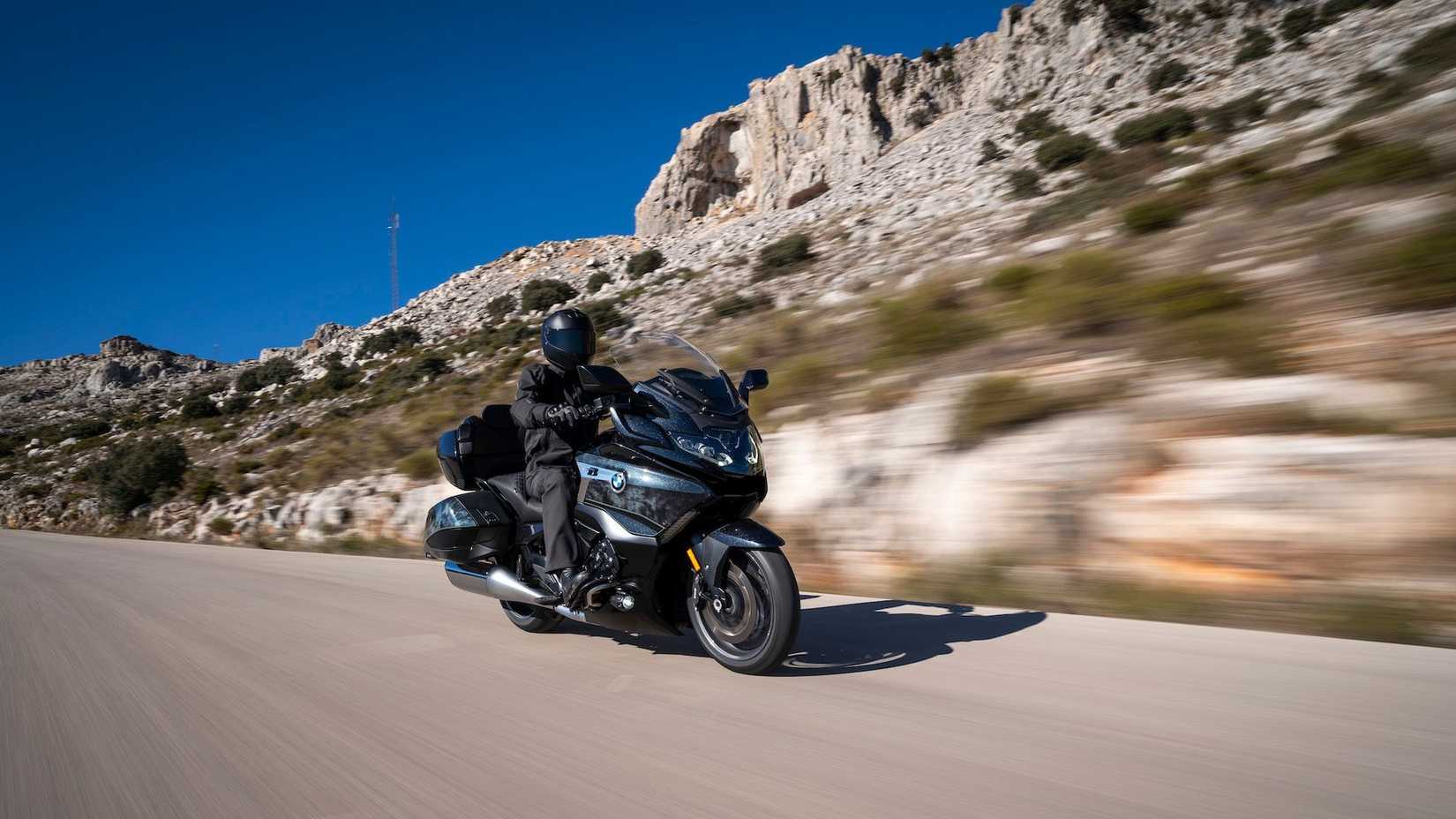
The BMW K 1600 Grand America, with a base price of $30,025, takes a more performance-oriented and tech-forward approach. Its inline-six engine is incredibly smooth and delivers power in a way that feels almost effortless at higher speeds. It’s packed with advanced electronics and rider aids, making it one of the most sophisticated options in the segment, but that same complexity can feel less intuitive, and it trades away some of the laid-back, character-driven feel of a big V-twin tourer.
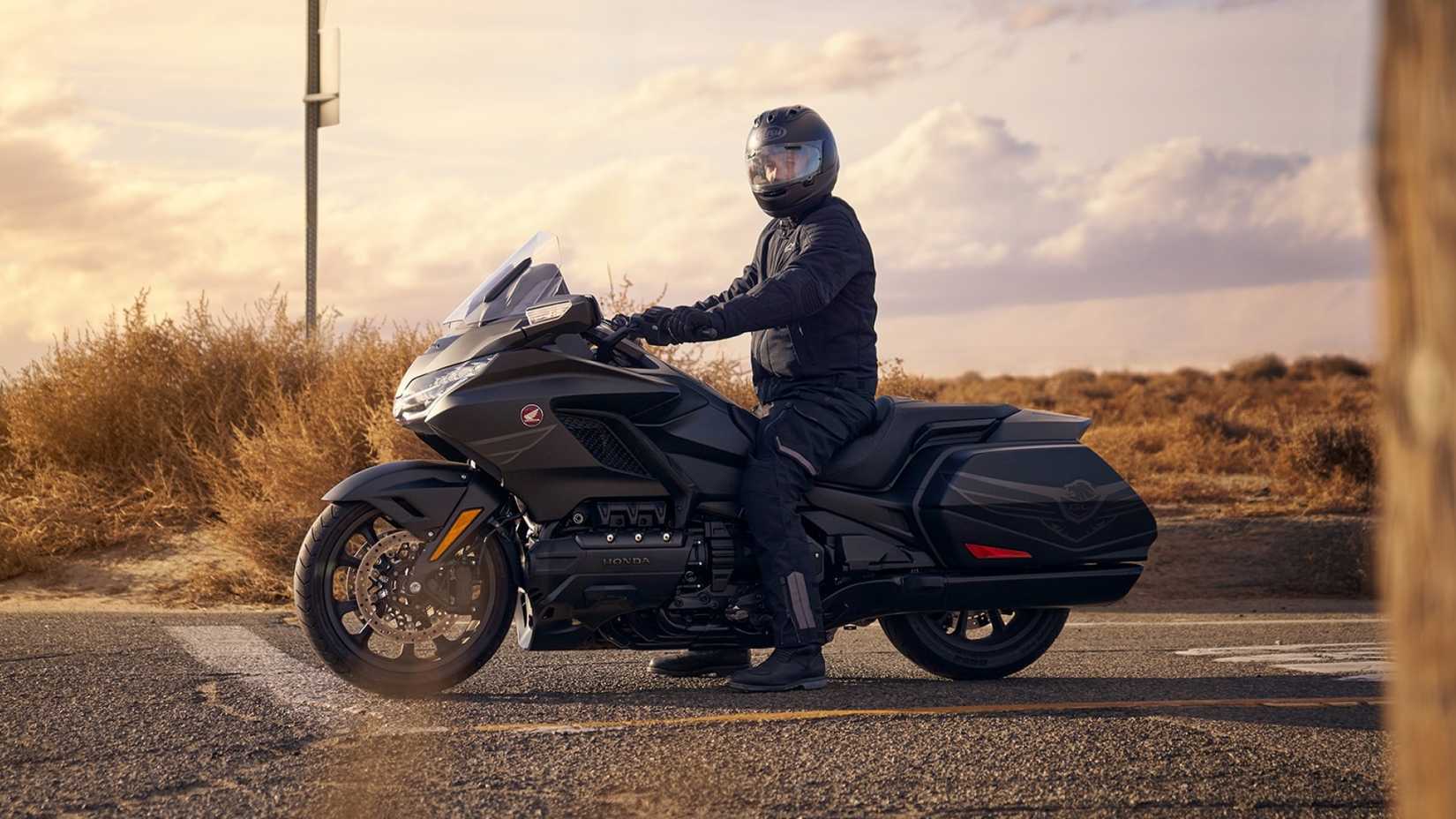
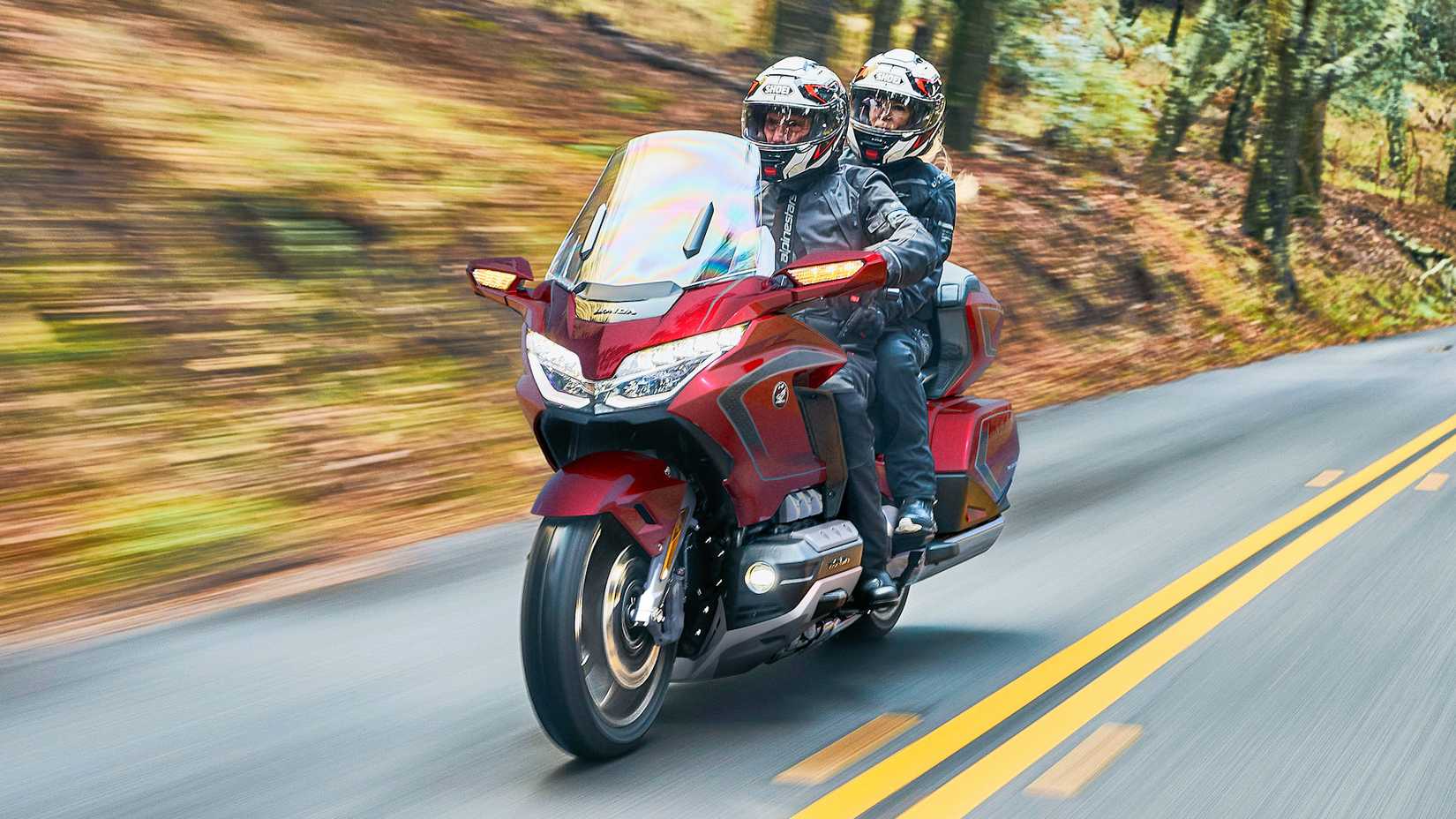
Then there’s the Honda Gold Wing, starting at $25,500, which represents the most refined and accessible entry point into this category. Its flat-six engine is famously smooth, and the bike itself feels incredibly well-balanced despite its size. It excels in ride quality, comfort, and ease of use, especially with its available dual-clutch transmission, but it leans more toward luxury touring than traditional cruiser styling, which may not appeal to riders looking for that classic big-bike presence.
Each of these machines brings something different to the table, whether it’s heritage, performance, or refinement. The Road Glide Limited positions itself right in the middle of that spectrum, blending classic American touring character with modern stability and comfort in a way that feels purpose-built for the highway.
In the end, what you’re paying for isn’t just performance or features, it’s the ability to cover serious miles in complete comfort. And for riders who live for the open road, that’s exactly what makes a bike like this worth it.
Source: Harley-Davidson